A translation can be immaculate and still arrive too late. Before anyone approves the final sentence, somebody has to price the work, choose a supplier, collect the right files and decide who signs it off. Afterwards comes the invoice. The Language Technology Centre, better known as LTC, made a business out of that less photogenic half of going global. Its subject was language; its opportunity was administration.
Founded by computational linguist Dr Adriane Rinsche in 1992, LTC combined translation and localisation services with consultancy and software. The combination matters. A company selling words encounters the awkward purchasing rules, changing deadlines and file exchanges that a software demonstration can glide past. LTC developed tools to manage those surrounding tasks, eventually packaging them in its web-based business system, LTC Worx.
The customer is usually a language service provider or an internal corporate language department. Both need to coordinate people, money and content across a production chain. Worx puts that coordination into a shared system, connecting requests, quotations, project work and finances. Think of the project manager who wants one dependable answer to a deceptively small question: where is this job?
A linguist builds the office machinery
Rinsche brought a doctorate in computational linguistics from Bonn University to the company. LTC’s early work covered language technology, multilingual consultancy and language services. Its Organiser product, released in 1998, concentrated on the management needs of the translation business. The interesting choice was to address the office around the translator, where a growing workload creates more relationships to remember and more transactions to reconcile.
An independent review of Organiser version 4.61 described more than a thousand users and named organisations including Deutsche Post, Eurocontrol, UNESCO and AXA. That is a historical snapshot of the earlier product, rather than a count of today’s Worx customers. The same review lists hardware requirements including 64 MB of RAM. Enterprise administration once fitted into a remarkably small corner of a computer.
By June 2007, LTC was launching Worx at Localization World in Berlin. Its conference announcement described a browser-based successor shaped by years of development and customer suggestions. Quoting, project management and invoicing sat together; the intended work extended to interpreting, consultancy and language training. The product’s organising idea was broader than translating a document: follow a service engagement from the first commercial commitment to the last bill.
- RequestFiles + languages
- QuoteScope + price
- DeliverPeople + approvals
- InvoiceCosts + payment
Follow the request, then follow the money
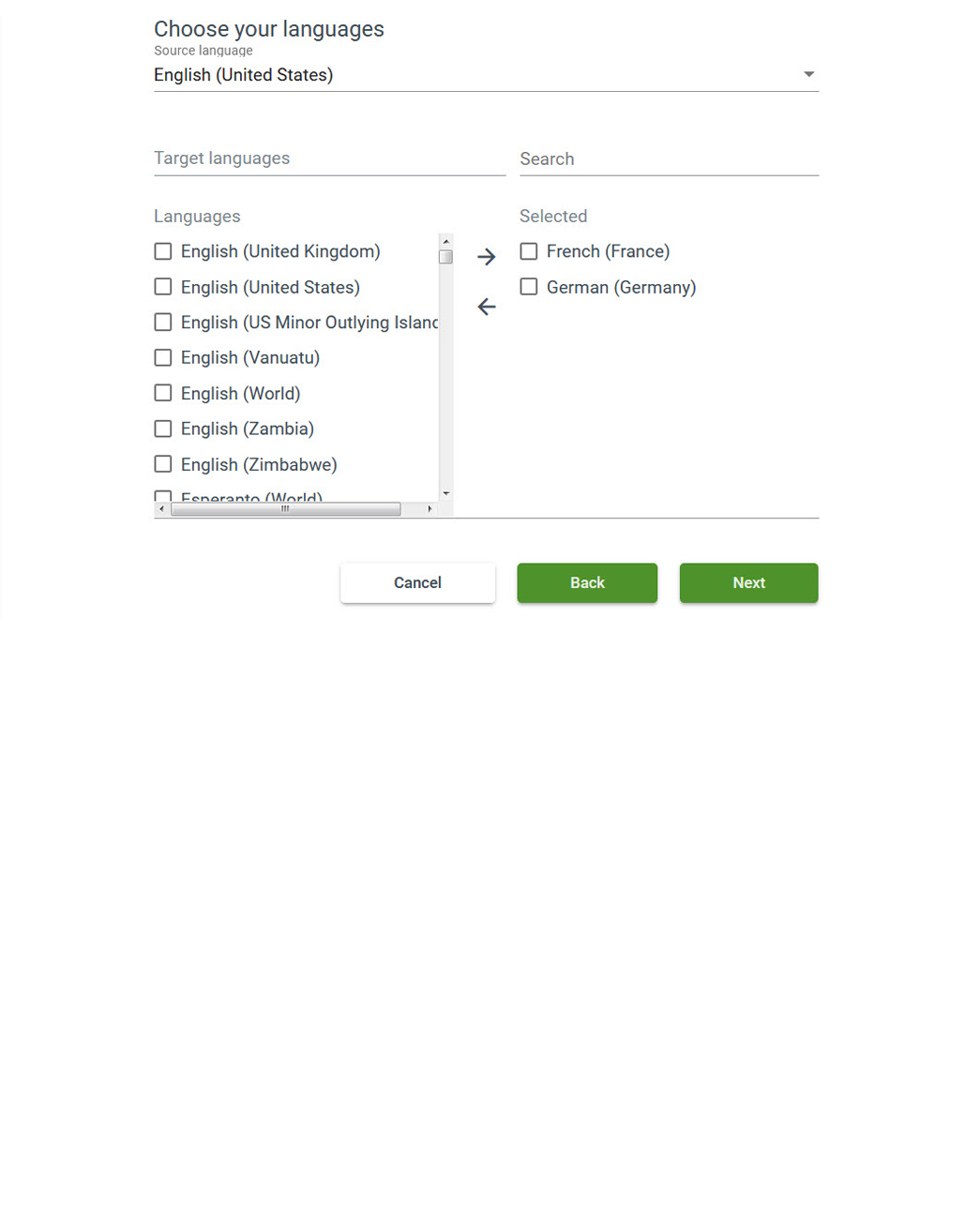
The later Worx website makes that idea tangible. A client request wizard asks users to select a template, enter general information, choose languages and upload source and reference files before reviewing a summary. This is the unglamorous discipline behind useful automation. If the job enters the system with essential information attached, the next person has less detective work to do.
Worx advertises automated quotations using information from computer-assisted translation tools, alongside project tracking, margin monitoring, purchase orders, invoices and payment tracking. Those functions connect the linguistic assignment to the commercial one. A manager can ask what a project is costing while it is still underway, instead of treating the invoice as the first occasion to assemble the numbers.
LTC also sold the surrounding expertise: software and website localisation, multilingual process consultancy, customisation, training and support. Its historical catalogue included LTC Communicator for multilingual workflows and, later, the Organik knowledge-management system. The recurring concern was how information moves between people. Selling that concern as both a service and a software product put LTC between the translation agency and the enterprise software supplier.
DHL wanted more than translated text
Deutsche Post provides a concrete example. In December 2013, LTC announced that the postal and logistics group had extended an existing relationship to include translation-memory hosting. The arrangement combined language services, hosted Worx and the memoQ 2013 translation environment. LTC said its work with Deutsche Post dated to 2000, making the announcement an expansion of an established relationship.
The distinction between the two software roles is useful. Worx supplied business coordination; memoQ supplied a translation environment. In the announcement, Doro Meyer-Veit, head of Deutsche Post’s Corporate Language Service, said the technologies helped the department “plan, track and report on important language projects.” The customer’s description is about operational visibility, a need that survives beyond any particular translation engine.
The lesson is to look at the connections before buying another tool. An organisation may already have capable translators and a functioning translation environment, yet still struggle with requests, resource allocation and budgets. LTC’s approach brought those concerns into the same implementation conversation. The commercial opportunity lay partly in taking responsibility for the joins between systems.
“plan, track and report on important language projects”
Doro Meyer-Veit
Deutsche Post Corporate Language Service, 2013
The customer bought into the workshop
Alpha CRC acquired LTC’s technology and services business in 2015, according to the Association of Translation Companies’ industry survey. The relationship subsequently became unusually direct: the Worx team page describes Alpha as both owner and principal customer. That gives the developer access to an organisation doing the work its software is meant to manage.
The same team page identifies Alpha CTO Jonathan Chan as an LTC project manager, translating operational feedback into development ideas. Product manager Sabine Rinsche works between customers and technical staff. Documentation manager Birgit Kirste brought experience as a translator and quality-assurance manager. These biographies suggest a practical product culture: people who know the work help describe, test and document the software.
There are human details, too. QA manager Milana Serk’s biography mentions art school and an ongoing interest in visual art. Support desk manager Antonina Pallu’s mentions motorcycling. More consequentially, the team’s published remit includes user guides in German and French. For a language-technology company, translating the instructions is a small but fitting expression of the product’s own premise.
The 2017 industry survey reported an enterprise Worx sale worth £500,000 for global asset management. It also reported that the deal made Alpha’s acquisition profitable. The buyer was unnamed in that account. The striking point is the application: a system developed around language operations had found a use in managing assets more broadly. Its administrative machinery could travel beyond its original specialism.

What the buyer is actually paying for
The published Worx 3.5 packages organise the purchase around management users. Team starts with two managers, Corporate with five, and Enterprise with fifteen. Client and vendor licences are unlimited across the listed packages. Hosting choices include shared hosting, installation on the buyer’s server and a private hosted server. Those are packaging terms for the published offer, not a promise of a fixed price.
The purchasing route is a quotation. The offer combines perpetual licences or additional rented management licences with support arrangements, optional connectors and services. First-year support is compulsory for the listed on-premise packages. Buyers are therefore selecting an implementation and a support relationship as well as software access. The reported £500,000 asset-management deal describes one enterprise transaction, not a standard Worx tariff.
LTC’s service process starts with consultation and proof-of-concept planning. It describes feasibility and return-on-investment work, system requirements, rollout coordination, data import and staff training. Those activities reveal the effort involved. Even when software can automate a step, a customer still has to decide what should happen, supply usable information and teach people how to operate the resulting process.
A crowded market, a particular point of view
LTC occupies the business-management end of language technology. In its MarketFlex evaluation, CSA Research assessed Alpha CRC LTC Worx alongside products including Plunet BusinessManager, XTRF, AIT Projetex, LSP.net OTM, MultiTrans and Wordbee Translator. The evaluation used data gathered in December 2015 and January 2016. It establishes a historical competitive set, rather than a present-day ranking.
The distinguishing pitch is a combination: configurable business workflows, connections to translation tools and assistance with implementation. It is also a question of fit. A buyer comparing systems should follow a real job through each candidate, including its quotation, supplier assignment, approval and invoice. That exercise tests whether the software understands the organisation’s work, rather than merely displaying familiar labels.
For a small operation handling occasional, simple assignments, this amount of configuration may be hard to justify. That is an inference from the implementation model, not a measured LTC customer outcome. If the main problem is the quality of a translated sentence, business-management software addresses a different part of the job. And if nobody owns the underlying process, automation can simply move an incomplete request along faster.
The useful habit is to inspect the handoff
LTC’s public history includes a reminder that joining an initiative creates administrative obligations of its own. It entered the UN Global Compact in January 2009; the programme subsequently delisted it for failing to communicate progress. The record concerns reporting compliance. It should not be inflated into a judgement on the quality of the company’s translations or software.
The corporate record continues beyond the older product announcements. Companies House lists Language Technology Centre Limited as active, with Alpha CRC holding at least 75 percent of its shares. Its registered office moved to Radio House in Cambridge in January 2026, and accounts for the year ending December 2024 were filed in May 2026. The company’s legal history has continued under its parent.
For a reader running a service business, the most transferable idea is straightforward. Take one recurring job and inspect every handoff: what information arrives, who makes the next decision and where the financial record is created. Write down the missing inputs before designing the automation. LTC’s history shows how much product work can sit inside those apparently minor transitions.
A multilingual project has to travel from a request to work someone can deliver, approve and pay for. LTC built around that entire journey. Its most useful question remains a practical one: once the words are ready, what else still has to happen?
Continue the conversation
Explore LTC Worx, its published packages, implementation services and request wizard. Find the company’s listed profiles on LinkedIn and X, or visit its original website.
Further reading: the Deutsche Post announcement, the Berlin launch programme and the 2017 language-industry report.