A lamp is a small thing to build a business around. Unless you cannot turn it on. In the 1980s, Lon Safko worked on computer controls for people whose disabilities prevented them from using an ordinary keyboard and mouse. The problem sounds technical. Its consequences were intensely personal: a telephone, a television, a room that someone else had to operate.
- Customized keynotes, executive workshops and consulting on creativity, marketing and emerging technology.
- A founder whose assistive computer systems are documented in the Smithsonian’s collections.
- A useful lesson for managers: examine what the user can actually do before choosing the tool.
Today, Lon Safko Keynote & Executive Training sells a different kind of control: helping organizations understand unfamiliar technologies and make better use of their ideas. Its main asset is Safko himself, an inventor turned author and trainer. The interesting connection between those occupations is how often a promising tool arrives before anyone has worked out how to make it useful.
A voice was only the first interface
The Smithsonian describes SoftVoice as a voice-operated computer control system, initially for the Apple IIe and later the Macintosh. SenSei expanded the approach into a configurable collection of devices, including telephone and television controls, a head mouse and sip-and-puff switches. A computer became a means of acting on the surrounding world.
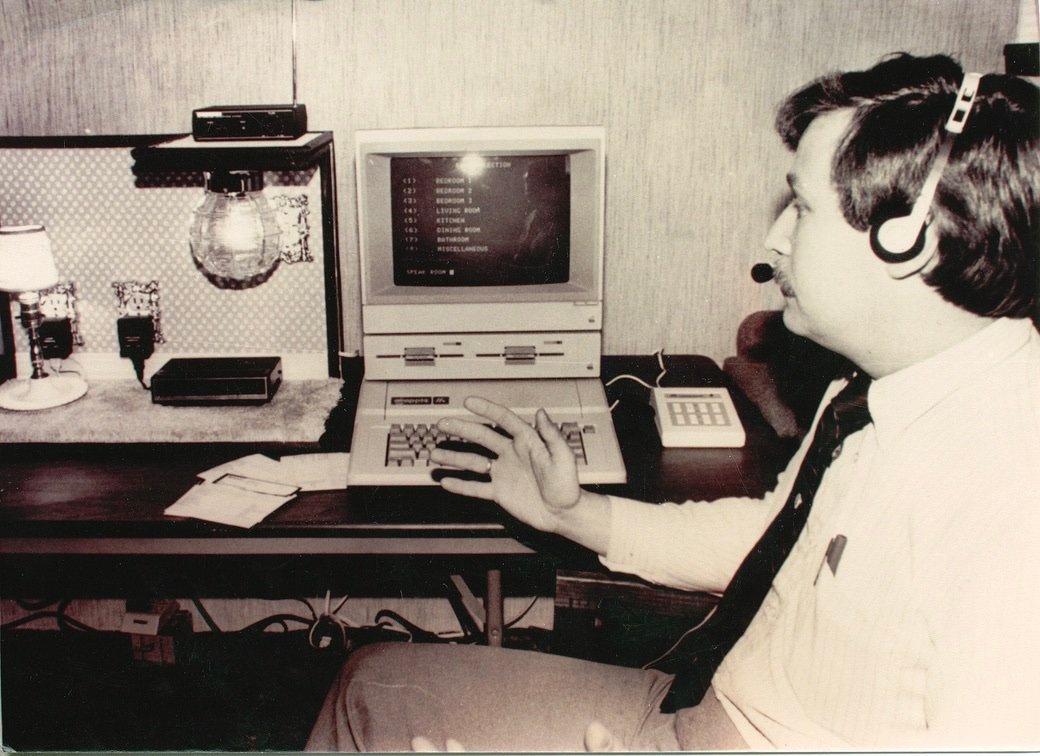
But voice control carried an assumption: that the person could speak clearly. Smithsonian archival material describes a physical therapist repeatedly approaching Safko about a teenage patient using a respirator. He initially resisted because her speech would not suit the recognition system. The request pushed him toward an alternative input device, a modified HeadMouse.
That is the revealing change of mind. The design had to follow the person’s capabilities. For a manager buying technology today, the parallel is uncomfortable and useful: a feature can work exactly as advertised while remaining inaccessible to the person who needs it.
The museum records put complete systems between $3,000 and $13,000, depending on configuration. These were substantial purchases, assembled for individual needs. That history gives Safko’s current innovation teaching a concrete reference point: creativity involved hardware, software, compatibility and money, alongside the original idea.
The conference room becomes the product
The current business packages that experience into presentations, workshops and advisory work. Innovative Thinking sessions use activities such as random association to challenge familiar habits. Executive retreats can run for one or two days. Fusion Marketing training connects traditional marketing, digital channels and social media. Another program explains artificial intelligence, augmented reality, virtual reality and the Internet of Things.
Its audience crosses organizational boundaries. Safko’s published client list includes Honeywell, IBM India, National Bank of Fujairah, University of Malaya and Tourism Malaysia. Those names describe the range of buyers; they do not establish identical engagements or results. The common need is translation: helping people responsible for decisions understand unfamiliar tools and see connections between familiar ones.
“The one on one attention and small groups were the strengths of this event.”Nicholas Ling, RMA Group Malaysia, in a testimonial published by Safko
The proposition sits between a conference keynote and executive education. An event organizer can buy a shared starting point for an audience; a smaller leadership group can spend longer applying the material. Relative to a university course or a large consulting engagement, the format concentrates attention on one practitioner’s examples, exercises and delivery.
What the room costs
Speaking and training are sold by engagement, with books providing a separate paid format. All American Speakers lists estimated live-event fees of $10,000-$20,000 and virtual fees of $5,000-$10,000. These are bureau estimates, not a company quotation. Safko’s own site describes a preliminary consultation covering objectives, stakeholders, format and budget.
For a buyer, the useful distinction is between paying for attention and paying for implementation. A keynote gives colleagues something to discuss. A workshop allows practice. Ongoing consulting can address a particular business problem. Choosing among them should begin with what the team must do differently afterward, and how anyone will notice.
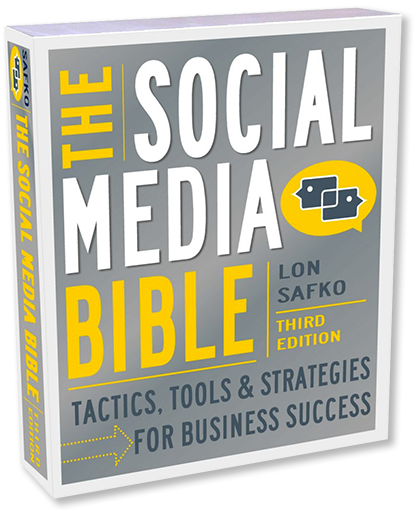
The books help explain the business’s reach beyond a room. Wiley published the third edition of The Social Media Bible in 2012. The Fusion Marketing Bible emphasizes coordination between channels. The lasting question is how marketing activities support each other; individual platform instructions belong to their publishing moment.
Borrow the question before buying the speech
Consider a deliberately simple exercise, adapted from the problems running through Safko’s work. Choose one customer task. List every step required to complete it. Then identify the step that assumes a capability the customer may lack: time, vocabulary, confidence, mobility or access to a particular device. Try changing that step before adding another feature.
This is an editorial exercise, rather than a promised outcome from the company. It is especially relevant when a team has bought capable tools but customers still struggle. It will accomplish little if nobody has permission to change the process, or if the real constraint is staffing, procurement or a broken underlying product.
Safko continues to turn his experience into material. His site’s May 2026 posts introduce books about innovation, teamwork, chatbots and authorship. The direction is consistent with the service business: make expertise available in several formats, from the page to the presentation to a discussion of a client’s problem.
The lamp offers a useful standard for judging all of it. After the ideas, the exercises and the discussion of what comes next, can someone do something they could not do before? For the person in the room, that is a better question than whether the future sounded exciting.