At Withings, the connected-health company, a new feature came with a peculiar companion: hours of copying and pasting. Product manager Romain Dahan had to manage translation keys, prepare reviewer tasks, and ferry information between people. The company could build connected devices. Getting the words around those devices into other languages still involved a spreadsheet.
That is a useful place to meet Lokalise. Translation sounds like a language problem. In a software company, it is also a problem of who has the latest sentence, who can see the screen it belongs on, and who remembers to send the approved version back.
- The job: connect the people and tools that make multilingual products.
- The evidence: Withings reports task management falling from 10 hours to 1.
- The catch: automation needs context, review rules, and a budget for usage.
Ten hours. Then one.
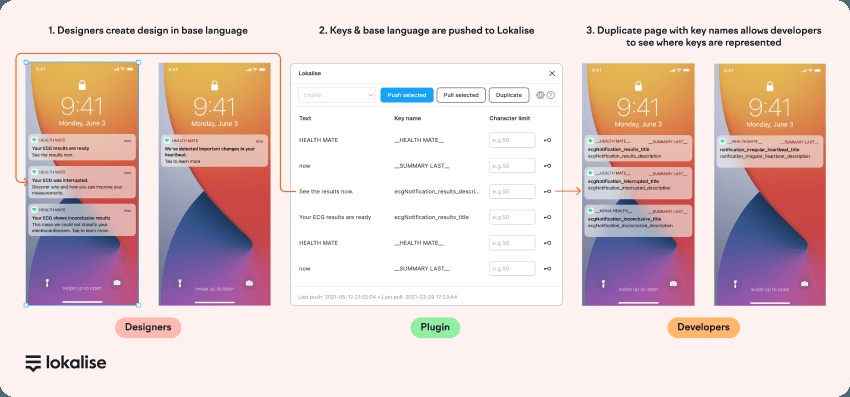
Withings adopted Lokalise in May 2020 and connected it to Figma. Designers could send text, keys, and screenshots into translation while developers worked from a duplicate design page. Linguists could see what the words were doing. Translation entered the design process, before the build.
Customer-reported case study. Overall localization work separately fell from 10 to 5 hours per feature.
The distinction matters. Dahan described a ten-to-one-hour reduction in task management; overall localization work fell from ten hours to five. These measure different activities. The practical lesson is to count coordination separately from translation. Otherwise, the cost of moving words can hide inside the cost of writing them.
The tool that escaped the app
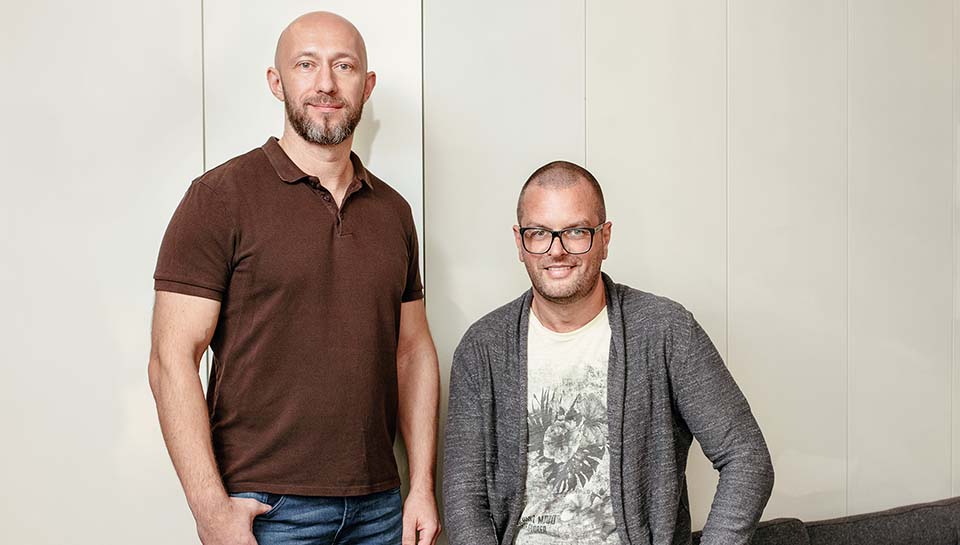
Lokalise began with a different travel problem. Nick Ustinov and Petr Antropov were building Roamer, an app intended to help people avoid roaming charges. According to Lokalise’s founding account, it passed a million users. As customers arrived from different language regions, the founders discovered how much manual effort translation required.
Ustinov, a self-taught developer, built an internal tool. The tool became the business. Launched in 2017, Lokalise took a recurring frustration inside one product and offered the remedy to other teams. Its early proposition was wonderfully mundane: stop organizing localization through files and email.
The founders initially financed the company themselves. A $6 million Series A followed in September 2020, led by Mike Chalfen, with capital300 and angel investors participating. In December 2021, Lokalise announced a $50 million Series B led by CRV, joined by Creandum, Dawn Capital, and existing investors. The company said annual recurring revenue had more than tripled since the earlier round.
Their explanation for accepting investment was capacity: demand was outpacing development, and they wanted experienced people to help the business grow. In October 2023, Sophie Krishnan became CEO; Ustinov and Antropov moved into innovation and strategy roles.
A translation needs an address
Lokalise sells a cloud subscription for managing localization across applications, websites, and content. Its technical workspace, now called Expert, handles software strings, repositories, APIs, and webhooks. Translation memory stores approved work for reuse. Glossaries keep terminology consistent. Screenshots and design integrations supply the context a bare list of sentences cannot.
- 01Capture the contextText + screen + terminology
- 02Translate and reviewReuse approved work; check risk
- 03Return it to the productConnected tools, fewer handoffs
The developer hub offers REST APIs and SDKs; the company’s public GitHub organization includes API clients and actions for exchanging translation files with repositories. That makes localization something teams can wire into development rather than remember at release time.
Its current AI translation system adds glossary, style, and project context, then routes work across language models. Quality scoring helps identify material needing review. This is software around the translation engine: deciding what goes in, how it should sound, and where a person should intervene.
The spreadsheet next door
At photobook company Popsa, engineers already used Lokalise while marketing copied translations through spreadsheets. Marketing operations manager Tom Rees wanted the departments’ translations in one place. He connected Storyblok and Figma, built translation memory, and used task templates to brief Translated, the team’s language-service provider.
“My primary motivation was let's have a tidier process”
Tom Rees, Marketing Operations Manager, Popsa
In Lokalise’s published case study, Popsa reports roughly 75% faster turnaround for its Storyblok-integrated project and approximately 20% lower translation costs. The savings combined better supplier rates with reuse of existing translations. That distinction makes the example useful: the result came from software, procurement, and human linguists working together.
One platform, two kinds of work
Vantage, announced in September 2026 and now live, extends that idea to campaigns, documents, and other long-form content. It shares language assets with Expert but gives nontechnical teams a different workspace. Reviewers can inspect translated content in its rendered layout. The October 16 release added a beta public API for project creation, uploads, and status checks.
Lokalise says more than 3,000 companies use its platform. Its customer stories range from Life360 and Dailymotion to healthcare and ecommerce businesses. Phrase, Crowdin, and Smartling occupy overlapping territory. Lokalise’s particular appeal is the connection between design, development, and content operations; buyers should compare the integrations and review controls their own work requires.
What the convenience costs
At the time of research, annual-billing prices start at $149 per month for Explorer, $379 for Growth, and $1,049 for Advanced; Enterprise requires a quote. Those are subscription prices, with usage allowances and add-ons to consider. Human translation work belongs in the budget too. Vantage shares the team’s subscription and quotas, and requires a current pricing plan.
The approach fits recurring, multilingual work with enough handoffs to justify connecting systems. A one-off document may need a translator more than a platform. A team without approved terminology still has to establish it. Organizations requiring an on-premises installation face a firmer constraint: Lokalise does not offer one.
The company went fully remote in 2020. Its published values include being direct and kind, taking ownership, and building competence. There is a fitting parallel in the product: give people shared context and clear responsibility, then reduce the errands between them. For a team considering Lokalise, the first useful experiment is simple. Follow one sentence from design to release. Count every handoff.