The parking space is empty. The owner still has the keys. In a recovery account published by LoJack, a 2023 Kia Forte disappeared in Redding, California, without broken glass or obvious forced entry. Police eventually found it undamaged at a boat launch. The interesting object in this story is the phone: it can turn an owner’s bewilderment into information someone else can use.
- LoJack connects GPS-equipped cars with drivers, dealers, and police.
- Dealers get inventory tools and a protection product to sell.
- The legacy radio system ended in March 2026. Today’s service uses GPS.
LoJack by Solera occupies the space between knowing where a car is and getting it home. Its product includes installed hardware, consumer software, dealership tools, recovery staff, and a dedicated law enforcement app. A location dot is useful. A location dot that reaches the right officer is considerably more useful.
A policeman’s question
William R. Reagan, a former police commissioner in Medfield, Massachusetts, approached vehicle theft from the recovery side. His invention received a patent in 1979; LoJack’s commercial story dates to 1986. Officer safety mattered alongside the owner’s missing property. The name itself was a small joke: the opposite of hijack.
The original arrangement was physical and specialized. A hidden radio transmitter in the stolen vehicle could be activated after a theft report. Police used tracking equipment to follow its signal. In a January 1986 demonstration described by The Christian Science Monitor, dashboard lights guided a Massachusetts state trooper toward a pretend stolen car. Think warmer, warmer, warmer, with a badge.
That history helps explain the company’s expertise. It had to make equipment useful inside police work, with its reporting procedures and operational constraints. The customer bought protection; another institution performed the recovery. LoJack needed both to participate.
The radio went quiet. The relationship stayed.
The old architecture had a commercial problem before its final shutdown. In its fiscal 2021 filing, CalAmp described a prolonged decline in legacy U.S. recovery-product revenue and slower-than-expected uptake of dealership telematics. Those were concrete signs that the existing business was struggling to make its transition.
Ownership changed around that problem. CalAmp announced its acquisition of LoJack Corporation for roughly $134 million in 2016. In March 2021, Spireon acquired selected assets and liabilities of the North American business for about $8 million upfront, subject to adjustments. These transactions covered different things; treating them as a simple collapse in valuation would be misleading.
Solera added Spireon in 2022. It announced LoJack LE in January 2024, with availability planned for February: a dedicated app giving officers direct real-time tracking access. On March 26, 2026, the legacy radio system was discontinued. LoJack’s notice told agencies there would be no new RF activations and recommended disconnecting old dashboard displays. An old LoJack installation and a current GPS subscription belong to different chapters.
Dedicated police receiver
LoJack LE access
Three customers. One car.
Now follow the vehicle before anybody steals it. On a dealership lot, it is inventory. Someone needs to locate it for a test drive, check its battery, or reconcile an audit. LoJack sells dealers tools for these unglamorous jobs, alongside an aftermarket protection package they can offer at the sale.
After delivery, the consumer app supplies location, trip history, speed and boundary alerts, and maintenance reminders. MyDealer keeps a route back to the selling store. The commercial logic is appealing: the equipment can be useful while the dealership owns the vehicle, then support a paid relationship once the buyer drives away.
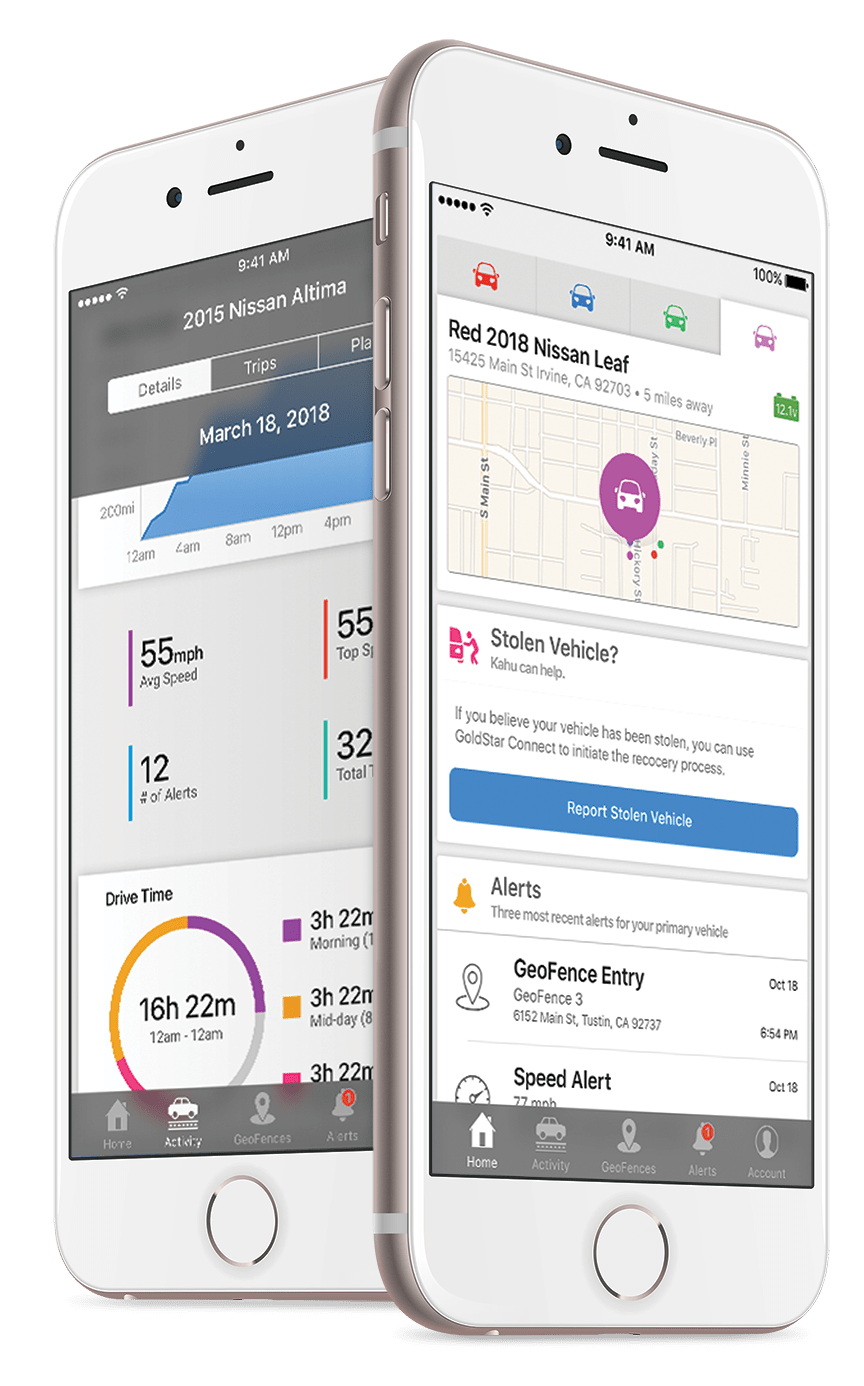
A little less mystery in the driveway. LoJack’s published activity-screen illustration; the current interface may differ.
The third participant gets a different offer. LoJack LE is free for registered law enforcement users. Solera describes training, experienced liaisons, and a round-the-clock intake command center supporting the workflow. Removing that access fee makes sense: the paying customer needs police participation for the service to deliver its central promise.
“Vehicle recovery is time sensitive”Ami Tomlin, customer testimonial published by LoJack
The numbers need their labels
LoJack’s August 2026 marketing reports a 98 percent recovery rate and an average recovery time of 26 minutes. Those are company-reported results. They describe the company’s stated experience, rather than a guaranteed outcome for the next stolen vehicle. Recovery still depends on activation, local conditions, and police response.
LoJack marketing, August 2026. Company-reported figures; individual outcomes vary.
The same care belongs on the price tag. Initial packages depend on the dealer and contract. The official renewal storefront lists service from $129.99 and offers several terms. Its consequential clause says renewing the service does not extend the original Theft Benefit Warranty. App access and a reimbursement promise have different expiration rules.
Buyers should therefore compare the installed package, service duration, renewal cost, and benefit terms separately. A headline promising up to $10,000 after an unrecovered theft is subject to conditions. It is a reason to read the agreement, not a substitute for reading it.
The network is the product
LoJack competes in a crowded field of vehicle-location services. RecovR, for example, also combines dealer lot management, consumer tracking, and police coordination. LoJack’s pitch rests on its dedicated law enforcement workflow, recovery personnel, dealer distribution, and place within Solera’s broader dealership software business. Police cooperation alone is not an exclusive feature.
Hendrick Automotive Group provides a named example of that dealer connection. A related Hendrick Motorsports sponsorship was extended through 2028 in April 2026. Meanwhile, Solera’s dealer materials place LoJack alongside customer-management and service tools. The direction is clear: make vehicle protection part of the continuing retail relationship.
There is a useful idea here for other businesses to copy. Identify everyone required to produce the outcome, then give each a reason to participate. The limits follow the same logic. Hardware without active service, location without usable signals, or an alert without an effective response leaves a gap. The phone can tell a story. Getting the car back still takes people.