The failure was easy to miss if you had a desk. You arrived in the morning, opened a laptop, passed through the authentication gates, and found the company intranet waiting. But more than half the employees at one health-and-wellness company did not work that way. They stood on production floors. They moved among machines. Their intranet, built for a seated person on a desktop computer, was less a workplace than a locked room.
This is the kind of problem Local Wisdom has arranged itself to notice. The New Jersey firm calls itself a digital communications agency, which sounds broad enough to include almost anything with a screen. Its sharper proposition is more interesting: it becomes the extra pair of hands, eyes, and judgment that an internal communications team rarely has. It audits the mess, interviews users, writes and edits the content, designs the experience, builds the integrations, moves the pages, and stays around to manage what happens next.
In the health-and-wellness case, “the mess” meant roughly 5,000 pages. Staffbase, the employee-communications platform, recommended Local Wisdom. The assignment began as content migration and widened into content production, user experience, and custom integration. Then an early template delay threatened to push the schedule back about four weeks. The team changed the sequence: move the news first, do the work that did not depend on the templates, and keep the launch date alive. Eight months later, the new intranet went live on schedule.
The basement had four chairs
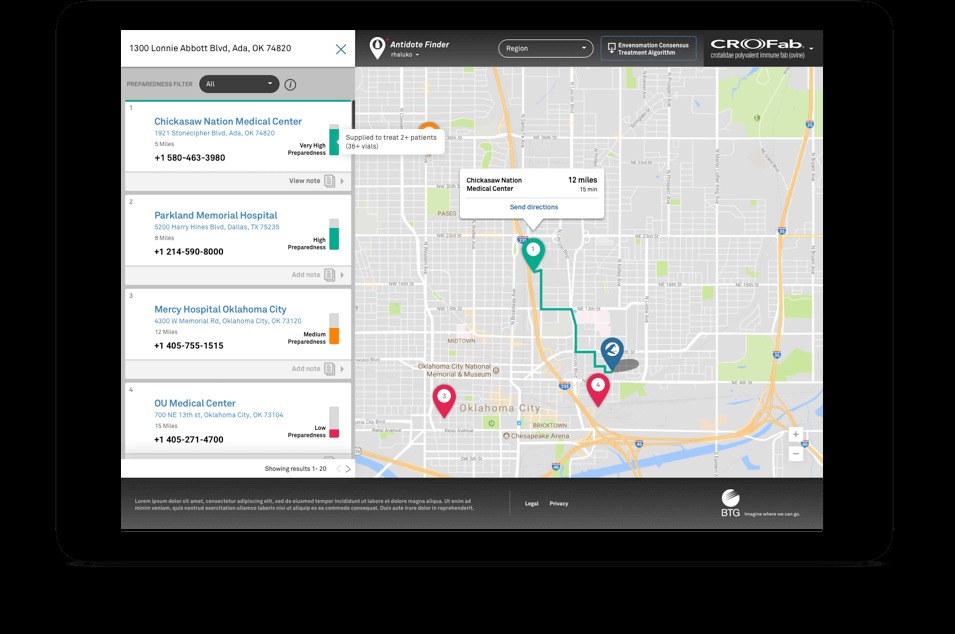
Local Wisdom began in 1999 with four Rutgers computer scientists in a basement. They were trying to bridge business, design, and technology, three disciplines that were usually seated at different tables and rewarded for speaking different languages. The company made websites, software, databases, and mobile products. It designed a one-screen antidote finder for BTG that organized preparedness data from 2,504 hospitals across 45 states for five poison control centers. It built microsites, campaigns, kiosks, email programs, and the rest of the digital agency catalogue.
The more revealing change was not a new service. It was a change in emphasis. Local Wisdom gradually aimed its combined skills at the people inside large organizations: the communications leader juggling strategy and newsletters, the HR team launching a program, the platform owner staring at several thousand stale pages, and the employee wondering why the search box cannot find the policy everyone swears exists.
“We signed with Local Wisdom because we had a very specific need: content migration. We evolved very quickly to content production, UX design, custom integrations. And it didn’t stop there.”A client director of communications
That sentence contains the business model. A client may enter through a bounded, unpleasant job - migration is the corporate equivalent of moving apartments without being allowed to throw anything away - and discover that the job touches everything else. Content has owners, taxonomies, permissions, audiences, legal obligations, visual patterns, and expiration dates. A migration becomes a redesign. A redesign reveals a governance problem. A governance problem produces an operating model. The agency is paid for custom projects and ongoing support, often behaving less like a vendor than an elastic department.
The work behind the homepage
- Listen and audit
- Plan the system
- Write and migrate
- Build and launch
- Measure and manage
The first thing to break was a spreadsheet
There is another origin story hiding inside the first one. When Local Wisdom had eight people, managers forecast work with paper and pencil. At 20, they moved to spreadsheets. More managers meant Google Sheets. Then came broken formulas, synchronization trouble, and executive reports that were out of date by the time someone consolidated them. The available systems seemed large, rigid, and expensive, so the team gave up for a while.
What changed their mind was Salesforce. Once the agency adopted it as a sales system, Pinaki Kathiari saw a flexible database on which workload forecasting could be built. Local Wisdom joined with Salesforce engineer Bill Kuehler, and an internal customization became a minimum viable product. In 2013, Resource Hero reached AppExchange. The current product forecasts workload, tracks time, matches skills to assignments, and reports on utilization. Its public price is $15 per user each month, with nonprofit discounts. The company says it now serves more than 3,500 users, from small businesses to Fortune-scale organizations.
A template delay threatened four weeks. The team moved independent work forward first, migrating news while the blocked pieces caught up.
The lesson is not that every agency should make software. It is that the best product brief can be a recurring irritation with a visible bill attached. Paper stopped scaling. Spreadsheets failed under collaboration. Market tools failed the test of fit. Only then did the custom build make sense. The sequence matters because it kept the product anchored to work the founders actually understood.
Software agnostic, consequence obsessed
The digital-workplace market is crowded with vendors eager to explain that their platform is the answer. Local Wisdom occupies a useful position beside them. It has experience with SharePoint, Staffbase, Drupal, Salesforce, and other systems, but sells itself as platform agnostic. That means the product is not the conclusion. The employee experience is.
This distinction explains the company’s competitive position. A large consultancy can redesign an organization. A specialist implementer can configure the platform. A creative agency can make the campaign attractive. An internal team knows the politics and the audience. Local Wisdom tries to connect those jobs at a size where the people making the recommendation may also help execute it. Its public capability list is almost comically practical: newsletters, intranets, copywriting, analytics, mobile apps, banners, social posts, websites. The list lacks theater. That is the point.
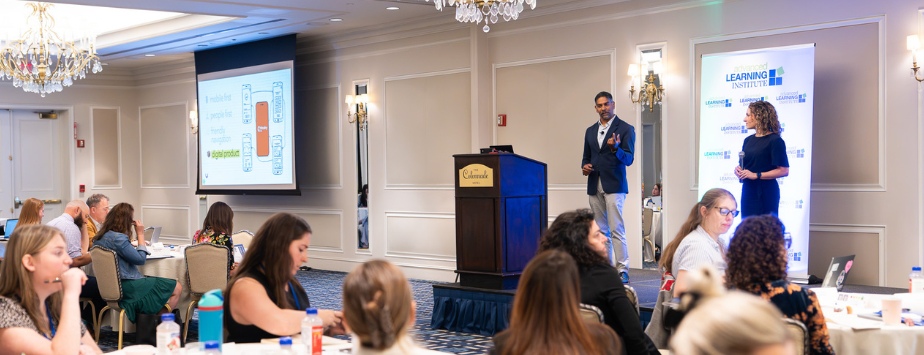
The firm’s culture fits the work. Its six published values include speaking with heart, acting against standing still, learning by doing, enabling others, and sharing wisdom. Its team page can be filtered by books, cinema, food, pets, travel, hobbies, and children, as if the org chart had admitted that a person remains a person after logging into Teams. Michael Alfaro, co-founder and chief technology officer, condenses the philosophy neatly: “It’s nice to be important, but it’s more important to be nice.”
What a communications team can steal
The transferable part of Local Wisdom is not a tool. It is a way of arranging the work.
- Begin with access. Before debating colors or navigation, ask who cannot get in, on which device, during what kind of working day.
- Map dependencies. When one input is late, move the work that does not need it. A schedule is a sequence, not a verdict.
- Treat migration as editorial work. Moving every old page preserves every old problem. Decide what deserves to survive.
- Design ownership with the interface. A page without a responsible owner is future clutter, however elegant it looks at launch.
- Keep launch day in the middle. Search behavior, analytics, feedback, governance, and new content determine whether the platform becomes a habit.
This approach has conditions. It fits organizations with meaningful content volume, multiple stakeholders, and a real need for cross-disciplinary execution. It fits teams whose bottleneck is bandwidth as much as insight. It is less sensible for a tiny company that can keep its knowledge in a handful of well-owned documents, or for a client seeking a cheap, fixed template with no appetite for research, governance, or continued care. Embedded collaboration also requires access to decision-makers. If every answer takes three committees and a quarter, elasticity turns into waiting.
It fits when...
Content is sprawling, users work in different contexts, the comms team is underwater, and the platform must connect strategy to daily production.
It strains when...
The job is only cosmetic, ownership is withheld, approvals cannot move, or the organization refuses to retire obsolete content.
Twenty-five years is a long time in digital services. The fashionable technologies of 1999 are museum pieces. Local Wisdom survived by attaching itself to a problem that technology keeps recreating: organizations accumulate more tools, more messages, and more content than their people can sensibly absorb. Someone still has to decide what belongs, make it findable, and do the uncelebrated production work.
That is the office nobody walks into. It has no lobby, no elevator, and no smell of burnt coffee. Yet every link, permission, search result, and sentence tells an employee whether the company has imagined the day they are actually having. Local Wisdom’s argument is quiet but difficult to dismiss: the digital workplace becomes human one practical decision at a time.
Keep wandering
Explore the company, the product that grew from its own staffing problem, and recent conversations about internal communication.