Lifespark sells a deceptively simple promise to older adults: one team should know who you are before the next health problem arrives. Behind that promise sits a complicated Minnesota company spanning private-pay home care, Medicare-certified home health, geriatric primary care, urgent response, hospice, senior-living management, and programs built around strength, purpose, and belonging. It is less a single provider than an attempt to make several providers behave like one.
That distinction matters. A senior can leave a hospital with competent instructions and still fail at home because the new prescription conflicts with an old one, a ride never arrives, the refrigerator is bare, or a tired daughter assumes someone else is checking in. Each organization may have completed its task. The person still lands back in the emergency room. Lifespark calls this the “sick-care roller coaster,” a phrase with enough carnival cheer to make the underlying problem feel even grimmer.
Founder and CEO Joel Theisen saw the pattern as a front-line nurse. In 2004, he started what was then AgeWell Home Care. The change of mind was not a Silicon Valley epiphany. It was cumulative irritation: good medical work could be undone because care stopped at the edge of a shift, a building, or a reimbursement code. The first thing that failed was continuity.
“We were only focusing on the medical problems. We weren't stepping back and asking the why.”Joel Theisen, founder and CEO
One customer, seven doors
Today an older adult or family can enter Lifespark through several doors. Community Home Care provides caregiving and nursing oversight at home. Home Health supplies clinician-ordered skilled nursing and therapy. Lifespark Medical Group brings geriatric primary care, medication management, assessments, urgent response, and round-the-clock triage into homes and senior communities. Hospice supports late life. Senior Living Management operates communities. SPARK Growth and Wellness works on the less billable but highly consequential territory of movement, identity, purpose, and friends.
The continuity stack
The connective tissue is Life Management: a recognizable point person, often a nurse, who learns the household and coordinates choices. Lifespark also describes a comprehensive “life record” that combines medical information, service interactions, claims history, and social factors. The ambition is larger than interoperability. An electronic medical record knows the potassium result. A life record should also know that the patient stopped driving, hates morning appointments, and lights up when talking about fishing.
The bill has more than one payer
There is no single Lifespark price because there is no single Lifespark product. The initial consultation is free. Community Home Care is private pay, with a quote shaped by the intensity and schedule of help. Skilled home health, primary care, and hospice may be reimbursed through Medicare or health plans when eligibility rules are met. Some members in partner Medicare arrangements can receive Life Management at no added cost. Senior-housing owners, meanwhile, can hire Lifespark to manage operations and layer in clinical and wellness services.
That mixture is a feature of the strategy. The consumer buys help. Medicare pays for covered clinical work. A health plan can benefit when coordinated members avoid expensive episodes. A property owner can benefit when residents stay healthier, remain longer, and recommend the community. Lifespark's wager is that the savings and loyalty created by continuity can support the people and technology required to deliver it.
The utilization figures came from a Lifespark and UCare comparison of engaged members. They are useful directional evidence, not a randomized independent trial.
What did the build cost? Publicly announced equity rounds total $36.1 million: a $16.1 million Series A led by Virgo Investment Group in 2020, followed by a $20 million Series B in 2021 with Virgo and Minnesota health plan UCare. The money was directed toward growth, strategic partnerships, and the technology platform. Lifespark also acquired Tealwood Senior Living in 2021, though the purchase price was not disclosed. That deal moved the company closer to residents for longer portions of their lives.
More than a building with a nurse
Lifespark's 2026 COMPLETE Senior Living model packages four components: property management; SPARK Growth and Wellness, led by geriatrician Bill Thomas; Lifespark Medical Group; and Lifespark Hospice. The company said it managed more than 50 communities across Minnesota and Wisconsin when it announced the model, with plans to grow substantially through 2027.
This is where Lifespark separates itself from a conventional home-care agency or senior-living operator. Home-care agencies sell trustworthy hours in the house. Medical groups treat disease. Operators run buildings. Hospices manage a difficult final chapter. Lifespark is trying to keep all those chapters inside one narrative, with fewer cold starts for the resident and family.
Its closest alternatives therefore change depending on which door a family opens. For companionship or personal care, the comparison may be Home Instead or Visiting Angels. For home health and hospice, it may be a large clinical provider. For housing, it may be Brookdale, Ebenezer, or a local operator. For value-based geriatric primary care, the comparison shifts again to clinic networks built around older Medicare patients. Lifespark sits in the overlap, competing with each category while also trying to supply the connective layer among them.
That market position gives the company unusual expertise. It sees what happens before a resident moves, during the move, after a medication change, when a family caregiver gets overwhelmed, and when goals shift near the end of life. A specialist may know one episode more deeply. Lifespark's advantage, when the model works, is longitudinal context. It can notice patterns that disappear when every provider sees a different slice.
There is a second customer hiding behind the older adult: the senior-housing owner. Lifespark's owner pitch uses occupancy, length of stay, resident experience, and operating income. Better care is valuable to an owner when it also produces a community people choose, recommend, and remain in. This makes COMPLETE Senior Living both a healthcare product and a management product. The resident experiences fewer seams; the owner buys a differentiated operating system.
“Community as the ultimate amenity.”Joel Theisen on COMPLETE Senior Living
The phrase reveals the commercial logic as neatly as the care philosophy. Good programming can make life enjoyable. Strong relationships can surface health changes earlier. On-site medical response can avoid a disruptive trip. Fewer disruptions may support longer stays and steadier occupancy. Humanity and unit economics do not have to be enemies here, but they do have to be measured honestly.
What builders can copy
The wrong takeaway is “buy every adjacent company.” Lifespark took more than 20 years to assemble this range, and it used partnerships before ownership in several places. The portable lesson is to map where a customer loses context. Then design accountability across that boundary.
The stealable playbook
- Give the customer one human name. A familiar coordinator is easier to trust than a clever portal.
- Store goals beside problems. “Attend a granddaughter's wedding” can organize decisions better than another diagnosis code.
- Treat handoffs as a product surface. Discharge, medication changes, family updates, and late-life conversations need owners.
- Align the party that pays with the party that saves. Avoided hospital use matters financially only when contracts recognize it.
- Build density before geography. A coordinated local network is more useful than a thin national footprint.
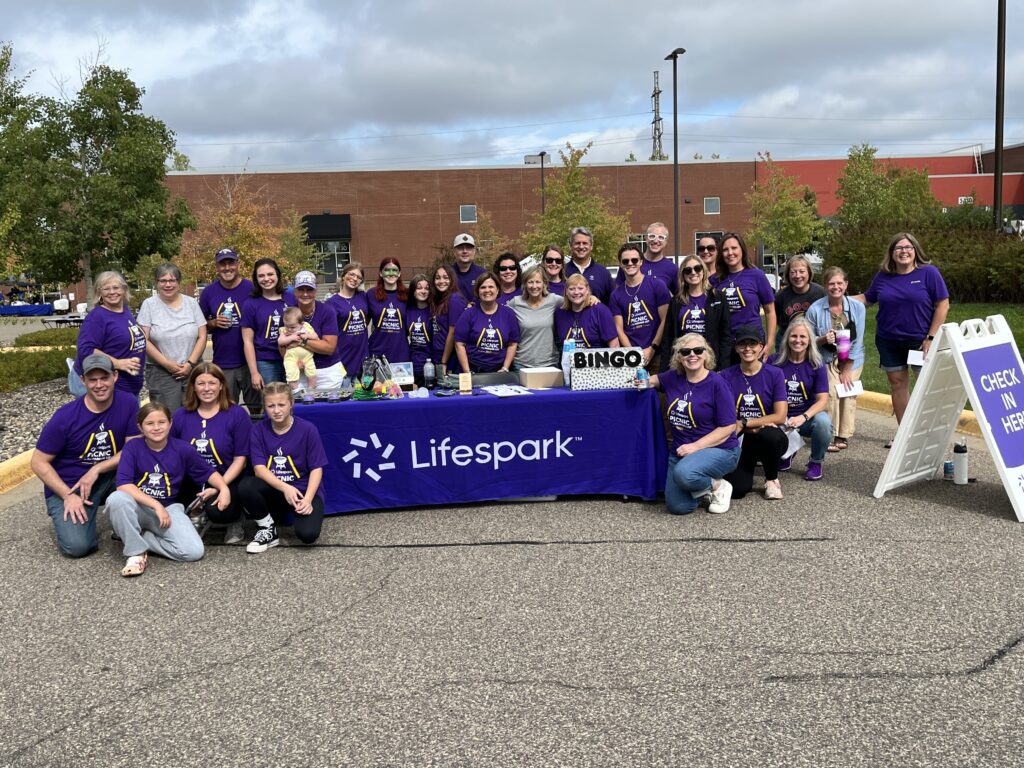
The culture is part of that system. Lifespark talks openly about purpose, transparency, employee ownership, and “failing forward.” Its events are unusually visible: parking-lot picnics, music-video contests, cheer competitions, robot soccer, and accessible summer camp. The playfulness can sound like branding until one remembers the product problem. Social connection is not decoration for a person whose health worsens in isolation.
The company says it earned a USA Today Top Workplaces award for a fifth straight year in 2025. Awards cannot settle whether staffing is sufficient on a rainy Tuesday night. They do suggest Lifespark understands that an integrated model is limited by the willingness of caregivers, nurses, clinicians, operators, and coordinators to share responsibility.
Where the model breaks
Complete care is an appealing phrase. It is also a warning label. Every added service introduces licenses, scheduling, reimbursement rules, workforce shortages, and another system that must exchange data. Vertical integration can reduce fragmentation for a resident while creating operational complexity behind the scenes.
The model is least likely to work in a market with scattered customers, incompatible payors, little data sharing, and no dependable clinical workforce. It can also become paternalistic if “whole person” turns into an excuse to make choices for someone rather than with them. Lifespark's language of choice and independence is therefore more than marketing. It is a design constraint.
The next test is scale. Minnesota offers long relationships among a health plan, regional systems, community operators, and a company rooted there since 2004. Taking COMPLETE Senior Living elsewhere means rebuilding those relationships while preserving the local knowledge that makes coordination useful. The company has proved it can assemble the pieces. It now has to show that the seams remain quiet when the map gets bigger.