Consider the space between two exercise machines. Nobody puts it on a specification sheet. Yet that gap determines whether a member can move comfortably, whether a trainer can help, whether the room feels inviting or like an obstacle course. For Life Fitness / Hammer Strength, the business increasingly includes that space. The machine is the visible object. The room is the proposition.
- Life Fitness supplies cardio and a broad fitness range; Hammer Strength centers on strength and athletic performance.
- The customer buys equipment, but also needs layout planning, service, and usable operating data.
- The useful lesson: test what people actually do before adding another feature.
01 / First, get someone on the bike
The origin contains an awkward interval between invention and acceptance. Keene P. Dimick developed the electronic Lifecycle bike in 1968. Augie Nieto and Ray Wilson established the company around it in 1977. A clever exercise machine still needed somewhere to prove itself.
An industry history recounts slow early sales and a practical response: Wilson and Nieto sent free bikes to 50 leading health-club operators. A demonstration became a placement. The lesson travels well beyond fitness: when a product requires a new habit, let the buyer observe that habit before asking for a commitment.
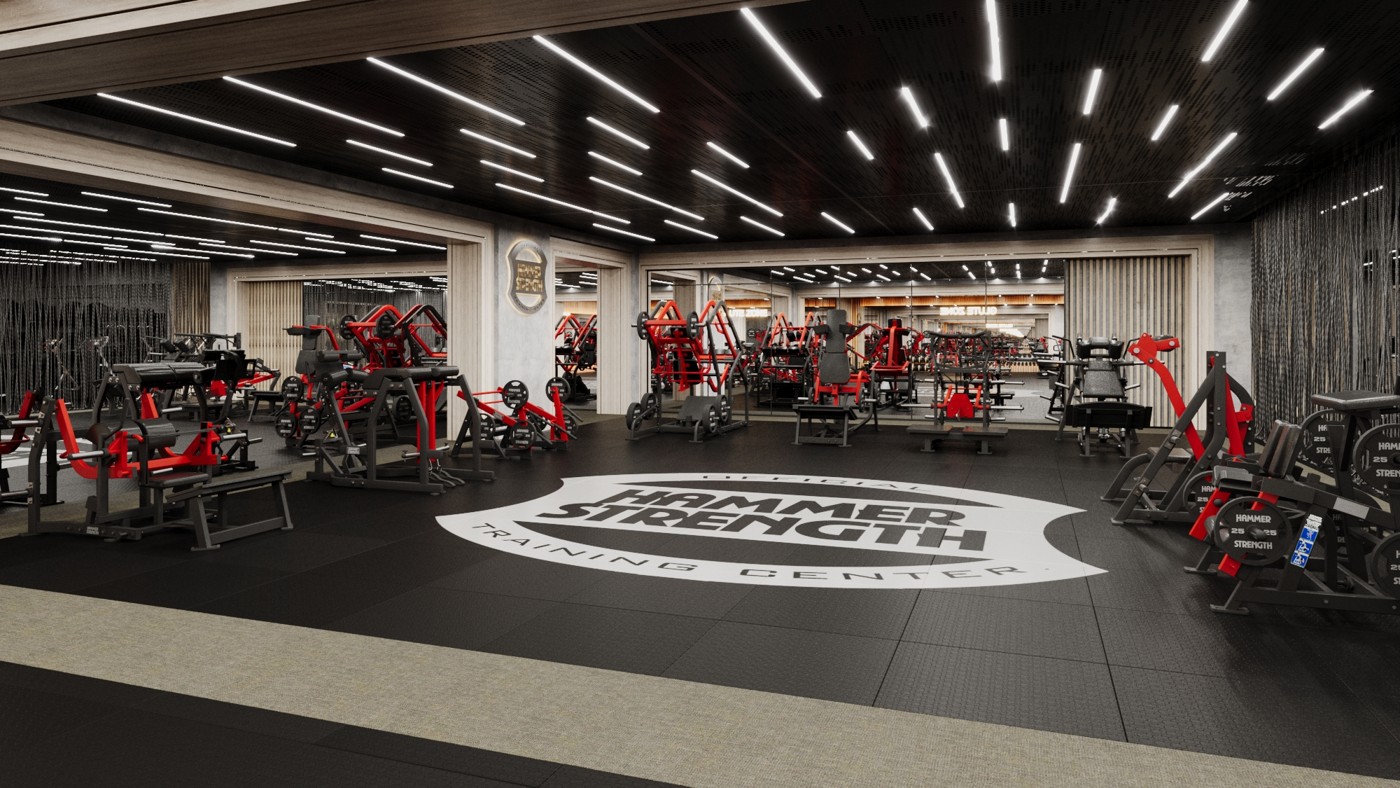
Hammer Strength approached a different problem. Gary Jones built its reputation around the relationship between a moving body and a loaded machine. Introduced in 1989, the brand made plate-loaded equipment central to its identity. Its Iso-Lateral designs allow limbs to work independently. The interest is in the path of the repetition, rather than simply how imposing the frame looks.
02 / Two names. One purchasing decision.
Life Fitness acquired Hammer Strength in 1997, the same year Brunswick acquired Life Fitness. That combination matters because a gym rarely needs only one category of equipment. An operator must accommodate the treadmill regular, the first-time lifter, and the athlete who arrives with a written program.
The catalog spans treadmills, bikes, ellipticals, stair climbers, rowers, cable stations, selectorized machines, racks, benches, and free weights. Customers include health clubs, colleges, sports organizations, hotels, housing developments, and home buyers. The business sells equipment through commercial relationships, distributors, and online shops, with parts and service supporting the installed machines.
Its competitive pitch is breadth joined to distinct brand identities. Life Fitness can anchor the cardio conversation; Hammer Strength gives the weight room its own vocabulary. Alternatives include Technogym, Matrix, and Precor. A buyer still has to compare the actual configuration, local service, and intended use. A recognizable badge cannot make those decisions.
Approximate cash purchase price agreed by KPS for Brunswick’s fitness business, including Life Fitness. An acquisition price for that business at that time.
That 2019 transaction moved the operation into private-equity ownership. It also supplies a useful distinction when discussing cost: buying the company, equipping a club, and purchasing a home treadmill are three different sums. One cannot sensibly stand in for another.
03 / The screen has to earn its place
Life Fitness has already tried making exercise more entertaining. In the 1990s, its Exertainment system paired a bike with Super Nintendo and a television monitor. The club version disappointed. The company’s explanation was wonderfully plain: a video game did not get somebody onto a machine they had no desire to use.
Today’s digital offer has a more operational side. Facility Connect is free software for managing compatible equipment. It provides usage information, remote software updates, and configuration tools. For an operator, that creates a way to examine the equipment fleet alongside the workout itself.
Observe use02
Decide03
Act
There is a purchasing catch worth understanding before signing: compatibility varies. The support documentation lists supported console generations and makes clear that features differ between them. Older Discover SE/SI and several other consoles are unsupported. A room full of machines does not automatically become one manageable network.
Symbio shows the product-facing version of the same ambition. Its cardio family includes a runner, upright cycle, recumbent cycle, and incline elliptical. The Runner’s deck offers five firmness settings, letting users alter the surface beneath their feet. This is personalization expressed through something a runner can feel.
The US consumer shop listed the Symbio Runner Home Edition from $21,199 when researched in October 2026. That is a specific retail example, with its own configuration and terms. Commercial projects need their own quote. For a lightly used room, the relevant question is whether those features justify the investment.
04 / Bring the lab back to the floor
In January 2026, the company opened its Nieto-Jones Innovation Center in Schaumburg. Mechanical, electrical, software, quality, and reliability teams share a development hub. At Harper College, a Performance Insights Lab adds faculty, students, and everyday equipment use to the feedback process.
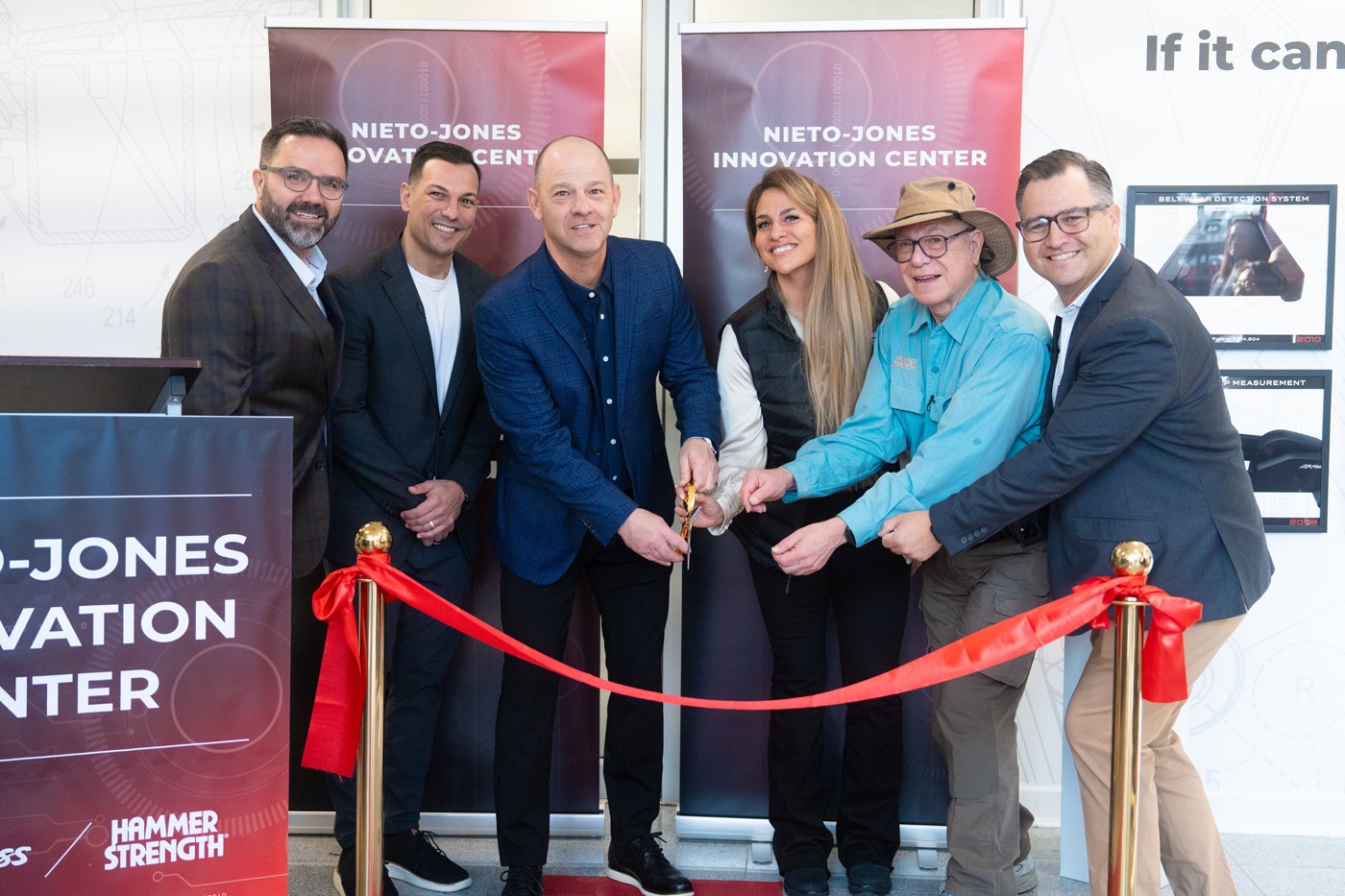
That arrangement makes the expertise concrete: biomechanics informs movement; engineering turns the design into hardware; reliability testing asks what repeated use will do to it. The transferable idea is to keep those judgments connected. A prototype can satisfy its designers and still reveal new problems when people use it.
“Without question, our first priority was our culture and our people.”Jim Pisani, CEO / August 2026
05 / The room keeps changing
The 2026 partnerships extend the room again. Merrithew brings US customers access to Pilates equipment and studio support. Les Mills supplies cycling content while Life Fitness becomes its official bike partner for cycling programs. Each adds something an equipment frame alone cannot deliver.
Atmos takes a different route: compact cardio for selected hospitality and residential settings, with simpler choices for smaller fitness rooms. The implication for buyers is practical. Start with the people, the space, and the staff available to maintain it. Then choose the equipment. The gap between the machines belongs in the brief.