Consider the peculiar optimism of an empty gym. Someone has bought the bikes, arranged the weights and installed the mirrors. Everything required for exercise is present. The exercise itself remains a matter of negotiation. A hotel guest walks through the door, surveys the machinery and must decide what to do next. The equipment has made its entrance. The instruction has yet to arrive.
Echelon has built a business around that interval. It sells exercise bikes, treadmills, rowers and strength equipment, then supplies the classes and software that tell people what to do with them. Its commercial operation takes the proposition into health clubs, hotels and shared fitness facilities. The room already exists. Echelon would like to give it a running conversation.
- The original proposition: connected workouts at accessible price points.
- The commercial twist: a membership attached to a machine can serve successive guests.
- The newer business: branded streaming and personalized workout software for gym operators.
- The buyer’s homework: add subscriptions, check integrations and try the instruction before choosing the screen.
The salesman who wanted a reason to return
Founder Lou Lentine came to fitness with a consumer-products résumé that included spin mops and laser Christmas lights. Television shopping had taught him to explain a product quickly. Fitness introduced a more demanding sales pitch: persuade the buyer again tomorrow.
In a company-published interview, Lentine described frustration with copycats and the cost of defending patents. A doctor’s advice to improve his own health supplied another nudge. Streaming instruction offered something harder to reproduce than an object: a relationship with people who kept coming back. That is the useful origin story here. An inventor started thinking about what happened after the invention left the box.
Echelon developed connected hardware and an app offering live and recorded workouts. By December 2020, it had completed a $65 million financing led by Goldman Sachs Growth, with North Castle Partners participating. Its retail channels included Walmart, Dick’s Sporting Goods, Costco and Amazon. Distribution gave the proposition several front doors.

The bill keeps pedalling
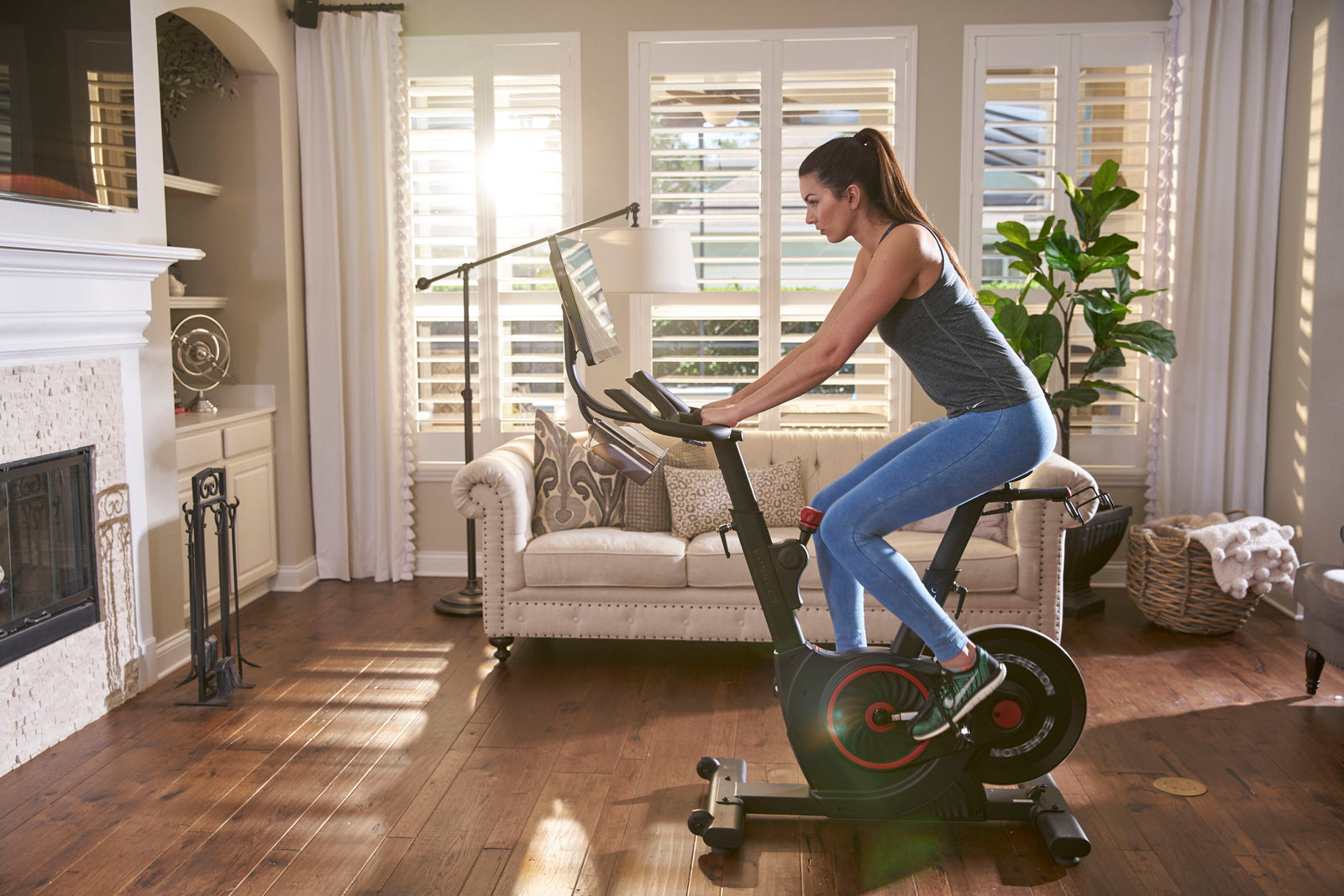
The commercial EX-Pro makes the product concrete. Designed for heavy use, it has quick-adjust seating and handlebars, dual-sided SPD pedals and a 24-inch touchscreen that flips for off-bike exercise. A connected bike can host cycling instruction and then become a screen for another kind of workout. The machine’s footprint stays put; its job description expands.
Strength+ approaches the same idea from the weights corner. The freestanding system uses digital resistance and folds into a full-length mirror. Echelon says it requires no wall mounting or professional installation. For a home buyer, that addresses a mundane obstacle that glossy fitness advertisements tend to skip: where the thing will live after the demonstration ends.
There is, however, a second price tag. At the time of writing, US Premier membership is listed at $39.99 monthly or $399.99 annually. It covers equipment and off-equipment classes and supports up to five member profiles. FitPass, listed at $11.99 monthly, covers off-equipment workouts. A cheaper class plan does not automatically include the classes for your bike.
$79.89 less with annual billing. Equipment, taxes and other applicable charges are separate. Prices checked October 1, 2026.
For buyers, the useful comparison is the machine plus the service over the period they expect to own it. For Echelon, those recurring payments support the ongoing product: instructors, recorded sessions and new reasons to log in. The content bill has to keep earning its place in the household budget.
A bike with somebody else’s name
In September 2020, Echelon’s roughly $500 “Prime Bike” briefly appeared to signal an Amazon fitness partnership. Amazon said there was no formal partnership, stopped sales and sought changes to the branding. A bargain bike had acquired a very expensive adjective.
Lentine subsequently told Yahoo Finance that Amazon’s buying department had agreed to the name and that correspondence supported his account. The two positions should remain distinct: Echelon described a buyer relationship; Amazon publicly rejected the claimed formal connection. The lesson is portable. Being stocked by a retailer does not settle who may speak for its brand.
Another pressure arrived behind the pandemic boom. Lentine’s later account described excess inventory and rising freight and product costs despite strong sales. In July 2022, MidCap Financial announced a senior secured credit facility to provide working capital for growth and expansion. Selling more equipment and funding the equipment are separate exercises.
From a machine to the whole room
A household bike and a hotel bike may look similar, but their customers behave differently. One serves familiar users. The other meets strangers every day. Echelon’s commercial subscription puts one membership on each equipment unit, giving successive guests access to its workout content. Operators buy a shared amenity rather than asking every visitor to arrive with a subscription.
Echelon’s commercial pitch spans health clubs, hospitality, corporate facilities, education and multifamily housing. Trade coverage has named Workout Anytime, Anytime Fitness, Crunch Fitness and The Bay Club among its partners. Its work with Arch Amenities Group also brings equipment supply into a conversation about layout, strength training and recovery space.
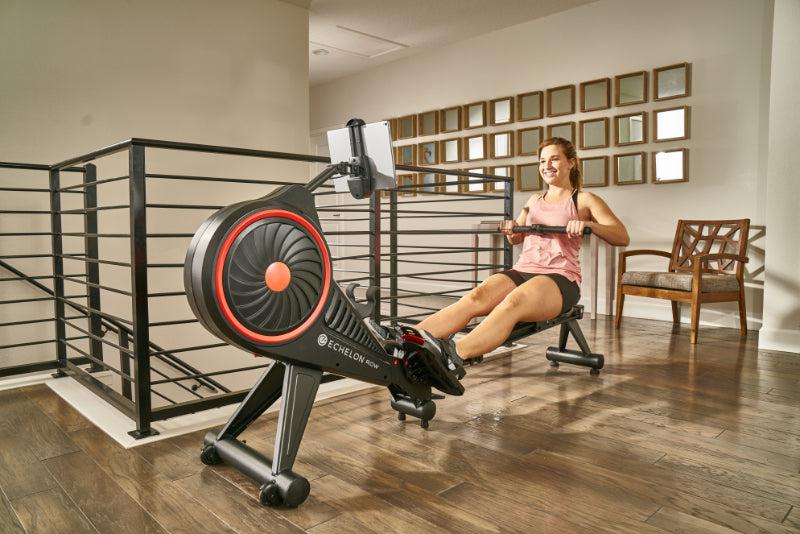
The expansion continued in March 2026 with a US partnership with Primal. The arrangement puts Primal strength equipment alongside Echelon’s connected cardio, recovery and digital offerings. This moves Echelon into a broader purchasing decision: how to equip a training environment, rather than which screen to attach to a bike.
Your gym, on somebody else’s software
The July 2025 acquisition of FORTË, renamed Elevate by Echelon, supplied another route into the facility. FORTË enabled gyms and studios to deliver branded live and on-demand classes. At the acquisition announcement, it reported more than 457,000 users across 39 countries. Those figures describe the acquired platform, not Echelon’s overall membership.
For an operator, branded streaming changes the relationship. The gym can keep its identity and take its instruction beyond the building. Echelon provides the machinery behind the broadcast. A supplier can therefore sell a digital service to a business whose members never touch an Echelon bike.
Workout Builder AI, announced in August 2026, tackles the next decision: what should this particular person do today? It generates adaptive seven-day strength and recovery programs based on goals, experience, readiness, time and equipment. At participating facilities, it can account for equipment locations. A program that knows where the equipment lives has a practical advantage over one that assumes an imaginary gym.
Operators can deploy the software under their own branding or integrate it into an existing app. These are product capabilities, rather than proof of better retention or improved health. The sensible pilot is measurable: do members open the plan, complete sessions and return?
A screen with conditions
Echelon competes with Peloton and iFIT in the home connected-workout market, and with established suppliers such as Life Fitness and Technogym on the commercial floor. Its pitch joins accessible connected hardware with content and, increasingly, operator software. Buyers can compare each part separately instead of assuming one brand must win every category.
Compatibility deserves its own examination. In July 2025, Echelon announced firmware security measures including jailbreak detection, certificate revocation and restrictions on certain features on compromised devices. It also announced an authorized partnership program. That creates a trade-off for people who want to connect their equipment to unapproved third-party applications.
Echelon support describes unsubscribed “Freestyle” use with basic metrics, but says workout history is not stored and app and Bluetooth connections are needed for resistance to register. Anyone expecting an entirely independent screen experience should check the specific model before buying. An internet connection and a willing subscription customer are part of this proposition.
Design for Tuesday
The transferable idea is surprisingly ordinary: sell the next use as carefully as the first purchase. A hotel can trial connected instruction on a few units. A gym can test branded streaming with existing members. A home buyer can sample the teaching and calculate a year of fees before committing floor space.
“Staying on course but not being afraid to pivot is the key to success.”Lou Lentine / company-published interview, 2023
That approach is less useful where users prefer unconnected training, subscriptions are unwelcome or the facility cannot maintain the equipment and network. A bigger content library cannot fix every operational problem. Echelon’s interesting wager is that enough people need help with the decision after they enter the room. Tuesday, as ever, will be the judge.