A treadmill has a peculiar ambition: to take you nowhere, reliably. Mark Watterson has spent much of his career complicating that arrangement. With iFIT, a machine in a spare room can follow a route through Egypt or a trail in Utah, its incline changing with the landscape on the screen. The runner stays put. The equipment supplies some of the geography.
Watterson came to this business through purchasing. In 2008, he joined the company then known as ICON, working with overseas suppliers and buying electronics. He spoke Mandarin Chinese. He liked software. He had also played college football. Those interests gave him several ways into an enterprise that needed to make steel, circuitry and filmed instruction cooperate.
Today he is CEO of iFIT Commercial, responsible for commercial partnerships, products and service, including Freemotion. His career has followed the product from components to subscriptions to the gym floor. It is an unusually practical route into a business whose sales pitch allows customers to visit another continent without finding their passport.
A receiver on a losing team
Before the screens and subscriptions, there was Mountain Crest High School in Hyrum, Utah. Watterson played wide receiver and basketball. His senior football numbers were specific enough to survive in Utah State’s recruiting announcement: 54 catches, 820 yards and three touchdowns. Across his high school career, he made 99 receptions.
The team finished 1–9. Watterson nevertheless earned first-team all-state recognition from the Salt Lake Tribune and the Deseret News. The distinction makes an appealing early scene in his biography: individual achievement appearing beside a rather unforgiving team record. A receiver can catch what comes his way; the scoreboard has additional contributors.
He signed with Utah State in 2004. A church mission intervened before his return to the university’s football plans in 2007. His later business education also came from Utah State, where he studied entrepreneurship. Logan would remain the base for his working life as his attention moved toward suppliers and customers much farther away.
That athletic background matters because Watterson has described wanting to turn his interest in fitness into a career. Yet his first job placed him among the less photogenic parts of the operation: products to source, relationships to maintain and electronics to purchase. Before a trainer could appear on a screen, somebody had to buy the screen.
The purchasing department had a window
Procurement put Watterson close to changes in consumer electronics. He has recalled sourcing an early Android tablet from Asia. His account of that period connects the work of buying components with a broader curiosity about what equipment might become when software occupied more of it.
There is a useful distinction between putting a display on a machine and giving that display a job. A display can count seconds. It can play a video. It can also coordinate what a user sees with what the machine does. Watterson’s subsequent work developed around that third possibility, where the electronics participate in the session.
He helped run iFIT as an internal startup with one other person. Early versions used Google Maps to let users follow routes around the world. Filmed workouts came later. The sequence is revealing: a map provided the destination; video brought people, instruction and scenery into the same experience.
By November 2023, Watterson described a team that had grown from two people to several hundred. He also reported one million paid subscribers and eight million total members. Those are different measures, and they describe the scale at that time. The story of the two-person beginning is striking without asking every account to stand for a paying customer.
When the trainer takes the controls
In July 2020, Watterson explained iFIT through the relationship among three participants: the person exercising, the trainer and the equipment. A trainer’s instruction could change a machine’s speed, resistance or incline. The program had consequences underfoot. Watching a climb and feeling the belt rise became parts of the same event.
His description reached for an analogy from cars: people were interested in vehicles that could drive themselves, while iFIT trainers could make adjustments for the person using the equipment. The comparison explained the convenience. A user could concentrate on following the session while the system handled a succession of settings.
“We’re seeing January usage in the middle of July,” he said in 2020. For a business accustomed to the calendar’s annual burst of exercise intentions, the observation captured how unusual demand had become. Watterson was discussing a platform that had passed 600,000 paid subscribers, with usage and sales rising across markets.
The appeal also involved choice of screen and setting. Watterson described the same content reaching someone through an integrated console, a phone or a tablet. That portability became a recurring concern in his public remarks. The product needed to accompany a person who might exercise at home today and use a club tomorrow.
“Our company believes fitness should not be a luxury.”
Mark Watterson, 2020
A production studio in the post
Watterson’s 2020 account also included a less glamorous production problem. Travel restrictions stopped the usual location shoots. Work in iFIT’s production facility was constrained. The company still needed fresh sessions, and its trainers were at home.
The production team assembled small kits for video, sound and lighting, then sent them to trainers. These miniature studios let instructors record and upload sessions from their own homes. Equipment procurement, production design and cloud delivery all met in a package arriving at somebody’s door.
The result changed the setting as well as the workflow. Trainers’ rooms became part of the picture. Watterson thought the arrangement made the sessions more relatable to customers exercising at home themselves. An imperfectly ordinary room could have its own appeal alongside footage from a distant mountain.
The anecdote offers a concrete view of the business he helped build. There are software roadmaps and content libraries, but also microphones, lights and people figuring out where to put them. A subscription promises the next session. Keeping that promise requires a working production system behind the screen.
The gym gets a longer address
In December 2022, Watterson took charge of iFIT Commercial. The assignment included bringing Freemotion more fully into the wider organization. He had worked on the subscription experience; now he was responsible for taking that experience into facilities with their own members, staff and operating demands.
Freemotion brought an equipment history of its own. Founded by Roy Simonson as Ground Zero Designs, it developed cable-based strength machines and became part of ICON in 2000. For Watterson, its place in the group offered a way to connect commercial equipment with a content business already serving home users.
The commercial argument has remained consistent: a club can offer digital sessions without becoming a film studio. It can stay involved when a member exercises elsewhere. The same customer may use NordicTrack or ProForm equipment at home and Freemotion equipment inside a facility. Watterson wants the experience to travel between those places.
Expansion creates its own less cinematic work. In an October 2023 interview about Latin America, he emphasized the importance of supporting local markets and acknowledged that they differed from the United States. He described building a team around commercial growth. Selling across borders brings service obligations along with the orders.
It also changes the meaning of a sale. A machine arrives once; its content, software and support create an ongoing relationship. Watterson’s commercial role covers products and service as well as partnerships, placing those responsibilities together. The equipment on the floor is the visible part of an arrangement that has to keep functioning after installation.
The next screen has to listen
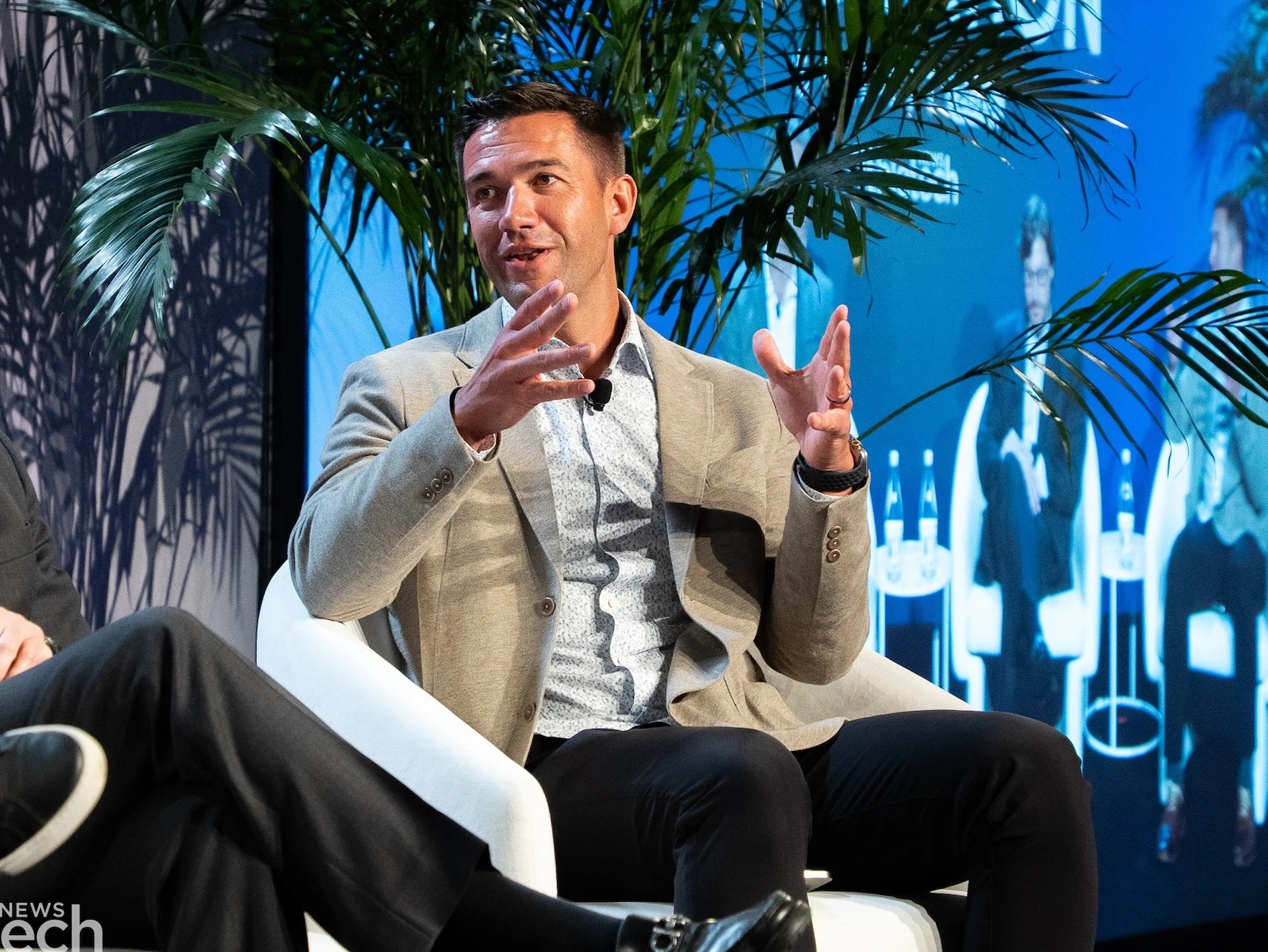
At the 2025 ATN Innovation Summit, Watterson joined Tonal’s Darren MacDonald and Hydrow’s John Stellato for a discussion moderated by Edward Hertzman. His argument for connected equipment was straightforward: phones and watches had already made connectivity ordinary. Exercise equipment belonged in the same world.
He also described using AI to adapt iFIT content for different languages and discussed expanding the recently acquired Reform RX Pilates business. The emphasis had moved beyond putting a library on a screen. Finding an appropriate session, and making it understandable to the person choosing it, had become part of the product’s work.
By 2026, his public posts were pointing toward EGYM integration and new Freemotion equipment. EGYM’s compatibility listing includes iFIT/Freemotion’s 24 Series and Ultra 1 consoles, RFID sign-in and synchronization of completed workouts. The small practical frictions of a gym visit now sit alongside the more visible business of filming routes around the world.
There is a recognizable pattern across these assignments. First the company needed electronics that could support an interactive experience. Then it needed routes and instruction worth returning to. Commercial customers brought questions about how that experience fitted into a facility. Each stage added another party whose requirements had to be accommodated.
For a member, much of that coordination can remain invisible. A route appears, a trainer speaks, a machine responds. Watterson has worked across enough of the underlying operation to describe several of its moving parts. His public story is most engaging when he gets specific about them, from a tablet purchased overseas to a lighting kit shipped to an instructor.
That makes a fitting continuation for someone who started in purchasing. Watterson’s career connects a succession of ordinary details: buying electronics, commissioning content, supplying facilities, getting a member signed in. The treadmill can still take you nowhere. Making that trip worth repeating has kept him occupied for years.