A visitor to an advertising agency expects to find mood boards, a half-erased headline and someone defending a shade of blue. At Lewis, the more revealing object may be the spreadsheet. The independent agency makes brands, films commercials, buys media and builds websites. Then it asks the question the industry once preferred to leave for later: did any of this alter the business?
That question has followed Lewis from Mobile, Alabama, where Jack Lewis opened the J.H. Lewis Ad Agency in 1951, to offices in Birmingham and the Nashville area. Today more than 100 people work across the three locations. Their clients range from hospitals and universities to banks, bourbon tourism, homeschool curricula and a national land brokerage. The categories look unrelated. The operating problem is usually the same: a business has plenty of activity, but cannot see a clean line between marketing and growth.
Lewis calls itself a marketing performance company. The phrase is less poetic than “creative shop,” which is precisely the point. Its services cover research, brand strategy, identity, paid media, content and video production, websites, public relations, analytics and return-on-ad-spend work. This is an agency designed to be difficult to divide into departments from the client’s side. The researcher finds the audience; the creative team gives that audience something worth remembering; the media team finds distribution; the analyst watches what happens next.
The first failure is often the clue
Consider MediGold, a not-for-profit Medicare Advantage plan. Sales had grown, but leads were trending down just as the company prepared to enter an already crowded market. A standard response would have been louder senior-citizen advertising. Lewis’s research uncovered the inconvenient fact: people aging into Medicare did not see themselves as “seniors” and resented being placed in the category.
So the campaign rejected the category’s usual cues. It showed the audience in a younger, more energetic register and built one campaign to do two jobs - protect attention in MediGold’s home market while creating awareness and leads elsewhere. Lewis reported a 500 percent year-over-year increase in web traffic, a 34 percent rise in plan-interest form submissions and a 50 percent increase in enrollees. The essential move happened before a camera rolled. Research changed who the team thought it was speaking to.
MediGold had sales growth but a downward trend in leads while entering a saturated market.
Research showed new Medicare customers did not identify with stereotypical “senior” advertising.
“The bigger risk is not invisibility. It is interchangeability.”Lewis, on brand differentiation in an AI-shaped market
A brand is not a substitute for plumbing
Bethel University’s problem was not a missing slogan. It had three colleges spread across 16 websites, an identity that no longer represented the institution and several audiences arriving with different anxieties. Lewis consolidated the digital estate into one site, rebuilt the visual system and created an “I Am” navigation feature that let visitors identify themselves - prospective student, parent and so on - before receiving relevant content.
The new message, “Become you,” avoided the commanding vocabulary common in higher education. Many Bethel prospects were first-generation students. “Lead” and “succeed” assumed a confidence the audience had not yet acquired; partnership was a more honest promise. Lewis reported a 70 percent increase in submissions on the traditional campus information page, 1,547 percent more traffic to the applications page and a 706 percent lift in traffic to the self-identification page.
This is the part another company can copy without hiring Lewis. Begin with the failing mechanism. Replace channel reports with a shared business question. Let research remove a bad assumption. Measure a behavior that matters. A click is informative; an application, enrollment, itinerary or transaction is closer to the truth.
Then somebody proposed a worldwide toast
Accountability does not require small ideas. For the Kentucky Bourbon Trail’s 25th anniversary, Lewis developed a new identity and website for an attraction drawing more than 2.5 million annual visitors. The digital rebuild added trip planning, favorites and shareable itineraries. In its first week, visitors built 928 trips and added 5,080 places to them. In the first year, the site sent more than one million outbound clicks to partner businesses.
The theatrical companion was the World Bourbon Toast, a live event designed to make a regional ritual travel. The 2024 edition ran for 24 hours and connected fans in 32 countries across six continents. It reached 17 million people across social and earned media, drove a 60 percent two-day traffic spike and produced more than $800,000 in estimated earned-media value. In 2025, Lewis staged it from the Bourbon & Beyond festival. The reported audience grew to 49 countries and 57.5 million impressions.
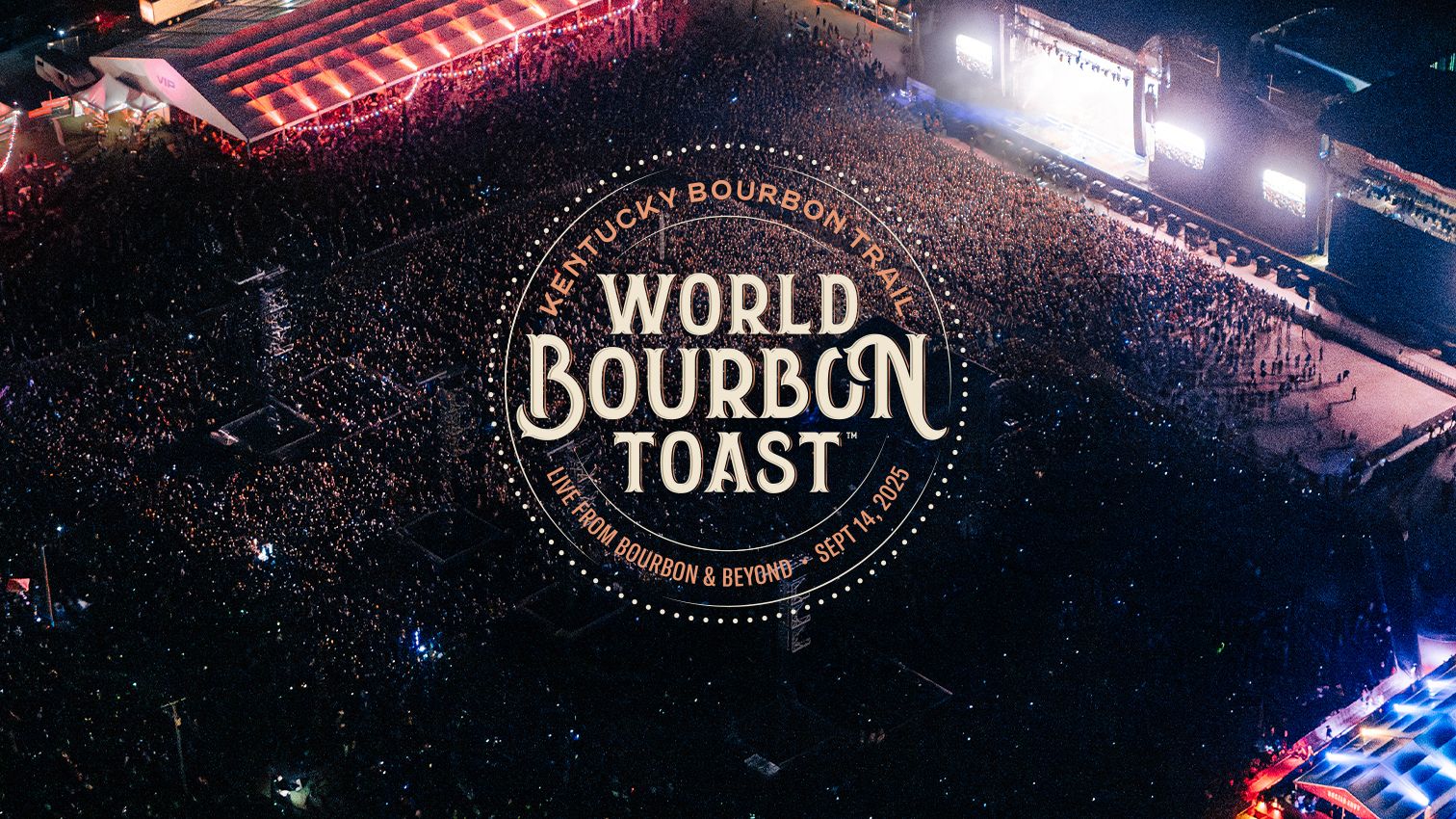
The lesson is not “livestream something.” Bourbon already possessed ritual, place, collectors, tourism and a reason for people to raise a glass together. The format worked because it amplified behavior that existed. Without a genuine community, a distinctive cultural asset and partners prepared to distribute the moment, the same production would be an expensive broadcast waiting for viewers.
The agency became its own succession case study
In 2022, longtime owner and CEO Larry Norris sold Lewis to eight senior managers from its three offices. They represented 185 combined years inside the company and selected Ellen Praytor Faulkner as the fourth CEO and first woman to hold the job. Faulkner had joined roughly 32 years earlier in account service, then managed the Mobile office for more than two decades. Norris stayed as chairman and strategic adviser.
The transaction price was not disclosed. The more telling number was operational: by then, Lewis had grown to 130 associates managing more than $100 million in marketing investment each year. This was not a venture-backed reinvention. It was an insider transfer built on unusually long tenure, a bet that continuity could be an asset if authority genuinely changed hands.
The new ownership group inherited an industry where clients often have a more basic problem than a campaign can solve. Marketing teams are stretched; systems are old; the quarterly number and the long-term brand are treated as opposing demands. Lewis’s 2025 response was Growth Multiplier, a service that puts fractional marketing leaders inside client teams. The promise is not a grand transformation deck. It is quick operating improvements while employees learn a new way of working.
The dashboard cannot rescue the product
Lewis’s model has conditions. It depends on access to customer and commercial data. It works better when the client allows creative, media, product and service teams to share a problem. And it cannot compensate for a poor offer, a broken checkout or leaders who demand immediate conversion while refusing to build memory. Measurement is not magic. It is a way to notice the truth sooner.
The agency itself now argues that performance marketing became too good at rewarding whatever could be counted immediately. That produced efficient but interchangeable work. Its current thesis is a useful correction: brands need response and meaning. The calculator belongs in the creative department, but it should not be permitted to write the headline.