Company Profile · Hardware
The Art School Bet: Make Speakers You Actually Want to Look At
Noah Kaplan started building speakers in a college dorm because he thought audio gear was ugly. Twenty-eight years later, Leon builds every soundbar to the exact width of your TV - and won't ship a warehouse of inventory it doesn't have.
In 1997, a University of Michigan art student looked at the stereo equipment stacked in a corner of his room and reached a conclusion that would define the next three decades of his life: this stuff is ugly, and someone should fix it. Noah Kaplan, who had just earned a Bachelor of Fine Arts from the School of Art & Design, was not an engineer. He built guitars. He ran art galleries. What he had was a designer's irritation at black plastic boxes that demanded pride of place in a room while contributing nothing to how it looked. So he started building speakers out of exotic hardwood, in a dorm room, mostly to prove a point.
The point held up. Today Leon Speakers is a Ann Arbor, Michigan manufacturer with somewhere between 60 and 84 employees, an estimated eight-figure revenue, and a network of roughly 1,500 custom-installation dealers across the United States. It is the kind of company that does not announce itself loudly - you have probably sat in a room with its products and never noticed, which is exactly the intention.
01 / The ReframeSound as a design object, not a spec sheet
Most audio companies compete on numbers - watts, frequency response, driver counts. Leon competes on a stranger question: do you actually want to look at the thing on your wall? Kaplan's founding insight was to treat a speaker the way an interior designer treats a lamp or a chair. It should perform, yes, but it should also belong in the room. The company likes to describe its work as mixing "art with audio, design with technology, and business with bohemia."
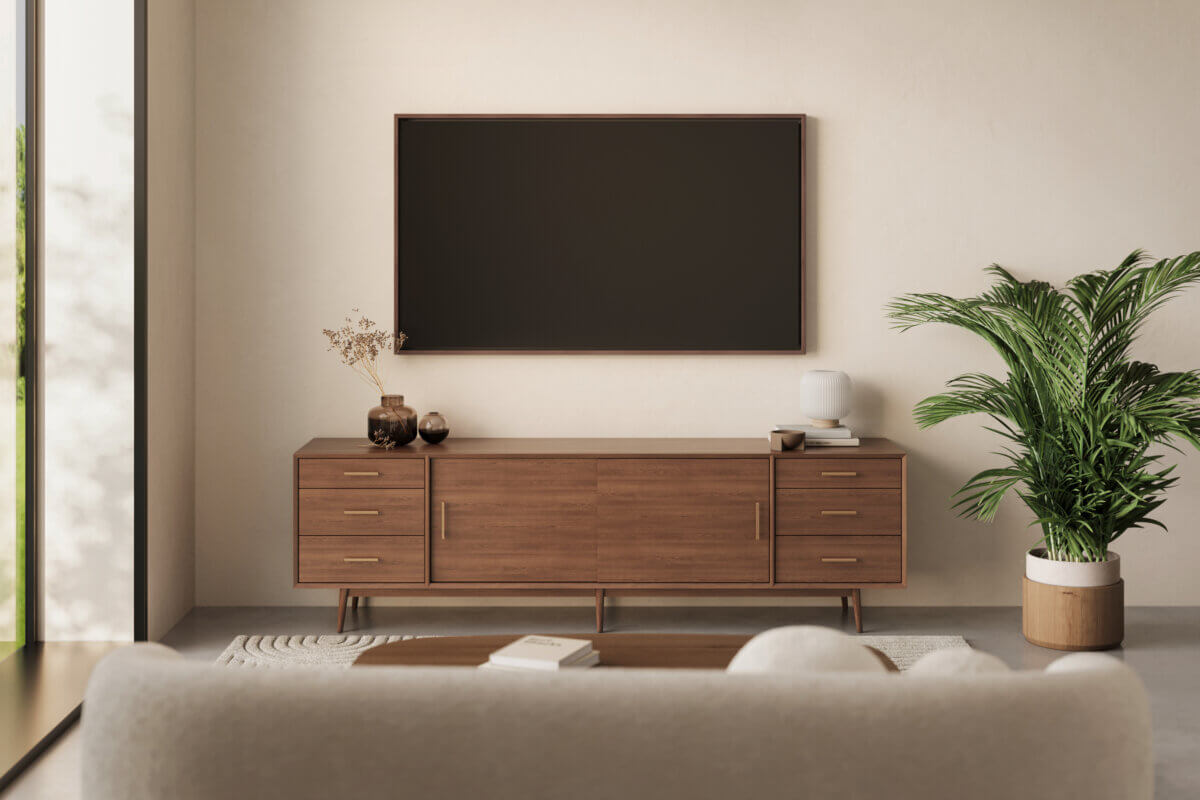
That reframe sounds like marketing until you notice how much of the product line follows from it. Leon's approach is almost ethnographic: before designing an install, the team asks how people actually use a space - how they listen, where they sit, what the room is for. The goal, in Kaplan's words, is to make environments "comfortable, making people feel better and more collaborative," whether that is a kitchen built for entertaining or a corporate boardroom.
02 / The PivotThe plasma TV that rewrote the roadmap
The early business was a collaborative art gallery, recording studio and speaker shop rolled into one downtown Ann Arbor storefront, run with co-founders Jeff Gordon and Matt Lome. The first product line, PictureSound, was a set of on-wall, flat-panel speakers with acoustically transparent, silk-screened grills that doubled as artwork. Customers liked the wall-hanging pieces most, which was a useful signal.
The real turn came at CEDIA EXPO in 1999. Kaplan saw a plasma television on the show floor and understood, immediately, what was coming: flat screens were going to hang on walls everywhere, and every one of them was going to need sound that did not ruin the look. He went home, shelved the gallery concept, and pointed the whole company at products designed to live alongside flat-panel TVs. In 2001 Leon built its first Horizon soundbar sized to match a specific television - the beginning of what is still its signature idea.
How a Leon product gets made
Measure the exact TV width & room
Choose finish, fabric, drivers
Built to order in Ann Arbor
Installed to disappear into the wall
03 / The ModelWhy Leon refuses to hold inventory
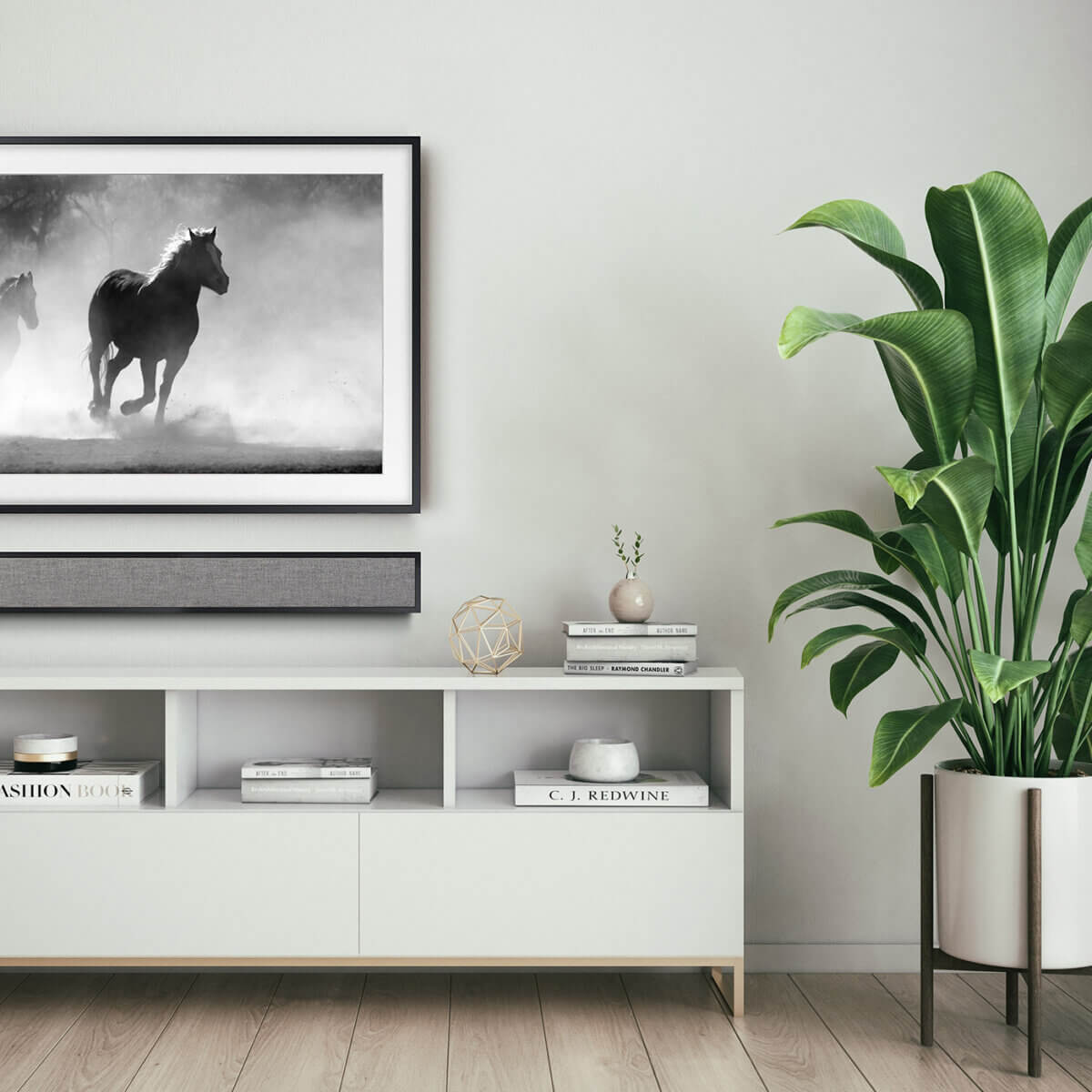
Here is the operational choice that most hardware companies would find alarming: Leon does not mass-produce and does not stock finished goods. Nearly everything is built to order after a customer commits. A Horizon soundbar is cut to the precise width of one person's television; there are no standard sizes to warehouse. The company keeps raw materials on hand and turns them into product on demand.
What reads as a constraint is really the moat. Made-to-order manufacturing let Leon survive downturns - during the 2008 crash, its products helped dealers claw back margin they were losing on commodity flat-panel sales. It also positioned the company as the shop that will take the job nobody else wants. As Kaplan puts it, Leon became "the guys that will build speakers when no one else will" - one-off widths, unusual finishes, difficult rooms. Being the last vendor to say yes is, it turns out, a durable business.
04 / The RangeFrom dorm-room hardwood to a full catalog
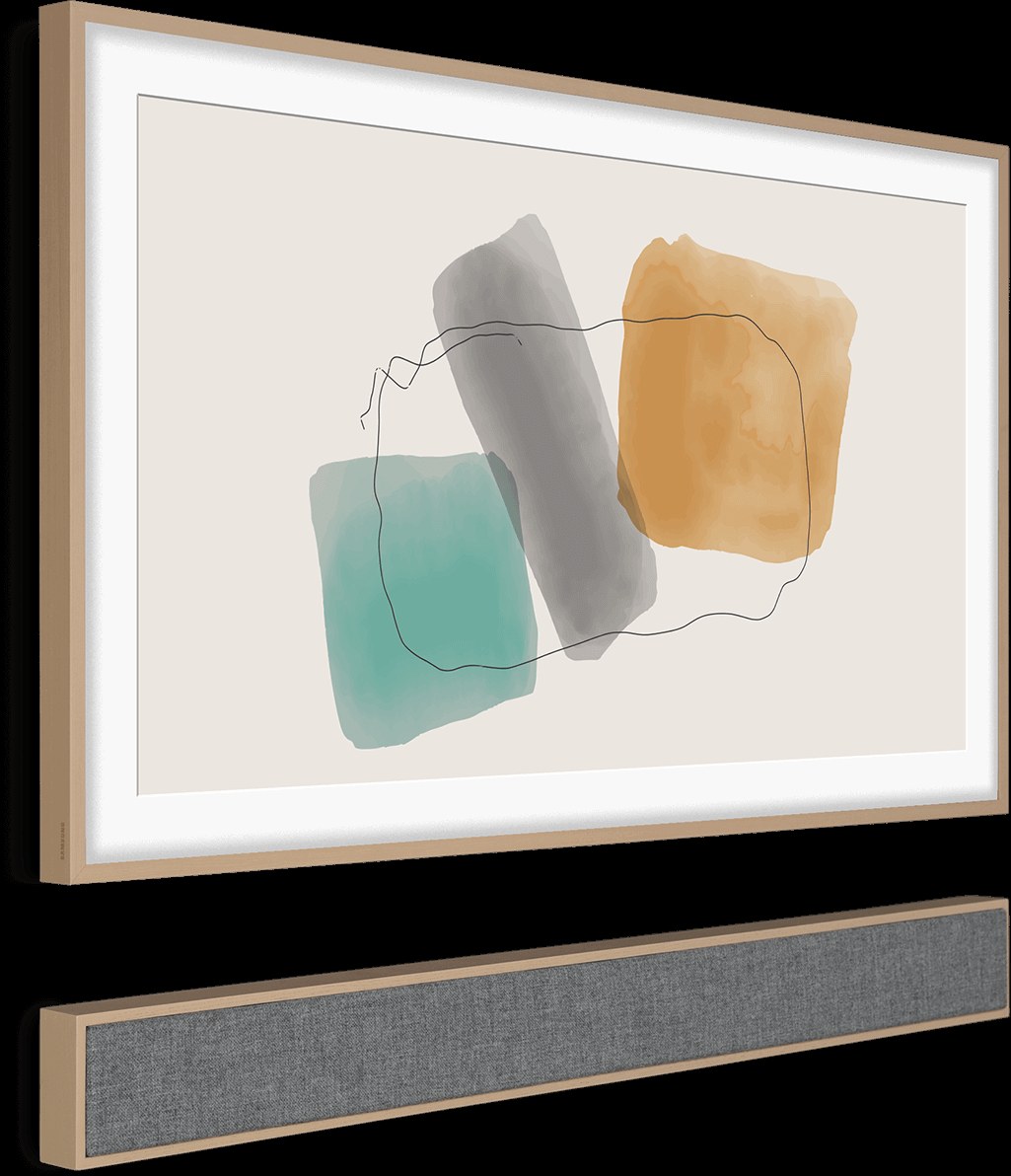
The product line has widened well past soundbars. There are the Horizon custom-width soundbars and the Profile architectural speakers; the FrameBar, which builds audio into a TV frame; Studio Frame and Edge Flex Frame systems that dress Samsung The Frame and Sony BRAVIA art-mode televisions; Aaros subwoofers; and the Ente SoundTile, a 24-inch acoustic art tile that handles sound absorption and audio in one wall panel. Two acquisitions filled in the edges: Media Decor in 2013, which added motorized art and mirrors that hide a TV entirely, and Terra Speakers in 2018, which brought all-weather outdoor audio into the fold.
The commercial side, launched in 2008, extends the same idea to boardrooms, retail and hospitality, including sound-absorption work and collaborations like the InSight PTZ camera mount designed with the architecture firm Gensler. The customer base runs from luxury homeowners and the interior designers who serve them to reported corporate clients like Apple, Spotify and JPMorgan Chase.
The expertise underneath all of this is less about acoustics theory than about craft and collaboration. Leon's team is a mix of artists, designers, engineers and cabinet-grade woodworkers, and the finished install is meant to sit at the seam between two trades that rarely talk to each other: the AV integrator who wires the room and the interior designer who styles it. One integrator, describing a Leon project, said the brand "allowed us to elevate the A/V experience and the visual impact of the space at the same time" - which is the whole pitch, stated by a customer rather than a marketer. The company reinforces the point each year with its Install of the Year awards, spotlighting dealers across categories from whole-home systems to showrooms to commercial jobs.
Recent releases show the roadmap has not slowed. In 2024 Leon rolled out a new ultra-thin UX audio platform across its Horizon, Profile and FrameBar lines, launched the compact Ente SoundTile MINI, and shipped the Edge Flex Frame for ultra-thin televisions. Studio Frame was updated to fit Sony's BRAVIA 7 mini-LED line with onboard IR and additional sizes. None of it strays from the founding thesis - each new product is another way to put good sound in a room without making the room look worse.
The Leon timeline
Milestones, earliest to latest · bar length approximates years elapsed
05 / The PositionWhere Leon fits, and where it does not
The obvious alternatives - Sonance, Origin Acoustics, James Loudspeaker, Sonos, and the soundbars bundled with Samsung and LG televisions - all compete on some mix of price, performance and convenience. Leon competes on customization and design integration, which means it is rarely the cheap option and never the mass-market one. It sells almost entirely through custom installers rather than a store shelf, which keeps it out of impulse-buy territory and squarely in the world of designed spaces.
That positioning explains a genuinely unusual 2025 move: Leon became the first AV brand to exhibit at ICFF, a large-scale furniture and interiors show, rather than a hi-fi expo. Showing sound gear at a design fair is the entire strategy compressed into one booth. The company has landed on the Inc. 5000 fastest-growing list six times and runs community projects that fit its "bohemia" streak - the Leon Loft performance venue and the Amplify Fellowship, co-founded with Grove Studios to support local African-American musicians.
The catch, for anyone tempted to copy the playbook, is that it does not scale the way a commodity brand scales. Made-to-order craft caps throughput; a 1,500-dealer channel takes decades to build; and "the shop that says yes to the hard job" only works if you can actually build the hard job well and in the USA. Leon's advantage is also its ceiling. But for a company that started because one art student thought his speakers were ugly, turning that irritation into a 28-year-old manufacturer is a reasonable return on a good grudge.
Explore Leon
- Web leonspeakers.com
- Blog The Sounding Board
- LinkedIn /company/leon-speakers
- Instagram @leonspeakers
- X @leonspeakers
- Facebook /LeonSpeakers
- YouTube Leon Speakers channel
- Horizon Custom-width soundbars