The cruel thing about a coding interview is that it can turn an ordinary gap in preparation into a verdict on a career. A stranger gives you a problem, a blank editor and a clock. You may have written good software for years; for the next half hour, you are being judged on whether a pattern comes to mind quickly enough. Winston Tang knew the feeling. After moving from Malaysia to the United States in 2005, he failed several interviews with major technology companies. He later worked at Amazon and Google, but the memory of arriving unprepared stayed with him. LeetCode grew from that awkward gap between being able to program and being able to prove it on command.
The short version
- LeetCode gives developers a browser-based place to solve coding problems, compare approaches and rehearse technical interviews.
- Its free problem library pulls people in; Premium charges for company-focused practice, extra explanations and simulations.
- Daily challenges, contests and discussion turn a solitary cram session into a repeatable routine.
- Hiring teams can use LeetCode Interview to run collaborative coding sessions and evaluate candidates.
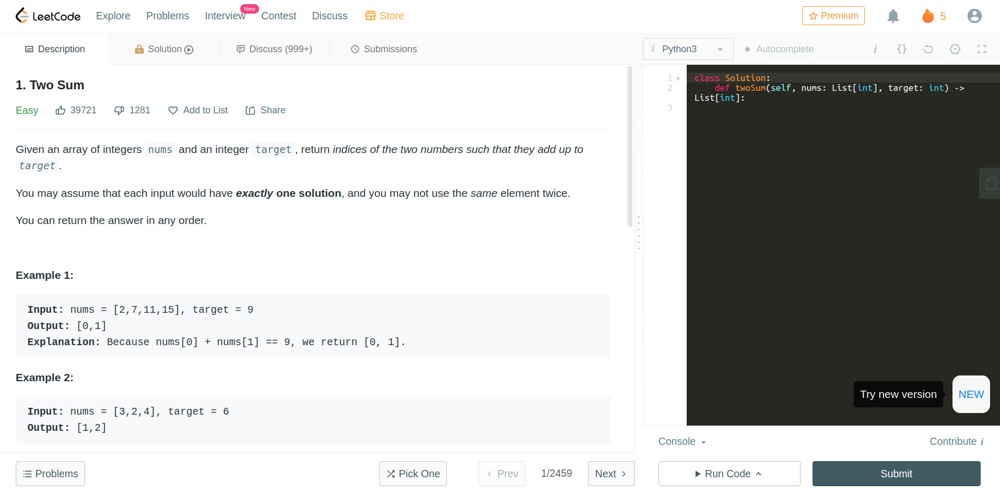
LeetCode is now familiar enough to software engineers that its name can function as a verb. That familiarity can obscure what the company actually made. Its core product is a structured encounter with failure. Choose a problem. Write code. Submit it. The judge tests it. If the answer is wrong, the site gives you another chance while the question is still warm in your mind. If it is right, there is an explanation, a performance comparison or a discussion that may reveal a cleaner route. The lesson is rarely just the answer. It is the little sequence of correction that follows.
A test you can take before it counts
The public problemset spans algorithms, data structures, databases and other programming topics. Questions have difficulty levels and topic labels; users can run and submit code in the browser. Explore cards explain subjects, while Study Plans arrange problems into a deliberate order. That last feature matters more than it sounds. A library with thousands of doors is useful only after someone tells a beginner which one to open. LeetCode's QuickStart guide describes the combination of learning cards, interview cards, problems, contests and Discuss as a route through that library.
The engine is a loop, not a single correct answer.
A daily challenge adds a clock to this routine: a new problem appears every 24 hours, at midnight UTC. Completing a month's set can earn a badge. Weekly and biweekly contests make the clock louder, with rankings that show how a solution performs against other people solving at the same time. In 2019 the company added the second contest schedule partly because its original weekly time did not suit users around the world. This is a small but telling choice. A global practice room needs more than a translated question bank; it needs an appointment that people in different time zones can keep.
The business hiding behind the hint
Much of LeetCode is free. Tang has said publicly that he takes pride in that. The paid tier makes the preparation more targeted: Premium includes exclusive problems and explanations, company-specific question filters, mock interview simulations and priority judging, among other tools. These features do not change the basic task. They reduce the uncertainty around which task to practice next. For a candidate with an interview date on the calendar, that narrowing can be worth more than another hundred random questions.
“I was determined to become a software engineer.”Winston Tang, writing about his move to the United States
The company also sells to the people setting the test. LeetCode Interview lets a hiring team choose from its question bank or create a whiteboard exercise, invite a candidate through a link and evaluate code in real time. It includes collaborative coding and communication tools in the browser. The same platform can therefore be a rehearsal room for applicants and an interview room for employers. That is a useful position in a market where HackerRank and CodeSignal focus heavily on assessment, while Codewars and NeetCode offer other ways to practice. LeetCode's particular strength is the collection of practice, published solutions, conversation, contests and company-oriented preparation in one place.
A 2021 financing report put the company's Series A at nearly $10 million, led by Lightspeed China Partners. It also reported more than 100 million annual code submissions and hundreds of paying corporate users at that time. Those are period-specific figures, not a current census. They do show why the company had become more than an online workbook. Every submission creates feedback for a user and evidence that this form of practice has a large audience. The separately operated Chinese site, established amid growing demand in 2018, extended that audience across another market. Co-founder and CEO Hercy Chang has been a public voice for that expansion.
A classroom with witnesses
The community is easy to underrate. Discuss carries explanations, interview experiences, study advice and arguments about whether a problem marked “easy” has any right to the label. One candidate may publish a failed attempt; another may explain the missing edge case. This is where a static bank of puzzles becomes a living set of notes from people who have faced similar screens. It also creates a practical warning: interview recollections are anecdotes, not promises that the same question will appear at a named company. Use them to understand patterns, then learn the underlying technique.
LeetCode has expanded the course material toward system design and, more recently, added Ask Leet, an AI helper for hints, examples, debugging and code improvement. The tool can shorten the distance between a mistake and an explanation. It also sharpens the old question about practice: when should a learner ask for help? A complete answer delivered too soon can turn a useful struggle into a quick read. A hint that leaves room for reasoning can make the next attempt better. LeetCode's own examples invite users to ask for step-by-step hints rather than simply request a finished solution.
There is a limit to the bargain. A candidate can become excellent at recognizing array and graph patterns and still struggle to design a maintainable system, work with a team or explain a trade-off. Tang himself has argued that software engineering involves judgment and collaboration beyond writing code. LeetCode works best when the interview really tests the skills it lets you rehearse, and when the learner studies why a solution works instead of collecting accepted submissions like stamps. For a founder watching this business, the copyable move is precise: find a high-stakes gate whose rules are hard to see, make the practice version accessible, and make the feedback fast enough that people will try again.
The achievement is oddly modest. LeetCode cannot remove the nerves from a technical interview. It can make the first encounter with a problem happen on an ordinary Tuesday, when the stakes are low and another attempt is available. The candidate still has to write the code. But the blank editor is no longer quite so blank.