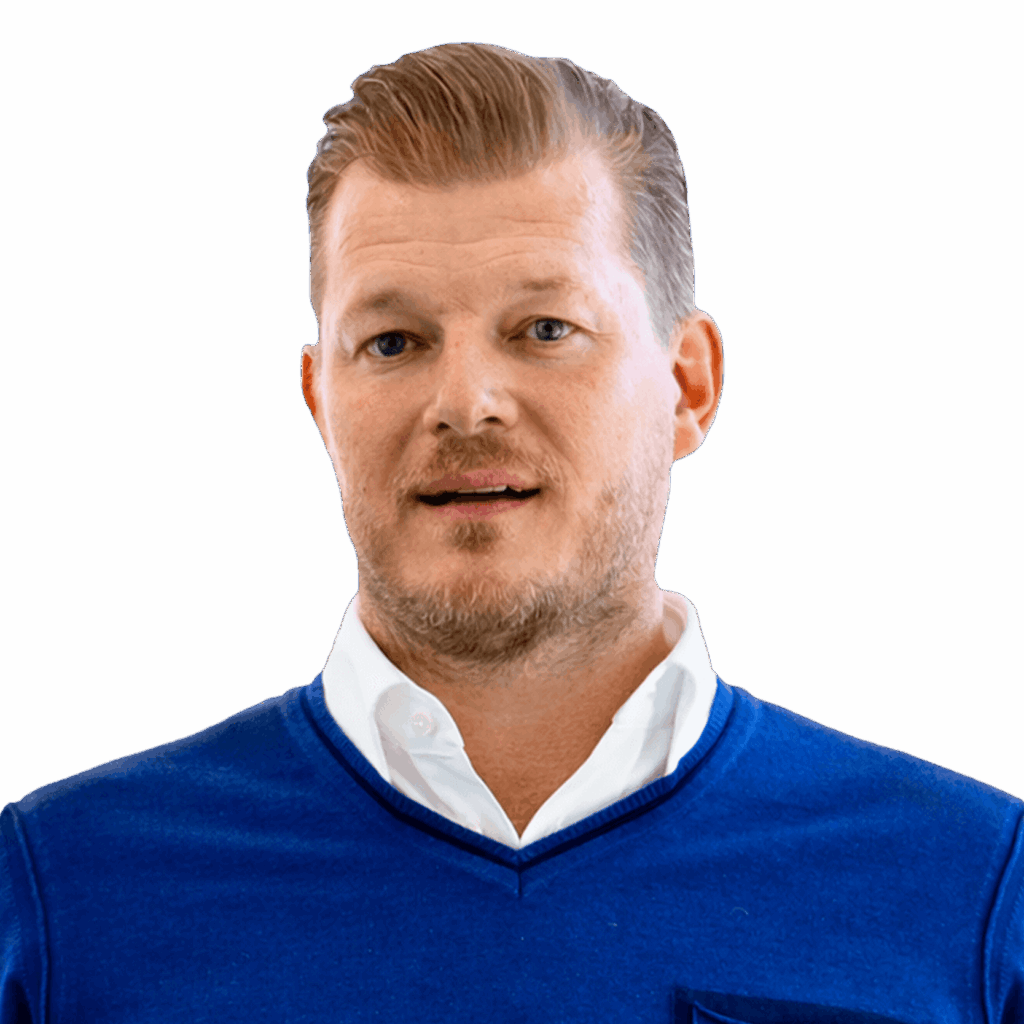
Ten minutes into the interview, Lars Dalgaard leans forward. The 6-foot-3 Danish venture capitalist has created just enough trust. Now comes the question that separates the posers from the humans: "What did you learn from your mom?"
Not your resume. Not your exits. Your mom.
"Incredibly powerful," Dalgaard says. "Basically I'm testing them to see, 'How human are you ready to be with me?'"
This is the investor who left a general partnership at Andreessen Horowitz - potentially walking away from nine figures - to start Luv Ventures, a firm with one primary mission: teaching CEOs to lead with more heart, less ego. The Twitter handle wasn't an accident. @LarsLuv means it.
The story doesn't start with empathy. It starts in Copenhagen, where a kid grows up speaking Danish, moves to England at 13, returns at 16, leaves Denmark at 18. Half his life in Europe, half in America. Four languages fluent, three conversational. The kind of cross-cultural fluency that makes you see patterns others miss.
He works at Unilever. Then Novartis in Switzerland. Corporate ladder stuff. Safe. Predictable.
Then 2001 happens. He founds SuccessFactors, an HR software company at a time when "cloud computing" still sounds like science fiction. The odds are terrible. The timing is worse. He does it anyway.
Eleven years. That's how long Dalgaard grinds before the exit. In an era of quick flips and growth-at-all-costs, he builds deliberately. He takes the company public in 2007. NASDAQ first, then NYSE, then Frankfurt. By 2012, SAP writes a check for $3.4 billion.
But here's where the story gets interesting. Most founders take the money and disappear into beach houses or angel investing. Dalgaard joins SAP's executive board, leads their entire cloud business, helps author an M&A strategy that results in 20+ acquisitions worth over $30 billion.
Eighteen months later, he's gone.
The Wall of Shame
At SuccessFactors, Dalgaard built a religion around customers. Not the lip-service kind. The kind that makes you uncomfortable.
One day, an angry customer calls. Product issues. Real problems. Most CEOs would handle it quietly. Dalgaard emails the conference call number to the entire company. Everyone stops. Everyone listens.
He divides employees among customer accounts. Quarterly calls required. Miss your calls? Your photo goes on the Wall of Shame. Public. Permanent. Humiliating.
"The entrepreneurs themselves don't really know what the end customer exactly wants," he explains. "They can sure visualize how this technology will work, but it's very hard for them to speak the language of the customer."
The Wall worked. People made their calls.
The paradox of Lars Dalgaard: brutal honesty wrapped in genuine compassion. He'll shame you for not calling customers. He'll also personally loan you tens of thousands when life falls apart.
An employee is moving to London to lead European expansion. Days before the flight, her car is stolen by a professional con artist. Fake cashier's check. Account frozen. Tens of thousands in the red.
Dalgaard goes straight to the CFO: "If SuccessFactors can't lend her the money to get this straight, I will do it personally."
He's the kind of leader who cries in front of employees. Multiple times. Not performative tears - genuine emotional vulnerability in a world that demands stoicism.
"The biggest thing in my life is really daring to be human, and that's the approach I take to the working world."
The a16z Years
In 2013, Andreessen Horowitz makes him a general partner. One of the most prestigious venture capital firms in the world wants the SuccessFactors founder who cries in meetings.
He makes 10 investments. Boards include AltSchool, Doxel.ai, Gigster, Imgur, Optimizely, Reflektive, SkySafe, Teespring, Tenfold, With.in, Zenefits. He works across the portfolio. He teaches at Stanford Business School - invited back for over a decade.
Five years in, he walks away from the general partnership.
The stated reason: to launch Luv Ventures, a new fund focused on enterprise software and computational biology. The real reason runs deeper.
"I think Silicon Valley could be 10 to 20 times bigger if 80 percent of the companies were led better."
Not better technology. Not more funding. Better leadership. More humanity. Luv Ventures isn't just about financial returns - it's about connecting with CEOs and teaching them empathetic leadership.
The Philosophy
Customer Obsession
Not metrics. Not surveys. Actual human contact. He made employees divide customer lists and call quarterly. The Wall of Shame wasn't cruel - it was accountability for the most important relationship in business.
Emotional Authenticity
He cried in front of employees. Asked candidates about their mothers. Showed vulnerability in a culture that worships invincibility. "How human are you ready to be with me?" isn't just an interview question. It's a worldview.
Brutal Standards
"I can execute harder than anybody - trust me, you cannot keep up with me." The empathy investor doesn't mean soft. He means human. High expectations wrapped in genuine care.
Teaching Over Scaling
He left a general partnership at a16z to focus on teaching CEOs. Not because venture returns don't matter. Because leadership transformation matters more. Silicon Valley could be 10-20x bigger with better leaders.
Career Timeline
The Luv Philosophy
His office sign tells you everything: "IF YOU DON'T LOVE WHAT YOU'RE DOING, GO WORK SOMEWHERE ELSE."
Not passion. Love. The kind that makes you cry when things go wrong. The kind that makes you personally loan money to employees in crisis. The kind that makes you email conference call numbers to entire companies so everyone hears customer pain.
Luv Ventures invests in enterprise software and computational biology. But the portfolio is secondary to the mission: teaching entrepreneurs to lead with more heart, less ego.
The Twitter handle @LarsLuv isn't branding. It's a manifesto. In a world of growth hacking and blitz scaling, Dalgaard is teaching something radical: that vulnerability is strength, that emotional intelligence beats ruthless ambition, that the best competitive advantage might be giving a damn about people.
What Makes Him Different
- Speaks 7 languages (4 fluent, 3 conversational)
- Lived half his life in Europe, half in America
- Spent 11 years building one company before exit
- One of few VCs known for crying openly
- Left potentially $100M+ at a16z to focus on teaching
- Has a sign reading "IF YOU DON'T LOVE WHAT YOU'RE DOING, GO WORK SOMEWHERE ELSE"
- Twitter handle reflects philosophy: @LarsLuv
Board Positions & Investments
- AltSchool - Education technology
- Doxel.ai - AI for construction
- Gigster - Software development
- Imgur - Image sharing platform
- Optimizely - Experimentation platform
- Reflektive - Performance management
- SkySafe - Drone security
- Teespring - Creator commerce
- Tenfold - Sales integration
- With.in - VR content
- Zenefits - HR platform
Lessons from the Empathy Investor
What did Lars Dalgaard learn building, selling, investing, and teaching for 25 years?
That founders don't speak customer language. That Wall of Shame tactics work when paired with personal compassion. That you can execute harder than anyone without being an asshole about it. That asking about someone's mother tells you more than their resume. That crying in meetings isn't weakness - it's proof you care.
Most importantly: that Silicon Valley's obsession with ruthless scaling has left massive value on the table. The 10-20x multiplier isn't in better technology. It's in better leadership.
He's teaching at Stanford. Running Luv Ventures. Supporting 10 portfolio companies as a16z Board Partner. Not because he needs the money - his estimated net worth is $69.5 million, comfortable but not billionaire territory despite the $3.4B exit.
He's doing it because someone has to teach Silicon Valley that humanity isn't a bug in the system. It's the feature everyone forgot to build.
The Denmark kid who speaks seven languages. The pharma exec who pivoted to cloud software. The CEO who made employees listen to angry customers. The investor who asks about your mom. The teacher who's been invited back to Stanford for over a decade.
Lars Dalgaard isn't trying to make Silicon Valley softer. He's trying to make it smarter. Because in a world where everyone optimizes for growth at all costs, the people who optimize for humanity might just build something that lasts.
More heart. Less ego.
That's not just Luv Ventures. That's the whole point.