A car key is a modest object for carrying so much ambition. For a driver, it can mean the difference between being available for work and actually earning. For Ladi Delano, it has become the thread through an increasingly complicated business story: financing cars for people who need them, operating fleets that can drive themselves, and deciding what happens to the keys when a company leaves its original market.
In October 2026, Moove announced it would conclude its Nigerian operations. Eligible customers would receive ownership of the vehicles they were using, with no further payment to Moove required for the vehicles themselves from October 1. The company put their combined value at approximately ₦35 billion. Employees would receive cars too. A business launched in Lagos was arranging its departure with an unusually tangible farewell.
Two months earlier, Moove had announced a $250 million funding round at a $2.1 billion valuation. That money would support its expansion in autonomous mobility. Put those announcements beside each other and Delano becomes more interesting than a fundraising headline allows. His company is enlarging its ambitions while bringing a formative chapter to a close. The difficult business of ownership runs through both.
A salesman before the spreadsheet
Delano’s first job involved a rather different kind of asset: suits. He sold them on commission, and the contest appealed to him. It is a pleasingly concrete beginning for someone whose later work would involve investment vehicles, credit models and international fleets. Before there were funding rounds to negotiate, there were customers who needed persuading to buy something they could try on.
In 2004, he founded Solidarnosc Asia, a Chinese drinks company behind the vodka brand Solid XS. He later sold the business and invested in property in mainland China. The geographical jump matters. This British-born Nigerian entrepreneur was building his early career in Asia, learning through businesses whose products and assets could be picked up, poured out or walked into.
By 2012, he was running Bakrie Delano Africa, a joint venture with Indonesia’s Bakrie Group that planned to invest $1 billion in Nigeria over five years. Mining, oil and gas, and agriculture were the areas of interest. The proposed investment programme was a statement of intent about Nigeria’s possibilities. It was also a move from selling a consumer product to assembling capital around much larger physical projects.
His account of success at the time was refreshingly workmanlike: work hard, make mistakes, learn from them. Away from business, he liked to cook and run. He joked that the running compensated for the cooking. For a person moving between continents and industries, the domestic accounting was admirably straightforward.
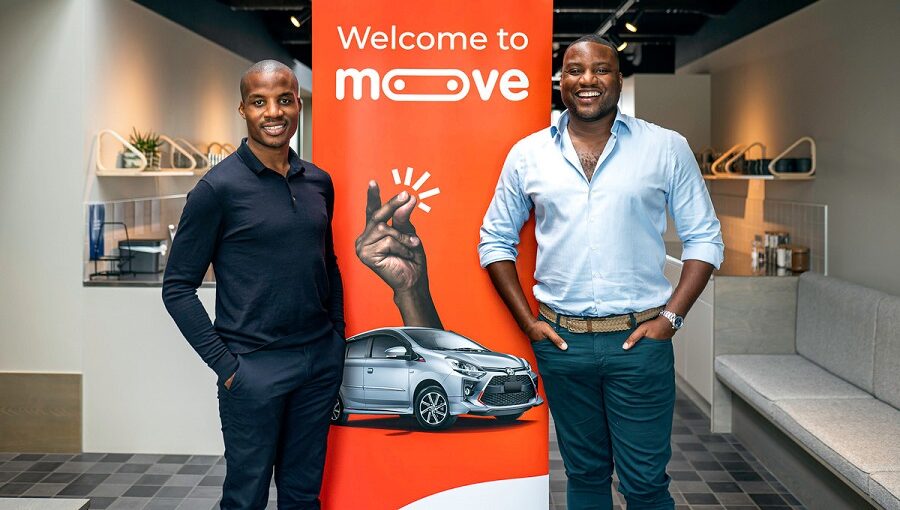
The question they brought home
The partnership with Jide Odunsi began in London, where both were students. Delano attended SOAS; Odunsi was at the London School of Economics. They were children of Nigerian immigrants, growing up with an affection for their parents’ country alongside an awareness of the reasons their parents had left it. Their friendship had a question built into it: what would make staying a better option?
That question eventually helped shape their approach to business together. They were influenced by Michael Porter and Mark Kramer’s argument for creating shared value: commercial value and social benefit could be pursued within the same enterprise. For Delano, the attraction lay in building a business around a problem that people were already experiencing, rather than attaching a social purpose after the commercial machinery was running.
He co-founded Grace Lake Partners in 2014. Its investment and operating approach addressed societal needs in Nigeria while seeking economic returns. Between 2016 and 2019, he also served as chief executive of JCDecaux Grace Lake, working in outdoor advertising. His working life was accumulating the less photogenic skills of entrepreneurship: operating businesses, managing partnerships and getting things built.
The friendship survived beyond the office. Delano was Odunsi’s best man at his wedding in Lagos. That detail gives their business partnership a different texture. These were people who had known each other before the company announcements, and who appeared in each other’s lives when the relevant document was a wedding programme rather than a financing agreement.
Borrowing against the next working week
Moove launched in Lagos in 2020. Its founding problem was an awkward circle. A prospective commercial driver needed a vehicle to generate income. Obtaining finance for that vehicle could depend on financial evidence or an upfront payment the person did not have. Willingness to work could arrive well before the bankable means of doing so.
Delano and Odunsi built around a different assessment: the earning potential of a vehicle working on a mobility platform. Moove used performance and revenue information from ride-hailing and logistics services to help evaluate customers. The car would generate income; part of that income would repay its financing. A familiar object acquired a different financial timetable.
In a 2022 interview, Delano described financing up to 95 percent of a new vehicle’s purchase price and onboarding drivers within five days. Those were the terms he described then; the larger point was the mechanism. Payments could be linked to the working week, with a portion of weekly revenue going towards the loan. The financing was designed around someone operating a small business from the driver’s seat.
That model made partnerships central. Platforms supplied access to demand and useful information about work. Moove supplied vehicles and financing. The customer supplied the labour that made repayment possible. The arrangement joined three different interests, and its durability depended on their economics continuing to fit together.
An education taken in a different order
Delano’s educational history adds a useful interruption to the familiar founder narrative. After his early entrepreneurial ventures, he returned to postgraduate study. He completed a diploma in Global Business at Oxford’s Saïd Business School in 2016, followed by an MSc in Major Programme Management in 2018. He also holds a Master of Public Administration from the London School of Economics.
The title of that Oxford MSc feels particularly apt. By then, his career had involved moving across markets, institutions and businesses. Studying how major programmes work offered a formal setting for questions he had already encountered in practice. His route through business and education had its own sequence, with experience arriving before some of the qualifications.
He then helped finance someone else’s route into the institution. The Oxford-Grace Lake Scholarship supported Nigerian MBA candidates; its first scholar, Mofe Ibrahim Binitie, received the award in 2016. In 2019, the programme was extended for another three years. For Delano, returning to the classroom was followed by helping another student get through the door.
The driverless car needs a landlord
Moove’s later expansion widened the meaning of its business. In January 2025, it announced the acquisition of São Paulo-based Kovi. The deal brought a larger Latin American presence and technology for understanding driver behaviour and managing vehicles. The attraction included an established operating business with its own knowledge of how cars and customers behave.
Another partnership took the company into a different kind of fleet. In December 2024, Moove and Waymo announced an agreement covering autonomous vehicles in Phoenix and, subsequently, Miami. Moove’s responsibilities included managing and dispatching the fleet, facilities and charging infrastructure. Waymo retained responsibility for its autonomous driving technology and the service offered through its app.
The division of work is revealing. Removing the human driver leaves plenty of human organisation around the car. Vehicles still require charging, servicing and somewhere to wait between assignments. A robotaxi may be an impressive answer to a technical problem, but it remains a vehicle with a battery, a maintenance schedule and a need for somewhere to park.
“Every major technology revolution becomes an infrastructure race.”
Ladi Delano · August 2026
The partners expanded their agreement to London in October 2025. By August 2026, Moove was raising money for autonomous fleet ownership and depots it calls “Nests”. Delano was making a bet on the physical arrangements required around the technology: keep the assets charged, maintained and ready, city by city. His ambitions had moved from financing the driver’s car to organising the infrastructure around cars without drivers.
The keys at the end of the road
The Nigerian exit brings the original promise back into view. Moove said more than 9,000 customers had used its rental and Drive-to-Own products in the country. Its announced handover would allow eligible customers to keep the vehicles they already operated. The value of ownership, once an intended destination at the end of a payment schedule, became the central feature of a withdrawal.
Moove’s estimated value of eligible vehicles to pass to customers.
No further payment to Moove for the vehicles themselves from October 1, under the announced arrangement.Delano connected the decision to the change in operating conditions following Uber’s withdrawal from Nigeria. The company had assessed alternatives and concluded that its Nigerian model could no longer be sustained. There is a practical limit here to the elegance of a financing idea: access to a car must be accompanied by an environment in which the car can earn enough.
That leaves Delano with a career whose central object is remarkably consistent. The industries have changed, the partnerships have multiplied, and autonomous driving has entered the picture. He is still arranging capital around things that must work in the physical world. For the Nigerian customer receiving a vehicle, the most consequential part of this chapter will fit in a hand: the keys, and the right to keep them.
Continue the conversation
Read more about the businesses, decisions and conversations behind the story.