Breaking L-Charge closes $10M led by Ultra Capital - January 2026 Mobile charging + roadside service truck launches Alto expanding EV ride-hail with L-Charge off-grid CaaS Stephen Kelley named CEO 1+ GWh delivered per month to commercial customers Breaking L-Charge closes $10M led by Ultra Capital - January 2026 Mobile charging + roadside service truck launches Alto expanding EV ride-hail with L-Charge off-grid CaaS Stephen Kelley named CEO 1+ GWh delivered per month to commercial customers
Climate · Hardware · Energy

L-Charge

The company that decided the fastest way to electrify a fleet was to stop waiting on the grid.

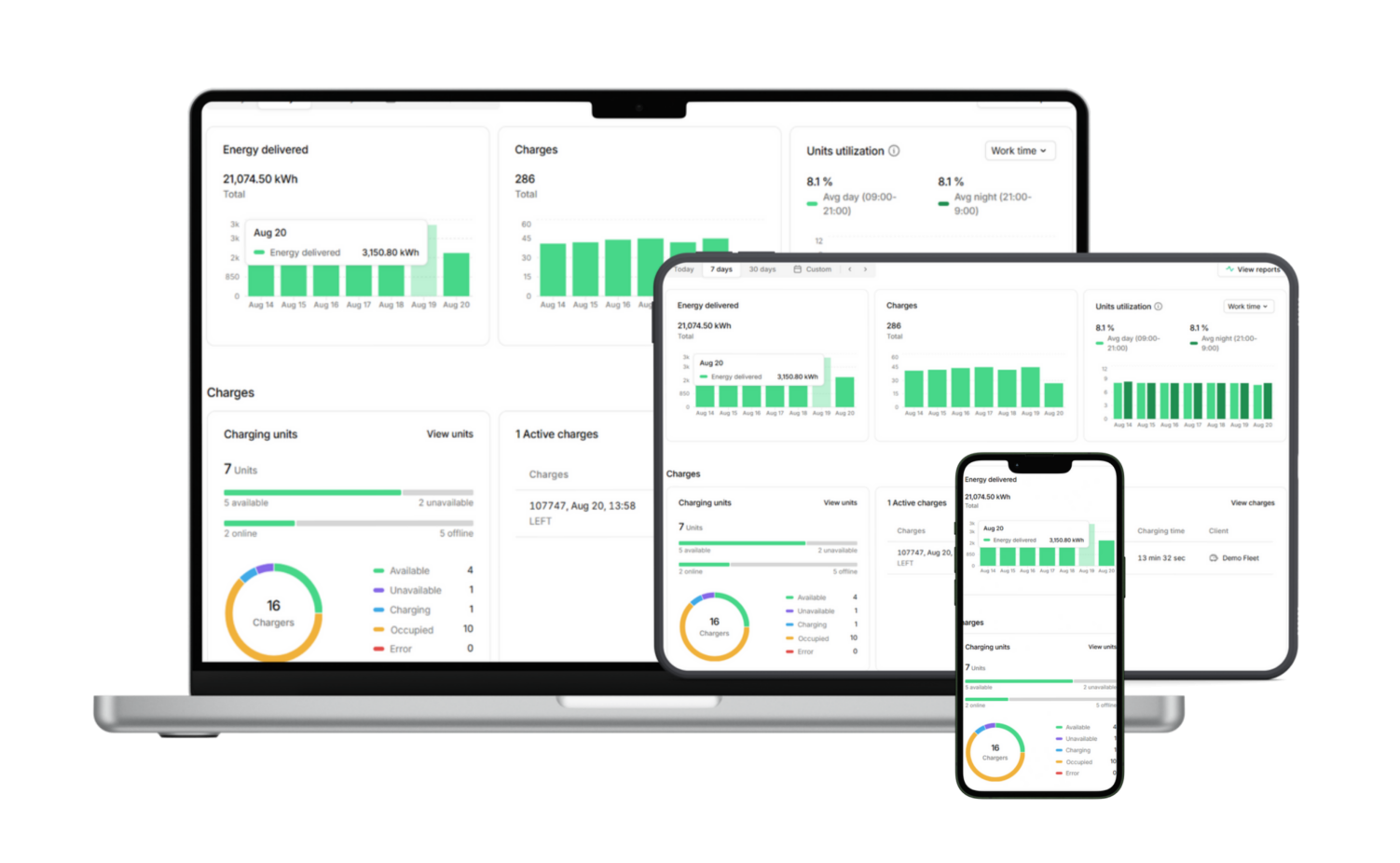
L-Charge fleet management - off-grid EV charging in action
Caption - A modular L-Charge unit on site. The cable is the easy part. Everything behind it is the company.
Dispatch

A parking lot in Dallas, 6:14 a.m.

An Alto driver pulls into a back-of-house lot before the city wakes. Twenty-eight other electric sedans are already plugged in, lined up like patient horses. There is no transformer humming. There is no substation buried under the asphalt. There is no three-year wait for the utility to pull a permit.

There is a modular box on a trailer, a thick cable, and a software screen ticking off kilowatts. It is an L-Charge site. It went live in days, not years. The driver swaps the SUV for a fresh one and is back on the road before the cafe across the street has flipped its sign.

This is the unglamorous miracle L-Charge is selling. Not a flashy charging canopy with a coffee bar. Not a Super Bowl ad. Something quieter and stranger: an EV charging company that has - for now - given up on the grid.

It is a strange thing to bet against, the grid. It is also, if you talk to fleet operators, the most rational thing you can do in 2026.

Most EV charging companies are trying to electrify transportation. L-Charge is trying to electrify it this quarter.
The Pitch

Charging-as-a-Service, minus the substation.

L-Charge designs, manufactures, and operates ultra-fast EV chargers that don't connect to the electric utility.

Instead, each site uses modular power units that can run on natural gas, renewable natural gas, or other low-carbon fuels. The company calls it Charging-as-a-Service: customers don't buy the hardware, don't run the equipment, and don't fight with their utility. They sign a contract. L-Charge shows up. Trucks start charging.

It is a deeply unsexy idea that solves a deeply unsexy problem. A new DC fast-charging site connected to the grid in California can take 18 to 36 months to energize. The vehicles are ready. The drivers are ready. The wire is not.

Time to a working fast-charging site

Grid-tied build~24 months
L-Charge off-grid~1 month

Approximate. Site-dependent. Industry averages from utility interconnection studies.

$19.5M
Total funding
1 GWh+
Energy delivered / month
~29
Employees
2020
Founded
3
Product lines
Product

Three boxes, one idea: stop waiting.

Integrated System

Charging-as-a-Service. L-Charge installs and operates an off-grid ultra-fast charging site at the customer's depot. Flat-rate billing. No utility upgrade. No hardware on the customer's balance sheet.

Distributed System

Power-as-a-Service. Modular power units bolt onto existing sites to supplement strained grid capacity. Useful for depots that have some power, but not nearly enough.

Mobile EV Charger

A truck that drives to the EV. Ultra-fast charge on the curb. The newest unit also doubles as a roadside-service vehicle - a charger and a tire change in one stop.

Customers

Who actually calls L-Charge?

Not consumers. The brand isn't for drivers - it's for the people who manage hundreds of them.

Ride-hail fleets

Alto, the eco-friendly ride-hail service, uses L-Charge to expand its EV fleet in Dallas and Los Angeles without waiting for utility upgrades.

Ports & airports

Heavy-duty electrification with deadlines: drayage trucks, ground service equipment, off-grid school bus and municipal fleets.

Construction & logistics

Sites that move every six months. Permanent grid hookups make no sense. A modular L-Charge unit makes a lot of sense.

The fleet was electric. The trucks were waiting. The grid said: come back in 2028.
The Team

Operators, not evangelists.

L-Charge is run by people who have worked inside power generation and distributed energy long enough to be suspicious of round numbers. CEO Stephen Kelley co-founded Green Charge Networks, which was acquired by Engie. CTO Dmitry Lashin has two decades in power generation. Chairman Mark V. Jarvis brings energy-industry depth. The company manufactures in Corona, California - the same state where the chargers are eventually deployed.

Stephen Kelley
CEO

Previously co-founded Green Charge Networks (acquired by Engie). Joined October 2025.

Dmitry Lashin
Founder & CTO

Twenty years in power generation. Architected L-Charge's modular off-grid platform.

Mark V. Jarvis
Co-founder & Chairman

Long-tenured energy operator. Helps L-Charge navigate the policy side of fuels.

Stephen Soroosh
COO & CPO

Operations and product leadership across L-Charge's commercial deployments.

Latest Dispatches

Six months. Four headlines.

May 2026
EV Choice partnership

L-Charge signs an agreement to deploy its mobile EV charging units through EV Choice's commercial channel.

Feb 2026
Mobile service truck launches

A single vehicle that delivers ultra-fast charging and roadside vehicle servicing. Two jobs, one rig.

Jan 2026
$10M led by Ultra Capital

Round funds a national expansion of installations, new product categories, and hiring across sales and ops.

Oct 2025
Kelley named CEO

Serial energy entrepreneur takes the helm to scale Charging-as-a-Service in U.S. fleet markets.

Ongoing
Alto fleet expansion

The eco-friendly ride-hail service uses L-Charge in Dallas and L.A. to add EVs without utility delays.

Recognition
Awards shelf

World Future Awards, Communitas Award, Platts Global Energy Awards finalist for Energy Transition Technology.

Marginalia

Things you may not know.

Carbon-negative, sometimes.

When the chargers run on renewable natural gas sourced from agricultural or landfill waste, the net carbon profile can come out below zero. The fuel matters.

Corona, California.

Better known for citrus than kilowatts. It is also where L-Charge builds its modular power units.

Two trucks, one stop.

L-Charge's mobile unit can charge a stranded EV and run basic fleet servicing at the same call. A AAA truck and a fast charger walked into a bar.

Watch

Interviews & demos

For public talks, product walkthroughs, and recent press appearances featuring the L-Charge team:

Coda

Back to the parking lot.

It is 6:14 a.m. again. Same lot. Different morning. The Alto driver is back on a route, the SUV she swapped into is now itself plugged in, drawing kilowatts from a box that was, three years ago, not on anyone's blueprint.

There is no fanfare. There is no canopy. There is a thick cable, a software screen, and a small modular unit on a trailer. The cars come, charge, and go. The grid, in this corner of Dallas, has not been bothered. It will be, eventually. It always is.

But the fleet doesn't have to wait.

That, in the end, is the whole L-Charge story.

Share L-Charge

Twitter / X LinkedIn Facebook Instagram