Somewhere between the first song you let Spotify pick and the tenth café that looked like the previous nine, choice became difficult to see. The menu kept expanding while the experience narrowed. Kyle Chayka built a career in that gap. He writes about the invisible systems arranging what appears in front of us, and about the odd sensation of recognizing our own preferences in a world that seems to have preselected them.
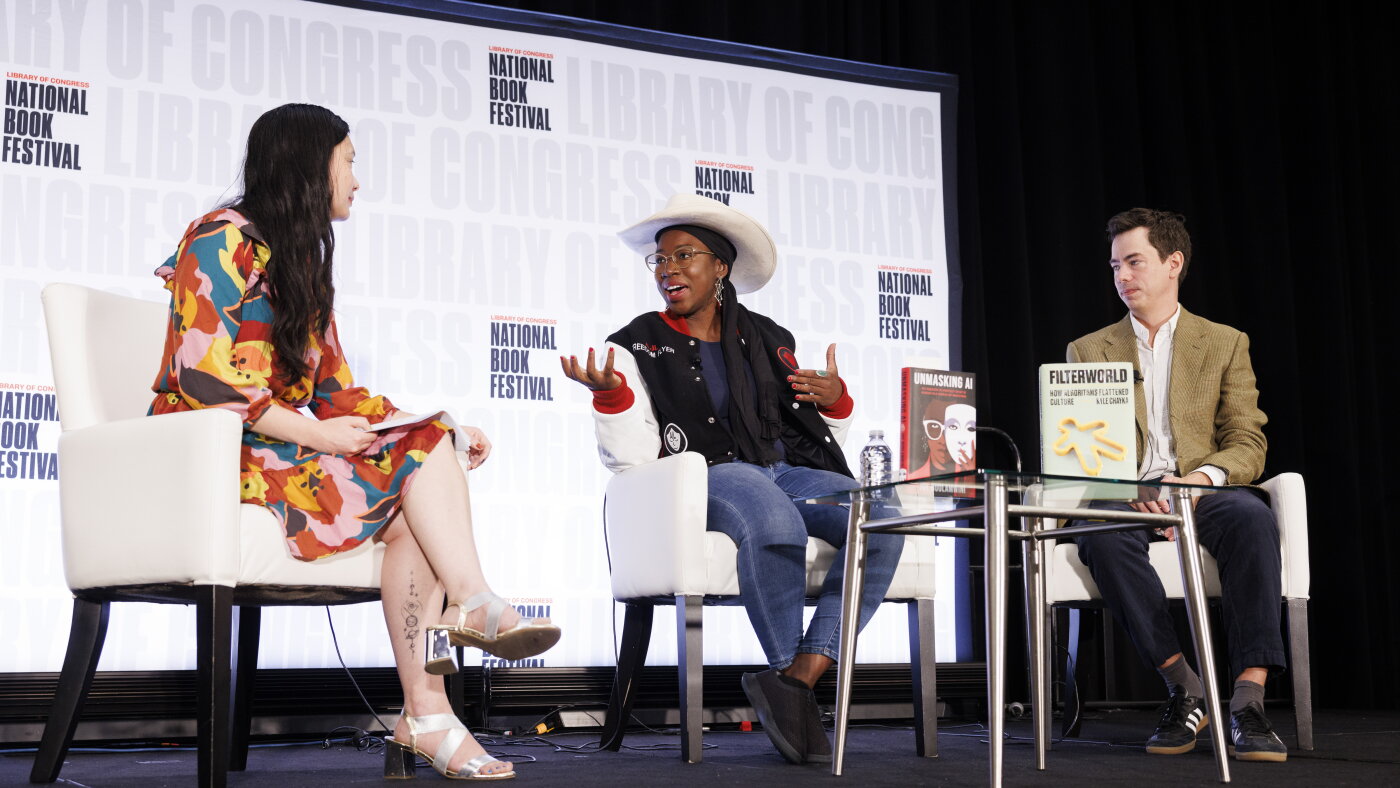
Chayka is a staff writer at The New Yorker, where his weekly Infinite Scroll column takes the internet seriously without granting it the dignity it constantly demands. His subjects include recommendation engines, AI aesthetics, social platforms, online video, digital labor, retail brands, and the tiny visual clichés that announce a trend has finished becoming a template. In his 2024 book Filterworld, he gave this environment a name: a culture in which algorithms do more than distribute creative work. They help shape what gets made.
The idea is easy to recognize in practice. A musician learns which opening seconds prevent a swipe. A restaurant designs a room that photographs well. A writer feels the gravitational tug of the viral phrase. Each decision can be rational. Piled together, they produce a peculiar flatness, a global abundance of things optimized to seem immediately familiar.
“Curation in a way is the antidote to that.”
Chayka’s argument has a useful edge because he is implicated in the system he studies. He publishes online. He maintains newsletters. He has founded digital media ventures. He posts, watches, clicks, and then writes about the machinery underneath those ordinary acts. His criticism carries the intimacy of someone checking the locks from inside the house.
An art historian enters the feed
The route began in New Milford, Connecticut. As a high-school senior, Chayka took AP Art History and joined a weekly after-school program at the Aldrich Contemporary Art Museum in Ridgefield. Curators astonished him. Here were people whose work involved artists, objects, rooms, and the power to decide what an audience would encounter. The job looked like interpretation made physical.
At Tufts University, he studied art history and international relations and edited the student newspaper. His courses moved between Latin American art, postcolonial theory, medieval artifacts, semiotics, and the arguments that institutions build around objects. During an internship in the contemporary department at the Museum of Fine Arts, Boston, romance met the card catalog. He spent much of the summer updating records of where collection objects were held.
The boredom was clarifying. Exhibitions could take years. Criticism could move at the speed of an idea. Writing offered the part of art history he liked most: active interpretation and the chance to bring information to an audience while the subject was still warm.
After college, when American jobs and internships were scarce, Chayka followed an earlier study-abroad connection to Beijing. An editor offered him roughly a thousand dollars a month to work at the art magazine LEAP. He stayed for about six months, then joined Hyperallergic in Brooklyn as a staff writer. He later joked that tweeting a lot probably helped him get hired. The writing may also have had something to do with it.
Brooklyn’s art world suited him better than the polished machinery of Chelsea galleries. It was full of artist-run spaces, open studios, small arguments, and improvised institutions. The internet surrounding it still felt similarly unfinished. Blogs had dialects. Forums had local customs. Tumblr, Twitter, Flickr, and early Facebook did different things instead of competing to become the same endless video screen.
First he named the room
In 2016, Chayka published “Welcome to AirSpace,” an essay about the recurring aesthetic of cafés, co-working offices, apartments, and short-term rentals around the world. The term captured a polished geography of reclaimed wood, exposed brick, pale surfaces, and reliable coffee. Digital platforms promised access to local experience, yet their incentives often rewarded places that looked legible to a traveling phone camera.
AirSpace was more than a design joke. It showed Chayka’s method: notice a faint irritation, walk backward through its aesthetics, and reveal the economic system hiding behind the ficus. His first book, The Longing for Less, applied that method to minimalism. Published in 2020, it moved beyond tidying and tasteful blank rooms into art, architecture, music, philosophy, and the long history of wanting absence to carry meaning.
What friends posted
What holds attention
What creators repeat
Filterworld widened the investigation from rooms to cultural circulation. Chayka argues that the decisive shift came as social and streaming platforms replaced chronological lists with recommendations during the 2010s. A shared morning post might arrive at dinner. A personal feed became less a record of chosen relationships and more a stream of predictions. Platforms learned from behavior, creators learned from platforms, and audiences learned to wait for the next item.
He calls the emotional residue “algorithmic anxiety”: the discomfort produced when a system judges us incorrectly or far too accurately. The phrase catches both insults. A bad recommendation makes us feel unseen. A perfect one raises the possibility that our supposedly private taste can be reduced to a trail of taps.
An algorithm predicts engagement from prior behavior. A human curator can offer context, judgment, and the productive shock of a recommendation that does not resemble your history.
The critic builds a few rooms
Chayka has not limited himself to observing media structures. In 2015, he co-founded Study Hall with writer P. E. Moskowitz as a newsletter, community, and platform for freelance media workers. It addressed a reality he knew directly: independent writers needed information, solidarity, and a place less public than the performance of a social feed. Study Hall was later acquired by OutVoice.
He next co-founded Dirt with Daisy Alioto, a culture newsletter that tested whether digital collectibles could finance editorial work. In 2021, an early sale of 131 NFTs brought in more than $33,000 in a week and funded two months of publishing. Dirt later announced a $1.2 million seed round. The experiment belonged to a specific crypto moment, but the underlying question outlasted it: could a small publication build a direct economic relationship with its audience instead of renting attention from a platform?
Chayka’s own site now says he has exited both ventures. He continues to make smaller rooms. Kyle Chayka Industries carries work notes and personal essays. One Thing is a collaborative weekly culture newsletter for links and arguments. These projects align with advice he gave journalists in 2023: spend less energy on giant public platforms and more on small-scale spaces and direct connections to creators.
That preference gives his institutional job an interesting tension. The New Yorker is hardly a tiny room, but Infinite Scroll resists the fastest habits of internet coverage. Chayka has said he looks for subjects that reward more thinking and ideas that might remain useful in a week, a month, or even ten years. His model is partly Walter Benjamin writing newspaper and radio pieces about Berlin and the technologies of the nineteen-thirties: contemporary observation with a long afterlife.
Taste is a verb
The easy response to Filterworld would be purification: delete every app, smash the router, and emerge with a record collection and excellent posture. Chayka offers a less theatrical answer. Algorithms are embedded in cultural distribution. Complete escape is difficult, and withdrawal alone does not create judgment. The alternative is to practice attention.
That practice can look almost embarrassingly ordinary. Ask a person what to read. Choose an album and listen through the dull track. Visit a shop whose shelves were arranged by an eccentric owner. Subscribe directly to a writer. Follow a recommendation into a subject with no obvious relationship to your personal brand. Let difficulty survive its first minute.
The feed can learn a preference. Taste begins when preference meets surprise.
Human curation matters in Chayka’s account because it carries reasons. A critic can tell you why an obscure film belongs beside a familiar one, or why a fashion trend connects to an older political mood. The recommendation arrives with a mind attached. It may challenge you, misunderstand you, or change its mind. Those inefficiencies are signs of life.
His forthcoming third book, How to Be Moved, turns toward life-changing encounters with culture and sensory experience. Even its announced premise feels like the next step after Filterworld. Once you have described the systems flattening experience, the livelier question is how experience regains depth. What makes an artwork, sound, place, or sensation rearrange a person rather than merely register as engagement?
Chayka’s career offers one answer without pretending to settle the matter. Keep looking at the frame around the object. Learn how the room is arranged. Build a smaller room when the large one becomes inhospitable. Preserve enough curiosity to be inconvenienced by what you find.
The algorithm will remain eager to help. It will supply the next song, video, product, and opinion with immaculate speed. Chayka’s work restores a little comedy to that confidence. Taste has always involved other people, accidents, moods, bad purchases, stubborn loyalties, and beautiful errors. A machine can smooth the route. The scenic mistake is still ours to make.