In December 2022, Kevin Roose asked ChatGPT to write the opening of a podcast. The instruction was wonderfully modest: make it sassy and energetic, and divide the lines between Roose and Casey Newton. Then the two journalists tried reading what the machine supplied. A technology that could finish homework and generate code was now auditioning for their jobs. Hard Fork had found a useful way to cover the future: put it to work and listen for the awkward bits.
- The product: reported tech conversation, interviews and practical experiments.
- The turn: a crypto-era premise gave way to the AI story.
- The new chapter: Max Read guest hosts after the original duo’s 2026 departure.
That little exercise explains the show’s appeal better than a list of famous guests. Predictions ask an audience to imagine something. Demonstrations give it something to judge. A chatbot-written introduction might sound impressive, silly or both. Either way, the listener has evidence. The joke becomes a doorway into the more consequential question: who gets to decide how this technology is built?
The premise expired. The conversation survived.
Hard Fork launched its first full episode on October 7, 2022, with Times technology columnist Roose and Platformer writer Newton. Its beginnings were less tidy than the finished product suggested. Roose later described a rejected three-person pitch called Not Gonna Make It, built around Web3, meme stocks and the metaverse. The eventual show occupied a feed left vacant after Kara Swisher’s departure.
The first problem was editorial: the original premise was losing its urgency. Crypto’s troubles, Musk’s Twitter takeover and the arrival of ChatGPT changed the news agenda. The hosts followed it. That decision matters because media products can get trapped defending the world that made their pitch sound clever. Hard Fork kept a crypto-derived name while allowing the subject underneath it to move.
There is a lesson here for anyone making a newsletter, a product or a presentation. Keep the question you are trying to answer separate from the topic you first attached it to. Hard Fork’s durable question was whether listeners could make sense of a confusing technological change. Crypto was one possible subject. AI turned out to supply a much longer conversation.
Give the listener something to test
By February 2023, the show was interviewing OpenAI’s Sam Altman and Microsoft’s Kevin Scott about AI-powered search. Later that month, an episode explicitly tackled how to understand language models without calling Bing sentient or reducing it to autocomplete. These were disputes about interpretation as much as engineering. Hearing the uncertainty helped make the stakes accessible.
Access also produced a peculiar historical artifact. Roose and Newton interviewed Altman two days before he was fired from OpenAI in November 2023. The Times published the conversation after his return. The same answers now landed in a different world. For a listener, it was an opportunity to compare an executive’s account of his company with events that the interview could not anticipate.
“What’s real? What’s hype?”Hard Fork’s original trailer
That is a useful standard for consuming the show, too. Listen to an executive explain a product, then ask what would count as evidence against the explanation. Try a featured tool on a small task. Compare the result with the promise. Hard Fork can supply questions and context; the listener still has to do the judging.
A tech show that reaches the classroom
The audience extends beyond people employed by technology companies. UMass Amherst’s Writing Program recommends Hard Fork’s ChatGPT episode and its GPT-4 discussion to instructors. Harvard’s Berkman Klein Center lists the appearance of researcher Aviv Ovadya. Those connections reveal a practical use for the show: helping people whose work is being changed by technology understand what to ask next.
For a teacher, that might mean considering how an assignment changes when students can generate prose. For a manager, it might mean distinguishing a convincing demo from a dependable workflow. Neither needs a degree in machine learning to begin. The show sits in the market for understandable technology journalism, alongside alternatives such as The Vergecast, Pivot and Big Technology.
Its original combination of experiments, interviews and comic disagreement gave listeners several ways into a subject. TIME included Hard Fork in its ten best podcasts of 2023, praising its treatment of weekly technology news. The publication’s examples ranged from students and AI to driverless cars. The common thread was technology’s consequences in ordinary life.
The archive has a price
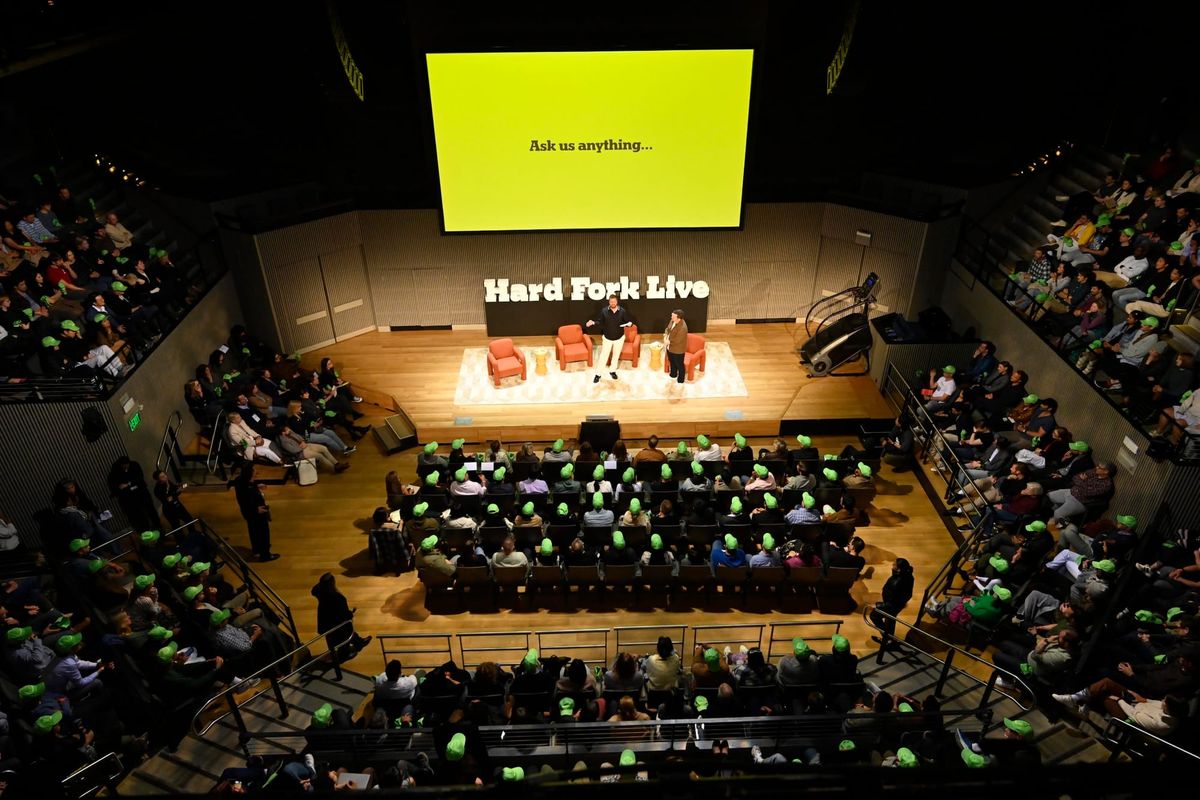
Hard Fork belongs to The New York Times. It is a media brand inside a larger publisher, and its business should be read that way. The Times’ audio offering combines podcast distribution with paid access, while episode notices describe advertising data practices. The show also took its audience into a theater. These are several commercial relationships built around the same editorial habit.
Historical Apple Podcasts and Spotify pricing for the Times audio offering.
At the 2024 launch, paid audio subscriptions through Apple Podcasts and Spotify cost $6 monthly or $50 annually. Older episodes became part of the subscription proposition. Today’s Times help guidance says Audio is included with All Access and home delivery, with limited recurring-show episodes available without an eligible subscription. A curious listener can sample; a subscriber can go deeper.
The practical boundary is equally clear. A podcast cannot validate a company’s deployment plan, replace technical documentation or settle whether a tool will work with your data. Nor should one striking chatbot exchange stand in for systematic testing. Hard Fork is useful preparation for investigation. Decisions involving a classroom, a workplace or a customer require evidence closer to that setting.
The next fork is human
Roose and Newton finished their hosting chapter with a September 18, 2026 exit AMA. Their separate venture, Machine Gods, was announced with NPR distribution and advertising support. They wanted to build a business they owned. That ownership decision changed the hosts’ careers; it did not transfer Hard Fork out of The Times.
An October 1 trailer introduced Max Read as guest host for the next few months, joined by Times reporters and experts. The next episode brought together Mike Isaac, Erin Griffith and Eli Tan to discuss AI assistants. Hard Fork now has a fresh question to answer through making the show: how much of a listening habit belongs to the conversation, and how much belongs to the people having it?