The name was a small joke with a serious point. In a platform game, the character survives by leaping from one surface to the next. When Casey Newton launched Platformer in 2020, he said the image described his life as a writer on the internet. He had spent a decade reporting on the companies that built those surfaces. Now he was placing his own publication on one of them and asking readers to follow him across.
At first, the jump was from The Verge to Substack. The Verge had given him seven years, a Silicon Valley beat, an audience for his daily newsletter The Interface, and editors he thanked by name when he left. Platformer would give him something different: a direct line to readers and the job of running the business that carried the reporting. It began as a small operation devoted to social networks and their relationship with the world. Five years later, that original description still fits, though the world and its networks have moved.
By September 2026, Newton had jumped again. Platformer had moved to Ghost. Hard Fork, the New York Times podcast he made with Kevin Roose, had ended. He and Roose had formed Machine Gods Media and announced a new AI show with NPR. It is a story about an unusually busy technology journalist, but also about a recurring problem in his beat: where does a person stand when the ground is owned by somebody else?
Before the tech beat, a newspaper kid
Newton grew up in La Habra, California, edited his high school newspaper and went to Northwestern’s Medill School of Journalism. In a later interview with the school, he recalled arriving there with a clear idea of his profession and then learning its craft from the editors at The Daily Northwestern, who would sit beside him and go through his copy line by line. After graduating in 2002, he reported for newspapers in the Midwest and Arizona. At The Arizona Republic he covered state politics. Technology, at that point, was an interest rather than his assignment.
San Francisco changed the assignment. He had visited friends there and wanted to move, though finding a job took him about two years. Then a former Arizona colleague at the San Francisco Chronicle called to ask whether he had ever thought about covering technology. Newton’s answer, as he remembered it, was essentially: what would that entail? The job meant writing about Apple, Google, Facebook and whatever else seemed interesting. He took it. It was 2010, and those companies were still becoming the institutions that would define much of his subsequent career.
A stop at CNET followed. Then, in 2013, he joined The Verge, eventually becoming its longtime Silicon Valley editor. The path from statehouse reporting to platform reporting was less of a turn than it might appear. Both beats ask who sets rules, who benefits from them and how ordinary people live with the consequences. Silicon Valley offered more product launches and better snacks, but the questions were familiar.
The inbox became a newsroom
At The Verge, The Interface let Newton treat the politics of platforms as a daily story. It was a useful format for an industry whose decisions rarely arrive as a single tidy event. A policy changes on Monday; creators respond on Tuesday; employees explain the internal argument on Wednesday. The newsletter could hold all three. Newton also pursued investigations beyond the email rhythm. His 2019 reporting on content moderation workers was named a finalist for the 2020 National Magazine Award for Reporting.
Platformer took that rhythm out of an established newsroom and turned it into a publication of its own. Newton announced it with an ambition to show that reader-funded reporters could sustain their work. He acknowledged the appeal of a service like Substack, which made subscriptions straightforward and gave an independent writer an immediate home. He also admired reporters who had already made the leap. His launch essay thanked colleagues at The Verge with unmistakable warmth; the decision reads as an expansion of his work, not a repudiation of the people who helped him do it.
The economics became visible quickly. Platformer started with roughly 24,000 free subscribers, the audience Newton brought from his previous newsletter. In a second-year reflection he reported nearly 75,000. By January 2024, he said the free list had passed 170,000, with paying readers supporting additional journalism jobs. Those numbers describe growth, but the more telling detail is what he said readers paid for. Breaks in news and careful analysis drew subscriptions. A jobs board, which he tried, did little. The reader was giving unusually clear feedback on the work.
Newton has a useful joke about his prose: the two phrases that may appear most often are “on one hand” and “on the other.” It is funny because any reader of technology coverage knows the temptation to dispense with one hand entirely. His preferred method leaves room to revise a judgment as a company changes, or as reporting improves. In his account of the newsletter, that was part of the advantage of writing in episodes. Tomorrow’s edition can carry the next complication. The cadence invites a reporter to keep looking.
“By going independent I hope to demonstrate that reader-funded reporters can survive and even thrive.”Casey Newton, announcing Platformer in 2020
Then the platform became the story
In January 2024, the joke in the publication’s name became operational. Newton decided to move Platformer from Substack to Ghost after a dispute over how Substack handled extremist publications and the tools that could recommend them to readers. He wrote a detailed account of the decision, including the advantages Substack had given him, the questions he had asked its leaders and the reasons he believed its response fell short. The question was particularly close to his reporting beat: a host that also promotes material exercises a different kind of power from one that merely stores it.
The migration had a practical premise. Platformer’s readers would come along, subscriptions intact. Newton said the business would also save money by no longer sharing a portion of its revenue with Substack. Neither point made the ethical dispute simpler. It made the choice possible. A direct relationship with readers had turned an editorial judgment into an action the publication could afford to take.
That is a subtle distinction in independent media. Owning a domain is easy. Being able to change the machinery beneath a publication while still delivering the next issue is harder. Newton was clear that Ghost, too, was a service with rules and limits. His argument rested on its policies and on its stated lack of a built-in recommendation network like Substack’s. For a journalist whose work often asks what platforms amplify, the host’s design mattered as much as the host’s name.
A podcast changes its subject
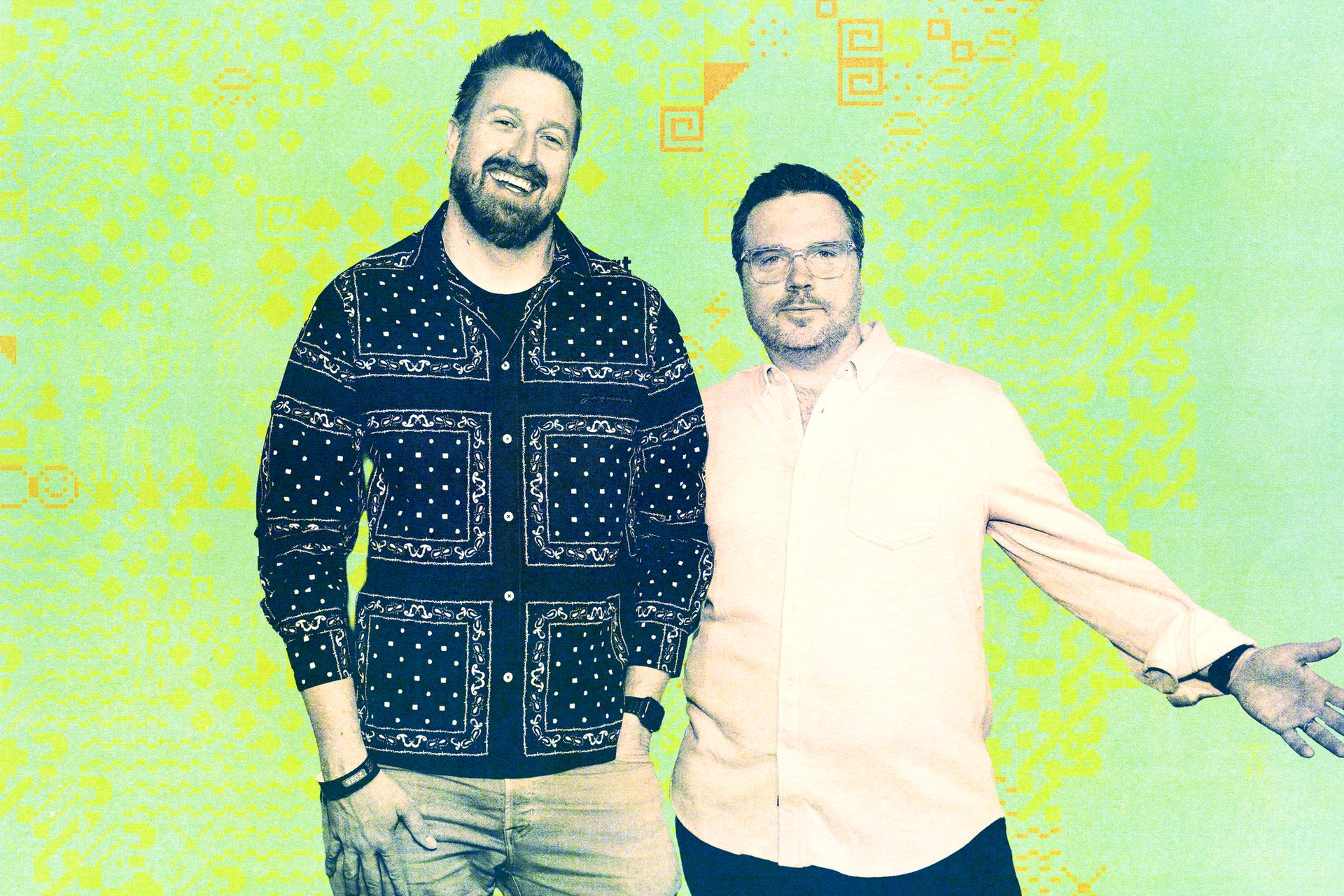
The other partnership in Newton’s recent career began at The New York Times. He and Roose started Hard Fork in 2022, after discussing a technology show during a period when crypto dominated the industry’s imagination. The title stayed; the center of gravity moved. ChatGPT arrived weeks after the show launched, and AI quickly became the question that kept returning. The pair interviewed the people building the systems, tested products and argued aloud about what the changes might mean. Their conversations gave the program its texture: serious reporting with room for a joke that did not need a press release to explain itself.
In June 2026, they announced they would step away from Hard Fork. In September, NPR announced the next chapter: Machine Gods, a twice-weekly, video-first AI show to be produced through the company Newton and Roose had formed. The show is scheduled to debut in October on podcast platforms, YouTube and the NPR app, with a radio version planned for 2027. NPR brings a wide public audience. Newton and Roose bring their reporting and the freedom, with their own company, to build the format around it.
Newton’s comment in NPR’s announcement was revealing. What sold him was its public-service mission and the chance to bring independent AI reporting to millions for free. It is an argument about reach as much as ownership. Platformer made readers willing to pay for the work; the new show can make some of that kind of reporting broadly available without a subscription. The arrangements are different. The impulse to explain powerful technology clearly is the same.
The next surface
There is a gentle absurdity in following the fortunes of a writer whose subject is the companies through which everyone else reads. Every publishing choice creates another story about power. Newton has made that condition unusually visible. He started Platformer on a service that helped him find paying readers, moved it when he disagreed with its approach to promotion, and is now building an audio and video business with a public-media partner. None of these steps removes dependence on distribution. Each asks him to choose it deliberately.
The career has a steadier line than the changes in format suggest. A school newspaper editor learned the value of close editing. A state politics reporter learned to ask how decisions get made. A Silicon Valley correspondent followed those decisions into social networks. An independent publisher found readers willing to pay for an answer. As AI becomes a larger part of public life, Newton is taking those same reporting habits into a new show. The platforms will keep changing. His work is to keep asking what they do, and to find a way for the answer to reach people.