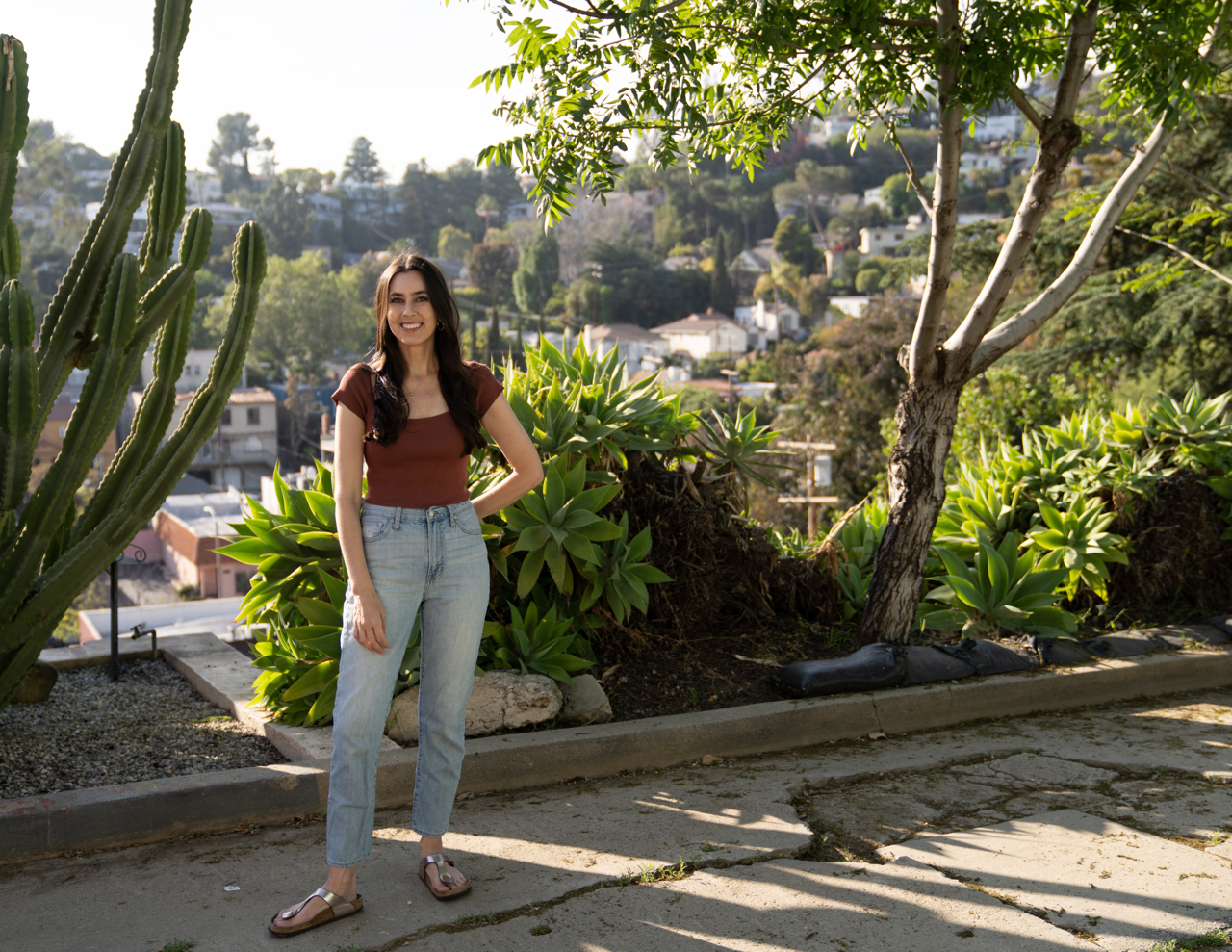
Taylor Lorenz does not observe the internet. She lives inside it - the way a marine biologist doesn't just study the ocean, they feel the current. Since 2014, she has turned that total immersion into some of the most consequential technology journalism in America: breaking stories that shifted political campaigns, documenting the rise of a billion-dollar creator economy before most editors even knew what an "influencer" was, and regularly absorbing the most intense online harassment directed at any journalist in the country without flinching. Today, from the headquarters of her growing independent publication User Mag, she is doing all of that without a corporate newsroom gatekeeping the work.
What sets Lorenz apart from other tech journalists is simple: she does not need to be taught the internet. She grew up learning it. In 2009, fresh from college and jobless during the recession, she was a temp worker when a coworker introduced her to Tumblr. "Every single thing I have in life I owe to Tumblr," she has said - and she means it literally. That platform gave her a framework for understanding how online communities form, how subcultures spread into mainstream culture, and how fame gets manufactured on the web. The journalism followed organically.
"Every single thing I have in life I owe to Tumblr."
- Taylor LorenzHer early career zigzagged through the new-media landscape in the way only a person paying close attention to its contours could manage. The Daily Mail's global social media team. Business Insider's tech desk. The Daily Beast. Then, in 2019, The New York Times - the assignment that would make her a household name in media circles. At the Times, she wrote about Instagram influencers, TikTok sensations, and the mechanics of online virality with a fluency that her editors clearly appreciated but, her critics argued, sometimes lacked distance. The criticism was ironic: her lack of distance was precisely what made her reporting accurate.
That same year, she became a Knight Visiting Nieman Fellow at Harvard, where she studied Instagram's influence on news consumption. The fellowship was a signal that the academy had recognized what practitioners already knew: the social media beat was not a soft cultural feature. It was a power beat. The people who ran the attention economy were as consequential as the people who ran the financial one - and almost no one was covering them with the rigor they deserved.
In 2020, Lorenz broke a story at the Times revealing that Michael Bloomberg's presidential campaign was paying Instagram meme accounts to post disguised political ads as fake personal DMs. The story exposed a new frontier of political deception - and the fact that most political reporters had no idea it was happening. Lorenz did, because she was on those accounts every day.
The move to The Washington Post in 2022 produced her most controversial story - and her most important one. In April of that year, she published a report identifying Chaya Raichik as the operator of Libs of TikTok, a Twitter account that had become the primary engine driving anti-LGBTQ+ legislation in dozens of states. The story generated a furious backlash from conservatives who accused Lorenz of doxxing. Journalism ethics organizations, her own newsroom, and most media critics defended the report as squarely in the public interest. The account had been named in legislation; its operator was a public actor. The rules of basic accountability journalism applied. Lorenz reported it. The controversy over the piece - which far exceeded in intensity the original legislation that prompted the coverage - became its own story about how the right-wing internet responds to unfavorable journalism.
The Record
Lorenz has been the subject of intense coordinated harassment campaigns throughout her career - SIM-swapping, swatting attempts, doxxing of her family, death threats. The Harvard Kennedy School's Shorenstein Center studied the campaign against her. She has been described, repeatedly and by multiple independent observers, as the most harassed technology journalist in America. She describes herself as "comfortable with trolls." The hostility she receives is not incidental to her reporting - it is, frequently, a measure of its impact.
Her book, Extremely Online: The Untold Story of Fame, Influence, and Power on the Internet, published by Simon & Schuster in October 2023, is the definitive history of the influencer economy. Starting with the proto-creators of the early 2000s - the LiveJournal writers and early YouTube personalities who figured out, before anyone had a framework for it, that audiences would pay attention to them directly - Lorenz traces the full arc to the TikTok megastars and brand-deal millionaires of today. The book became a national bestseller. More importantly, it reframed the conversation: influencer culture was not a sideshow. It was the main story of how media, commerce, and identity had been restructured for an entire generation.
"Most of the coverage of influencers is deeply misogynistic and messed up."
- Taylor Lorenz, Fast CompanyIn October 2024, following an editorial dispute at the Post over a Biden-related Instagram post, Lorenz departed to build something of her own. User Mag launched on Substack within days of her exit, and the audience followed. Within weeks, the publication had tens of thousands of subscribers. Within months, it crossed 99,000 free readers. The paid tier adds to that. The math is straightforward: Lorenz had built an audience that was hers, not the Post's - and when she left, they came with her.
User Mag is not just a newsletter. It is Lorenz's full theory of what tech journalism should be: granular, reported, attentive to power dynamics, and written by someone who actually uses the platforms being covered. Her "Free Speech Friday" column covers tech policy and civil liberties. Her reported features dig into the mechanics of how algorithms, platforms, and power intersect. The Power User podcast - which she launched in early 2024 with Vox Media distribution and now runs independently - extends that coverage into audio.
She also writes for Zeteo, Mehdi Hasan's independent media outlet, where her column focuses on Silicon Valley billionaires and the concentration of tech power. It is a logical fit: both publications share a conviction that the people running the internet's infrastructure deserve the same level of scrutiny as the people running its politics - and that the two categories are increasingly the same category.
Lorenz coined - or at minimum mainstreamed - several terms that are now embedded in the cultural vocabulary: "cheugy," "algospeak," and the broader framing of the "creator economy" as a field worth studying seriously. She was among the first journalists to document the viral spread of "OK boomer" as a generational marker.
The personal biography reads like an argument. She grew up in Old Greenwich, Connecticut - affluent, suburban, a long way from the digital underground. She earned a BA in Political Science from Hobart and William Smith Colleges in 2007 and graduated into a recession. The gap between what her education trained her for and what the economy offered in 2009 sent her to Tumblr, and Tumblr sent her everywhere else. The trajectory is not a story about privilege or its absence - it is a story about paying attention to the right things at the right moment and having the discipline to follow where they led.
She moved from New York to Los Angeles in 2020. Her explanation is characteristic: "LA understands how media distorts reality." It is a terse sentence that contains a complete theory of how entertainment, tech, and perception work together. She is immunocompromised and regularly wears masks in public - a fact she has been open about, and which generated its own small controversy during the pandemic when people who didn't understand the concept of individual health circumstances mistook her consistency for a political statement.
The internet she covers is not abstract. It is the one she wakes up to every morning, moves through all day, and documents with something that looks, from a distance, like compulsion but is, up close, just the practiced fluency of someone who has been paying very close attention for a very long time. When she describes falling into a rabbit hole about lawn care and rewilding, or about the inner dynamics of a meme account with 400,000 followers, she is not performing eccentricity. She is describing the job. Most of journalism is knowing where to look. Lorenz has always known where to look - and the answer has consistently been: the internet, right now, at the thing everyone else is ignoring.
"Every story I do has to have a really strong 'why it matters' part."
- Taylor LorenzWhat comes next is User Mag - the publication she spent her career building toward without necessarily knowing it. Independent, subscriber-supported, unmediated by institutional gatekeeping. Her audience, her reporting, her framing. The bet is that readers who want serious, informed, native coverage of tech culture will pay for it directly. Based on the first months of subscriber numbers, the bet appears to be paying off. The internet, as it turns out, is a reasonable place to build a media business - if you know it as well as Taylor Lorenz does.