In August 2017, Sam Charrington was watching a number on SoundCloud. His podcast was approaching its five hundred thousandth play. A little more than a year earlier, he had launched a show with a name that sounded like a calendar entry: This Week in Machine Learning & AI. Now people were listening. In his thank-you note, he admitted, “I had no idea what I was getting into.”
- Technical interviews connect AI research with the work of shipping systems.
- Study groups and Slack give listeners somewhere to take their questions.
- Sponsorship and advisory work sit alongside the publicly available show.
The revealing part of that story is the counter. Charrington could see attention arriving. Attention, however, is an awkward thing to build a company around. It can disappear when the next announcement arrives. TWIML’s more interesting move was to give that attention somewhere to go: another conversation, a paper, a study group, eventually a conference. A listener could become a participant.
The question behind the announcement
TWIML occupies the stretch of road between an AI result and an AI system someone must maintain. Its host is an industry analyst whose work includes enterprise adoption and technology platforms. Researchers, engineers and data scientists supply the conversations; technically curious business leaders are also part of the intended audience. The product is access to their reasoning, with enough room for the details to matter.
That positioning is visible in the archive. In November 2018, TWIML announced a platform series with interviews featuring people from Facebook and Airbnb, alongside forthcoming ebooks. The subject was the machinery around machine learning. A model is one component. Training, evaluation and the way teams organize their work can determine whether that component becomes useful.

The archive’s topic navigation makes that breadth practical. A visitor can follow causality, responsible AI, robotics or infrastructure rather than simply play whatever is newest. Its series collect conversations around research conferences and recurring themes. This is useful when your problem has a name but your next step does not.
A podcast with somewhere to go afterward
Consider the difference between understanding an interview and working through a textbook. In the first, someone else carries the explanation. In the second, the reader eventually gets stuck. TWIML’s community programs address that second moment. Members receive a Slack invitation and join channels for the subjects they want to explore.
The listed programs include practical generative AI discussions, a group working through the Deep Learning textbook by Goodfellow, Bengio and Courville, and a weekly Kaggle team. Those are different activities with a common feature: people return to shared material. There is something pleasingly ordinary about it. An industry full of extraordinary predictions still needs a regular meeting and someone willing to ask a basic question.
“Challenge the idea, not the person.”TWIML Community Guidelines
The rule is more useful than a vague promise of community. TWIML’s guidelines also ask people to support claims with evidence and leave room for others in discussion. These are stated expectations, rather than proof that every interaction lives up to them. But they tell a newcomer what contribution means here: bring a question, an explanation or a reason to reconsider.
When the commute disappeared
In 2020, the setting changed. Charrington wrote that people were spending more time in front of computers during the pandemic, and TWIML leaned into video. Its first video interview, in April, featured Google’s Quoc Le. By December, audio-only interviews had become unusual enough that he could not remember the last one.
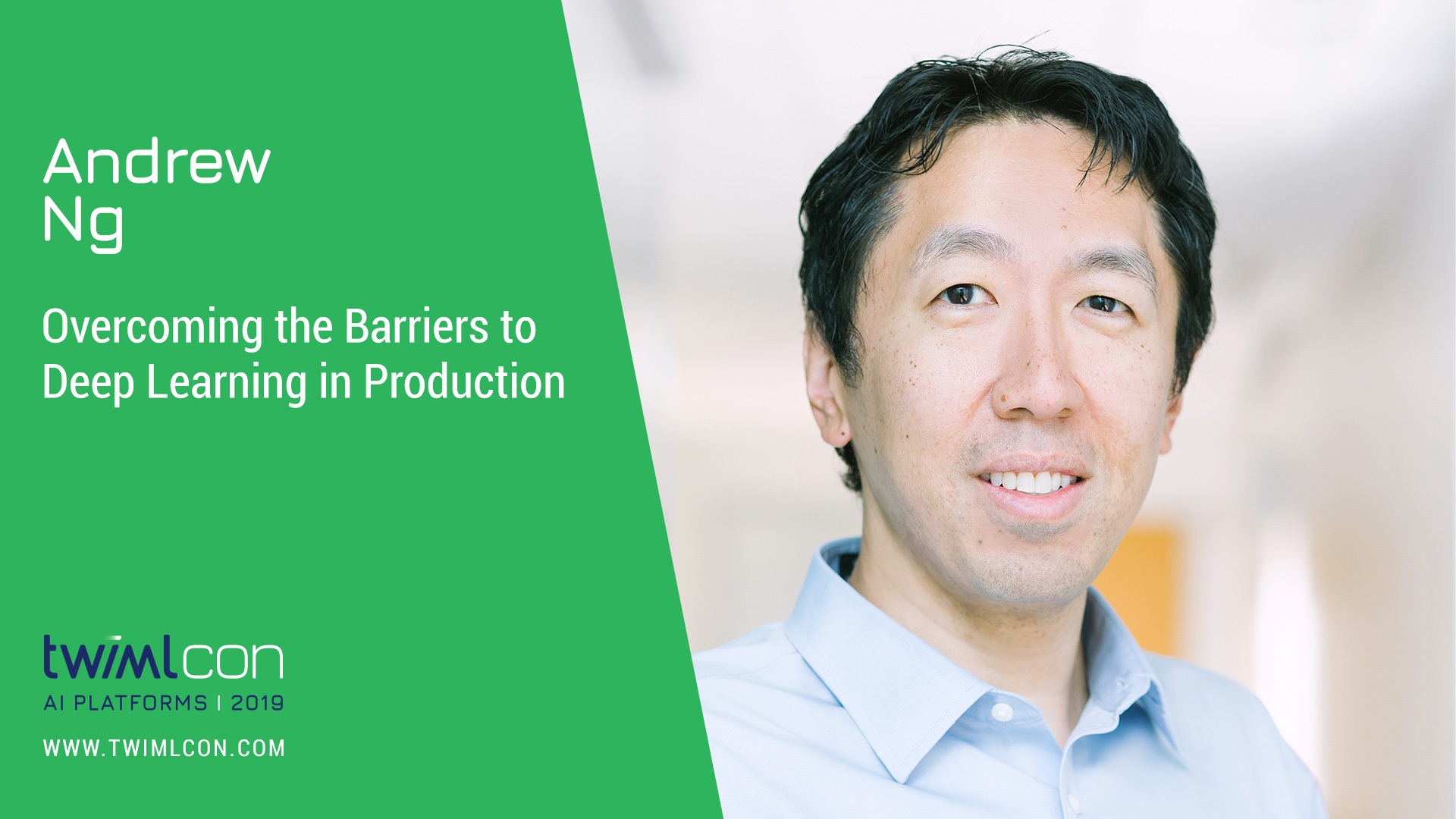
The same year brought sixteen study groups and TWIMLfest, a virtual festival that expanded beyond its smaller original plan. It ran for three weeks, with forty sessions, more than seventy speakers and over 1,700 registrations. The figures describe one historical event, rather than today’s audience. They also reveal a useful business choice: build a program around what people can participate in now.
Who pays for the conversation?
The podcast is publicly accessible. Companies can buy sponsorship; TWIML also offers content and advisory work. The distinction matters because listeners and paying organizations need different things. A listener wants useful understanding. A sponsor wants the attention of people who might use its technology. Their interests can overlap, but the commercial relationship belongs in view.
A concrete example is episode 767, published in May 2026. Distributional co-founder Scott Clark discussed production agent failures, including tool-use hallucinations that standard evaluations miss. The episode explicitly names Distributional as its sponsor. The conversation provides ideas to investigate; the disclosure tells the listener whose product is part of the discussion.
TWIML’s reports extend the same applied emphasis. RAG: Beyond the Chatbot argues for integrating retrieval-augmented generation into existing tools and workflows. The interesting question is whether a particular process improves, rather than whether an organization can produce a convincing chat window. For a business reader, that is a useful change of unit: from demonstration to work.
Borrow the habit, then test the claim
TWIML sits among technical shows such as Practical AI, Latent Space and Data Skeptic. Its identity comes from the combination of researcher interviews, deployment questions and opportunities to study with others. The archive is a place to gather hypotheses. It is especially useful when you already have a technical question and want to hear how another team approached it.
Here is a habit worth borrowing: choose one episode connected to a problem you face, write down one claim, follow a linked resource, and design a small test. Take the confusing part to a study group. The podcast costs no listening fee; the larger investment is attention and the work afterward. An interview cannot establish that another team’s architecture will fit your data, budget or risk tolerance.
By October 6, 2026, the catalog had reached episode 779, with Diogo Almeida discussing Jev and calibrated software decisions. The vocabulary had traveled a long way from 2016. The reader’s useful question remains wonderfully stubborn: what would make this work here?