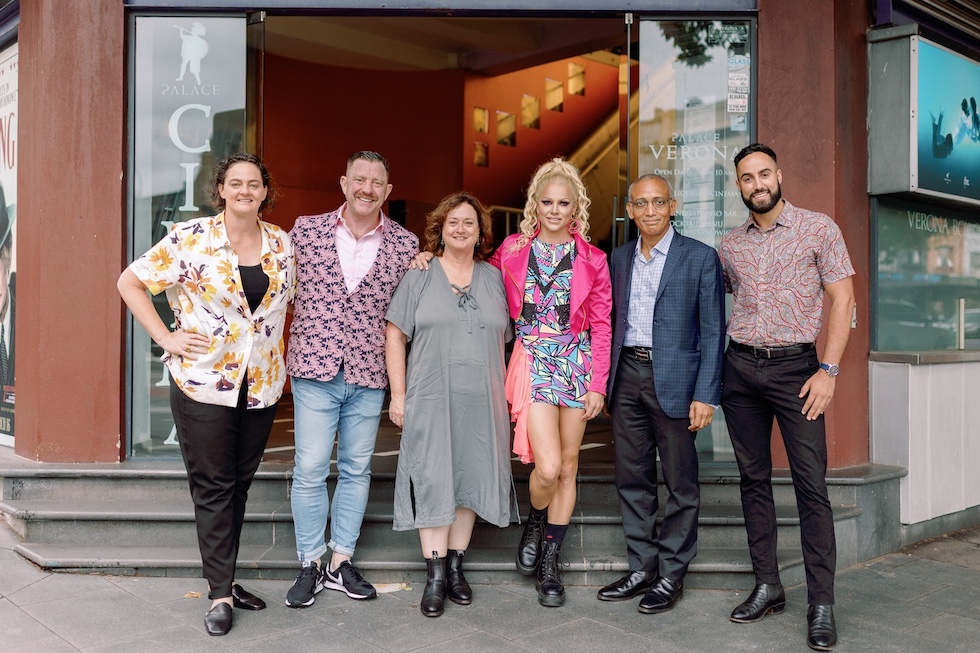
On a Wednesday morning in Sydney, Kumar Venkatasubramanian took his coffee at the cinema. At Palace Verona, P&G and its partners were screening CODED: The Hidden Love of J.C. Leyendecker, a documentary about an illustrator and the early representation of LGBTQIA+ people in art and advertising. For someone running a business full of familiar household brands, it was a useful place to sit.
The occasion, in February 2023, brought together people whose working lives crossed film, performance, advertising and corporate leadership. Courtney Act was there, along with the film’s executive producer Brent Miller and Sydney WorldPride’s Kate Wickett. Venkatasubramanian appeared in the photograph outside: jacket, open collar, round spectacles, standing between Act and presenter Matty Mills. A consumer goods executive had turned up to consider who gets seen.
His own explanation emphasised continuing to learn and challenge himself. That is a revealing ambition for an executive already two decades into the same company. Seniority usually supplies plenty of opportunities to speak. Here he was describing the value of remaining a student.
The education after business school
Venkatasubramanian studied engineering at the National Institute of Technology, Durgapur, then took an MBA at the Indian Institute of Management, Calcutta. His LinkedIn profile dates the MBA to 1998-2000. P&G hired him from campus in 2000, placing him in its Indian sales organisation. The first rung of this particular corporate ladder involved helping goods find their customers.
His subsequent assignments included distributor operations and relationships with major customers. These are the parts of a consumer business that rarely make an advertising reel. A brand can have a memorable campaign and an attractive package; somebody still has to get the package into the place where somebody else can buy it. Distribution supplies an unromantic answer to a romantic profession’s promises.
He eventually led P&G India’s sales function and its oral care category. By the time he moved overseas in 2020, he had also led a major expansion of the Indian sales distribution network. The progression matters: he arrived at general management through the practical business of reaching shops and working with retailers. His later enthusiasm for digital commerce has that decidedly physical backstory.
- 2000Campus to P&G
India sales - 2020Australia &
New Zealand - 2024Back to India
as CEO
There is a useful distinction between spending years at a company and spending those years doing the same job. His career includes category experience across India, Brazil and Australia. The employer stayed constant while the markets changed. Different customers, different retail relationships and different teams supplied the variety that a sequence of company logos might otherwise suggest.
Sydney, with a wider brief
In 2020 he became vice president and managing director for Australia and New Zealand, succeeding Vivek Gupta. At his appointment, Venkatasubramanian singled out the local team’s brand building, innovation and support for one another. He was taking responsibility for an organisation whose work he explicitly praised. That is a considerate way to arrive in somebody else’s office.
The Australian and New Zealand period gave him a larger operating brief. Category expansion and retailer partnerships featured in the business’s reported growth under his leadership. He also chaired P&G ANZ’s Sustainability Board, with recycling initiatives for consumers and retailers among its activities. The job encompassed what happened to products after purchase as well as how they reached the basket.
At the time of Sydney WorldPride, his biography described a household of his own in Sydney: his wife and two daughters. It also placed him in industry work through ACCORD, the Australian industry association. The public picture is of an executive working across the company, its trading partners and the institutions around it, rather than treating the country business as a sealed room.
The cinema visit belonged to a broader commitment. P&G had entered a three-year partnership with Sydney Gay and Lesbian Mardi Gras in 2022. Its plans included educational materials with youth charity Minus18 and work by several brands on visibility and representation. The partnership connected advertising choices to what employees, pupils and consumers encountered beyond the office.
For a business selling everyday goods, representation is a practical creative decision. Advertisements contain people, households and assumptions about who does what. The discussion at Palace Verona put those choices under scrutiny. His stated wish to learn gives the scene its interest: a senior executive making room for perspectives that a sales report would never contain.
Returning is another kind of beginning
On May 1, 2024, Venkatasubramanian became CEO of P&G India, succeeding LV Vaidyanathan. Nearly 24 years separated his campus entry from the appointment. He returned with knowledge of the Indian organisation and experience running Australia and New Zealand. It was a homecoming inside a company where he had already spent most of his working life.
Yet his language at the announcement made space for discovery. He looked forward to “learning more about Indian consumers, and serving their needs.” Knowing a market from earlier assignments does not freeze it in place. A returning executive gets both an advantage and an awkward question: which familiar assumptions still deserve to be familiar?
His proposed approach centred on daily-use products and five connected considerations: product, packaging, communication, retail execution and value. Read as a shopping experience, the list is straightforward. Does it work? Can I understand it? Can I find it? Is it worth the money? The vocabulary of a large corporation becomes more intelligible when imagined from the other side of the counter.
Five elements of the growth strategy Kumar outlined on his return to India in 2024.
The shelf has acquired a screen
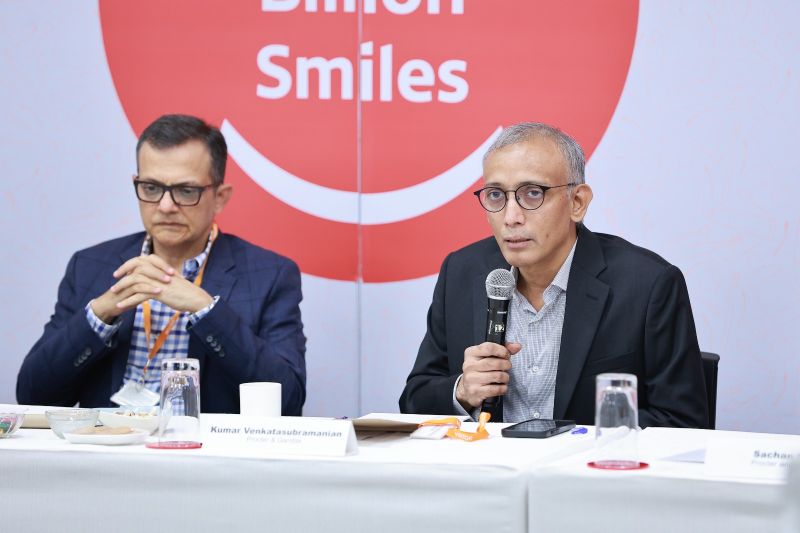
By October 2024, he was speaking publicly about India’s changing supply chains and the growth of e-commerce and quick commerce. At a FICCI event, he linked digital capabilities to a better understanding of consumers. Faster delivery was part of a larger change in expectations: convenience itself had become something a shopper could choose.
His argument went beyond saving money in the supply chain. Better flows of information could improve predictability and service while reducing environmental impact. He also distinguished the value people perceive from the amount they initially spend. That distinction leaves room for a better-performing product to earn its price, provided the shopper can see the benefit.
For someone who had helped expand physical distribution, the continuity is striking. The route to the shopper is changing, but the responsibility to understand that route survives. A delivery app may look very different from a distributor’s order book. Both eventually have to answer to an actual household waiting for an actual purchase.
New tools, familiar obligations
At the Indian Society of Advertisers CEO Conference in February 2025, he described P&G’s internal generative AI tool, ChatPG. Data security was a reason for building it in-house; saving employees time was a reason to use it. He also described machine learning in distributor ordering, connecting a fashionable technology to the decidedly longstanding problem of replenishment.
That example fits his career unusually well. An executive who began in sales was discussing software that helps predict distributor shipments. The subject had travelled from sales operations into technology without losing its original purpose. The useful question remained whether the next order could better reflect what would be needed.
He called the broader approach “constructive disruption”. Behind that corporate phrase lay several different applications. In education, P&G Shiksha worked with partners and state governments on digital labs and adaptive learning through Mindspark. He described technology helping tailor learning to a child, extending the same attention to differing needs beyond commercial products.
His industry responsibilities also widened. He chaired FICCI’s FMCG Committee, whose first meeting of 2025 took place at Colgate-Palmolive’s Mumbai office with Kenvue’s Manish Anandani as co-chair. P&G’s chief was discussing the sector’s concerns in another company’s building. Competition still leaves some common work to do.
During 2024-25, he also joined the Advertising Standards Council of India’s Board of Governors. In February 2025, IIM Mumbai listed him among the keynote speakers for its Equality Summit. Advertising standards and inclusion are different subjects, but both ask executives to consider the consequences of what a business puts into public life.
“I want to be constantly learning and challenging myself.”
Kumar Venkatasubramanian · Sydney, 2023
The customer still has the last word
By June 2026, the consumer conversation had become more demanding. At an analyst meeting, Venkatasubramanian described crowded media channels, changing paths to purchase and shoppers making careful decisions about value. He discussed quick commerce, social commerce and agentic AI as forces changing the relationship between discovering a product and buying it.
His emphasis on attention brings the career back to its starting point. Distribution makes a product available; communication helps somebody understand why it deserves a place in the basket. When shopping and media overlap, those tasks move closer together. A familiar brand still has to explain itself to a person with other things to do.
The cinema morning offers a fitting image of that work. Venkatasubramanian had gone somewhere different to hear something outside the normal business agenda. Across the years, the locations have changed: Indian sales operations, Sydney, the India CEO’s office, an industry meeting. The habit he described remains a useful one to carry between them: keep learning about the people on the other side.