Consider a sofa. On a furniture website, it is a photograph, a price and a delivery promise. Inside the retailer, it is also a purchasing decision, a warehouse location, a financial entry and a transport problem. Every department can be doing its own job competently while the sofa remains stubbornly undelivered. KPS AG works on the connections between those jobs. That is a less photogenic business than designing the shop window. It is also where the promise gets tested.
- KPS designs and implements the processes behind retail and consumer-goods businesses.
- Its tools make established workflows available for teams to explore before changing their systems.
- Recent financial results show why it is broadening its offering and pursuing smaller engagements.
01 / A sofa is a systems problem
The German consultancy’s published home24 reference offers a compact example. The online furniture retailer implemented SAP S/4HANA Merchandising as a central platform. KPS reports a prototype after three months and go-live, including the customer-facing SAP components named in the case, after thirteen. Those timings belong to that project. Their value is that they show a sequence: make the future operation visible, then work towards putting it into service.
One published home24 case. A timetable, not a delivery guarantee.
KPS covers the route from strategy and process design to implementation and application management. Its portfolio includes enterprise resource planning, finance, logistics, commerce, marketing automation and loyalty. A retailer can hire it to connect what the customer sees with what purchasing, inventory and accounting know. Published references range from home24 and Fressnapf to Coop and Hugo Boss. The common thread is the coordination problem inside businesses selling through several channels.
02 / Rehearse before you replace
A distinctive KPS product is a collection of processes. Its Instant Platform packages more than 300 best-practice processes and 67 retail use cases around SAP S/4HANA. Teams can use documented workflows and training materials, model their requirements, and develop a prototype. An example company gives them somewhere to experiment. Purchasing and warehousing become things colleagues can walk through together.
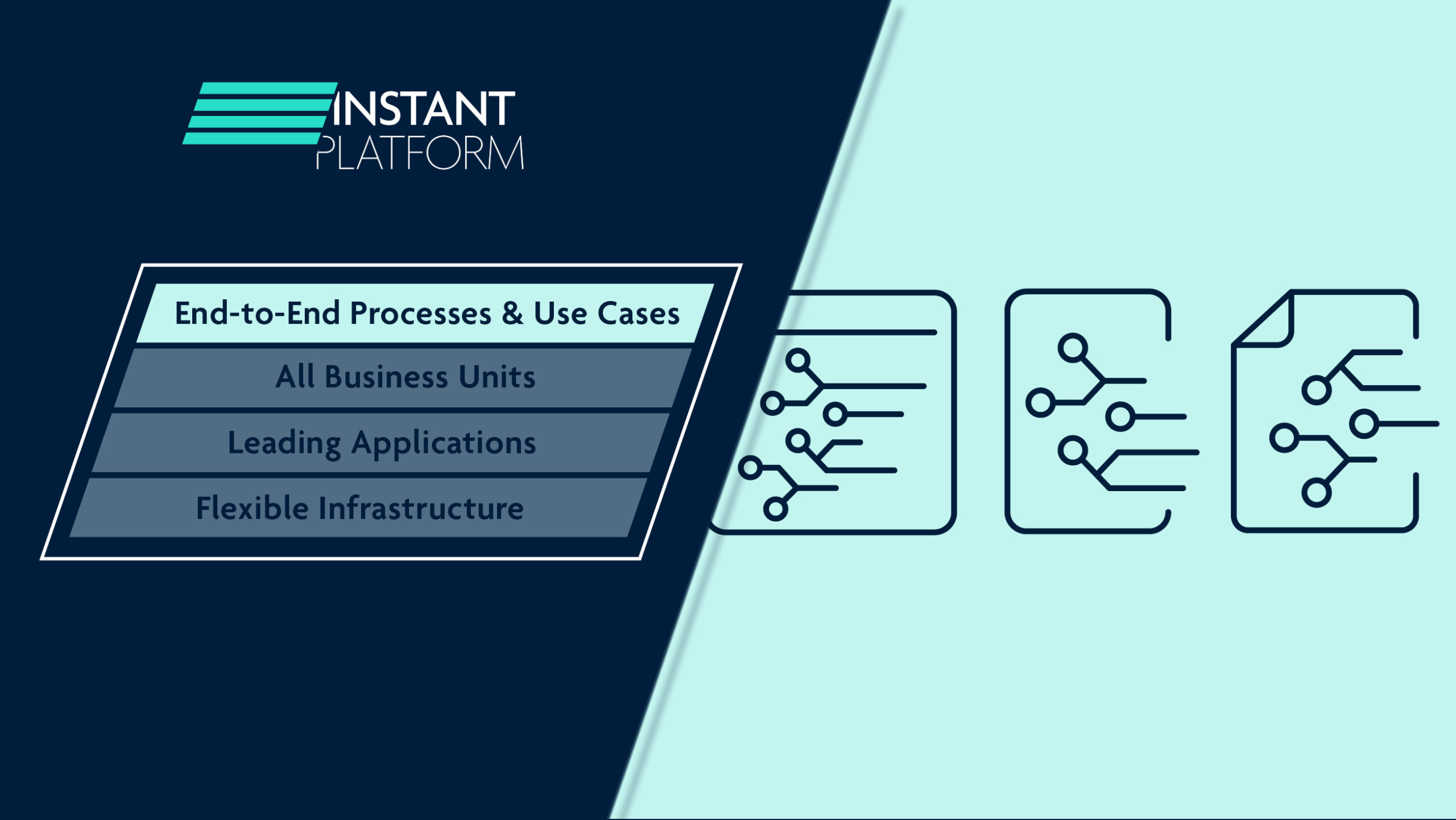
Here is the practical appeal: an abstract requirement can conceal several incompatible interpretations. A working process makes those differences easier to spot. The lesson a reader can borrow is to ask people to run a representative transaction early. Follow it across departments. Watch where somebody reaches for a spreadsheet. That is editorial advice drawn from the method, rather than a measured promise about its results.
The approach has conditions. Reuse helps when routine activities can follow a shared model and the underlying data is dependable. A retailer with unusual requirements needs to examine where the template stops fitting. Business owners still have to agree on definitions and responsibilities. A process library can accelerate those discussions; it cannot make the decisions for them.
Its competitive pitch rests on that accumulated retail knowledge and the ability to carry a design through implementation. KPS identifies itself as an SAP Gold Partner, while its portfolio also includes other technology providers. A buyer comparing consulting firms can therefore ask a concrete question: which parts of this project have you already solved, and which require discovery? The distinction helps separate reusable experience from assumptions that still need testing. KPS’s case material makes that question easier to ask, even though each new customer will bring a different set of constraints.
03 / Fashion has a calendar
At Marc O’Polo, the difficulty was more specific than simply having old software. KPS describes fragmented processes, inconsistent data and manual work across an international business. The O’JECT programme connected merchandise management, planning and finance through an SAP-based architecture. The rollout began with master data and finance, progressed into planning and procurement, then continued into warehouse and seasonal processes.
That order matters. Fashion has seasons, and a technology programme has dependencies. The company staged the introduction to reduce risk and accommodate its commercial calendar. In February 2026, KPS announced retail technology recognition for the project in the Supply Chain Excellence category. The useful detail is the choreography underneath the award: start with foundations that subsequent work will need.
- 01 Master data & finance
- 02 Planning & procurement
- 03 Warehouse & seasonal processes
04 / The adviser gets a smaller brief
KPS’s own business supplies the counterpoint. Its 2024/25 accounts report €121.7 million in revenue, down from €145.4 million, and a €21.8 million net loss. The loss included substantial non-cash charges. The board describes a move towards a broader base of smaller and medium-sized engagements, alongside additional technology capabilities and cost adjustments. Transformation advice has an operating model of its own.
A separate warning had arrived in January 2024, when client KaDeWe filed for insolvency. KPS postponed its annual statements because it had significant outstanding receivables. Its subsequent report disclosed a €1.5 million shareholder loan drawn to support liquidity. That episode illustrates customer credit exposure. It says nothing by itself about whether an implementation worked.
By May 2026, KPS reported first-half revenue of €54.7 million, against €64.7 million a year earlier. Customers increasingly preferred shorter, smaller projects to large capital-intensive programmes. That is the documented reason to reconsider the offering. Productising knowledge also has limits: services still supplied 97.1% of revenue in 2024/25. Reusable tools sit inside a business that continues to depend heavily on delivering people’s expertise.
“We test future topics with a clear focus”
Leonardo Musso / June 2026
05 / Expertise that survives the meeting
Co-founder Leonardo Musso began his career at BMW before moving to IBM Consulting. Fellow founder Michael Tsifidaris also worked at IBM and published a book on innovation management in 1994. The company’s emphasis on operational change has roots in careers spent around large organisations. Its advertised culture combines responsibility and teamwork with flexible working and training through the KPS Academy.

Its partner additions show where that expertise is heading: Agicap for cash management, Giotto.ai for enterprise AI and Okta for identity. KPS occupies the practical space between buying technology and getting a business to use it coherently. For a prospective customer, the productive first conversation begins with one transaction, its awkward handoffs and the people responsible for each. The sofa has to arrive eventually.