The difference between a sale and money in the bank is easy to overlook until you run a shop. The customer has paid. The counter is clear. But the money arrives on somebody else’s timetable. Korea Credit Data built its opening around that gap: a small uncertainty that returns every working day.
Its flagship service, Cashnote, gathers the numbers a merchant needs to understand the business. Over time, that daily ledger became an entrance to supplies, finance, marketing and payments. The useful question is how a company earns permission to become that many things.
- The opening: daily sales and settlement information, delivered through KakaoTalk.
- The expansion: paid memberships, merchant commerce and a wider payments-and-POS group.
- The test: a first profitable month in December 2025, alongside a full-year adjusted EBITDA loss.
The message that beat the bank pitch
Co-founder Dong-ho Kim, known as Kelvin, had already led Opensurvey. In 2016, he saw an opening in business finance. KCD explored two directions: automated credit assessment for banks and a tool for merchants. The merchant response was stronger.
Cashnote launched in April 2017. The team lacked engineers for a dedicated mobile app; getting owners to install another app also looked difficult. KakaoTalk offered a practical route. Connect the business’s card information, add Cashnote as a friend, and receive sales and deposit updates.
Eight months later, it had 34,000 merchant customers. An early paid service checked whether card transactions had settled correctly, including missing or delayed payments. In January 2018, that cost KRW 4,900 a month. The feature had a plain proposition: help an owner account for money already earned.

A ledger with doors in it
Today’s Cashnote is a much wider collection of services. Owners can review sales and costs, manage profit and loss, and see settlement and tax information. Finance tools bring together loan and card comparisons, credit-score checks and tax-saving options. The market supplies ingredients and other business goods. Talk gives merchants a place to exchange questions and find policy information.
Cashnote Plus adds premium ledger functions, including AI sales forecasts, alongside coupons and partner benefits. Store tools support promotion and messages to regular customers. Each addition concerns something the owner might need after opening the books. A shortage of cash, an ingredient order and a quiet afternoon belong to the same working day.
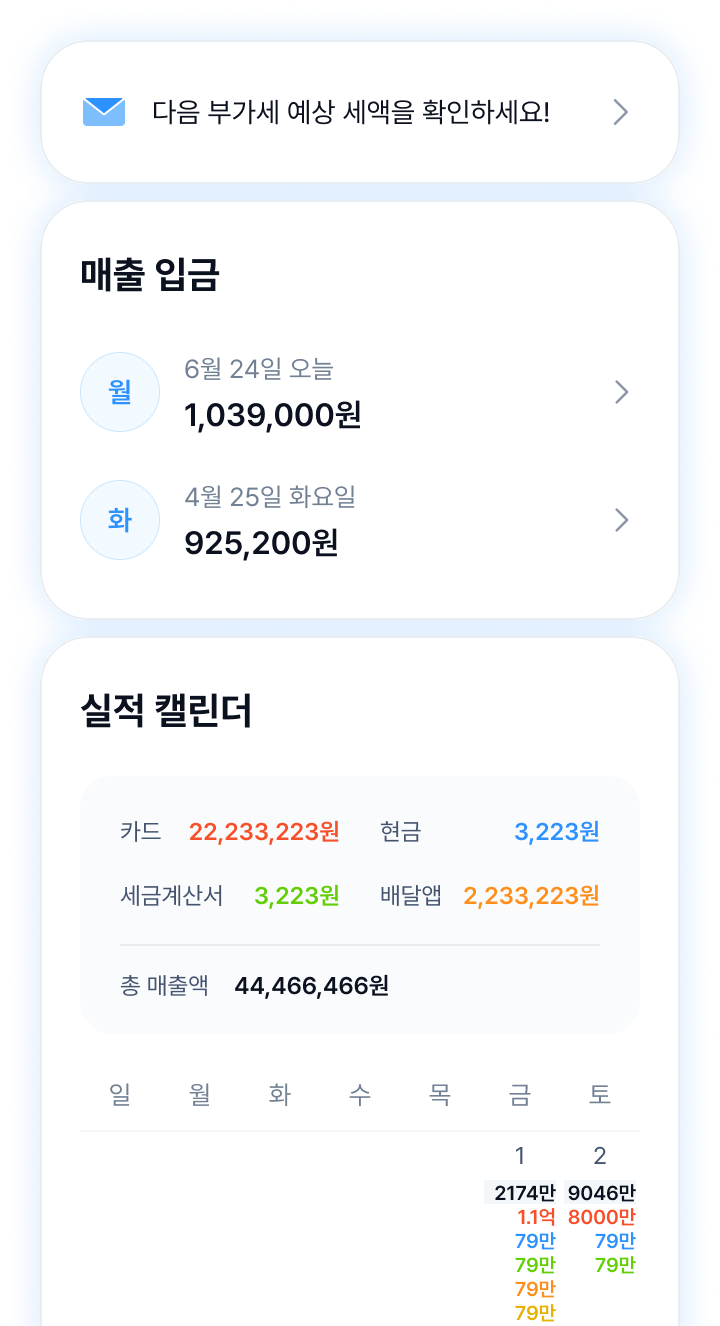
That is also its position in the market. A card portal reports one provider’s activity. A spreadsheet needs tending. A POS system handles the counter. KCD connects several jobs and, through its group, participates in the infrastructure underneath them. Its expertise spans transaction aggregation, merchant analytics, payments, POS technology and credit assessment.
Transactions02
Daily ledger03
Decisions
The shareholder list as a product decision
Kim described early investment as the start of strategic collaboration. Kakao brought a relationship with the messenger through which Cashnote reached owners. The banking-backed startup foundation D.Camp offered routes into financial-sector collaboration. Later shareholders included banks, card companies and telecommunications businesses.
In Kim’s account, a merchant ecosystem was too large for KCD to construct alone. Strategic shareholders helped it make broader offers to owners. Product leader Tae-hoon Ahn’s wife was also running a business; her experience informed the design. The company drew knowledge from both institutional relationships and the person handling an actual shop’s problems.
In August 2023, Morgan Stanley Tactical Value invested KRW 100 billion, approximately $77 million. The announced post-money valuation was $1 billion. By then, the wider group served approximately two million merchant users, including payment and POS services.
“This investment underscores the recognition of KCD’s merchant centric business model”Dong-ho Kim, August 2023
Nine years to a profitable month
The business model asks free tools to create demand for paid software and adjacent services. Subscriptions, merchant commerce and targeted advertising sit alongside the group’s payment and POS businesses. This is a broader commercial engine than charging everyone for a ledger.
It took time. KCD reported its first monthly operating profit in December 2025, nine years and eight months after establishment. January reporting credited subscriptions, AI features, the B2B marketplace and advertising with improving the economics. A lower-priced subscription option also widened access for lower-revenue stores.
The annual figures deserve equal attention. For 2025, KCD reported consolidated revenue of KRW 162 billion, up 13.3%. Parent-company platform revenue reached KRW 33.1 billion, up 119%. Yet the full-year adjusted EBITDA loss was KRW 17.9 billion. One profitable month shows progress; it does not settle the question of sustained annual profitability.
A turn behind the counter
KCD’s published working principles put the business owner first. They also call for data-based decisions, vigorous disagreement followed by commitment, and frequent communication. Those phrases acquire more meaning through the company’s onboarding activities: employees experience store operation, listen with customer-service specialists and visit merchants.
There is a physical testing ground, too. BOTTLED, KCD’s wine-selling store near Gangnam Station, lets staff experience shopkeeping and try services. A software company can spend hours discussing customer experience. Working a counter gives the discussion an impatient customer and a closing time.

The books follow the shop
In April 2026, KCD launched shop-transfer listings informed by actual operating indicators. Sellers could use accumulated sales and reviews to describe their businesses; prospective owners could filter listings by their requirements. The daily ledger had acquired another job: helping someone judge the shop itself.
Cashni, its conversational AI assistant, similarly draws on connected store information rather than offering only generic advice. The recurring ambition is to move from showing a number to helping an owner use it.
For another founder, the copyable move is the sequence: choose a frequent question, answer it in a familiar place, then add the next useful task. The conditions matter. Incomplete records weaken the answer. Local payment integrations take work. A free audience still needs a reason to buy. Cashnote’s opening worked because the question came back tomorrow.