Quality assurance in customer support has long had a sampling problem dressed up as a management process. A team handles 50,000 conversations; a reviewer opens a few dozen; everyone hopes the sample contains the expensive mistake, the quietly brilliant save, and the agent who needs help. Klaus was built to stop that little game of roulette. The Tallinn company connected to support systems, pulled conversations into one place, and gave managers scorecards, assignments, feedback, and eventually AI that could inspect the entire queue.
In February 2024, Zendesk completed its acquisition of Klaus. Soon after, the name on the door changed to Zendesk QA. Klaus the black cat mascot was dispatched to a sunny imaginary windowsill, while the software became part of Zendesk's workforce engagement portfolio. The old website now redirects to Zendesk. Buyers should understand that distinction immediately: Klaus is no longer a plucky standalone app with its own public price card. It is a web-based QA product sold inside the Zendesk world.
The reason to care survived the rebrand. Traditional customer metrics tell you what happened after the interaction. QA asks what happened inside it. Did the agent understand the problem? Did the bot loop? Was the explanation accurate, humane, and compliant? Where did the customer signal that they might leave? Klaus made those questions searchable at scale.
Who should put Klaus on the shortlist?
Start with volume. If two founders answer twelve emails a day, a scorecard will create more ceremony than insight. Zendesk QA begins to make sense when a support operation has enough conversations, channels, agents, or outsourced partners that managers cannot see the work by looking over a shoulder. It is aimed at QA leads, support operations managers, coaches, team leaders, BPO supervisors, and the agents who receive their feedback.
It also needs an owner. The software can find a weak solution, a risky phrase, or a recurring knowledge gap. It cannot decide what good service means for your company. Liberty London built its scorecard around communication, compliance, soft skills, and resolution, then folded its own idea of “Liberty magic” into the criteria. Kahoot! weighted “Solution” at 27 percent and “Grammar” at 2 percent. Those are management choices, not model outputs. Teams without a shared definition of quality will automate their disagreement.
Strong fit
- Established Zendesk customers
- High-volume or multi-channel support
- Dedicated QA and coaching ownership
- Human, outsourced, and bot teams under one standard
Think twice
- Tiny teams that can read every ticket
- Buyers seeking a standalone bargain
- Teams with no coaching follow-through
- Organizations unwilling to audit AI ratings
What the machine actually does
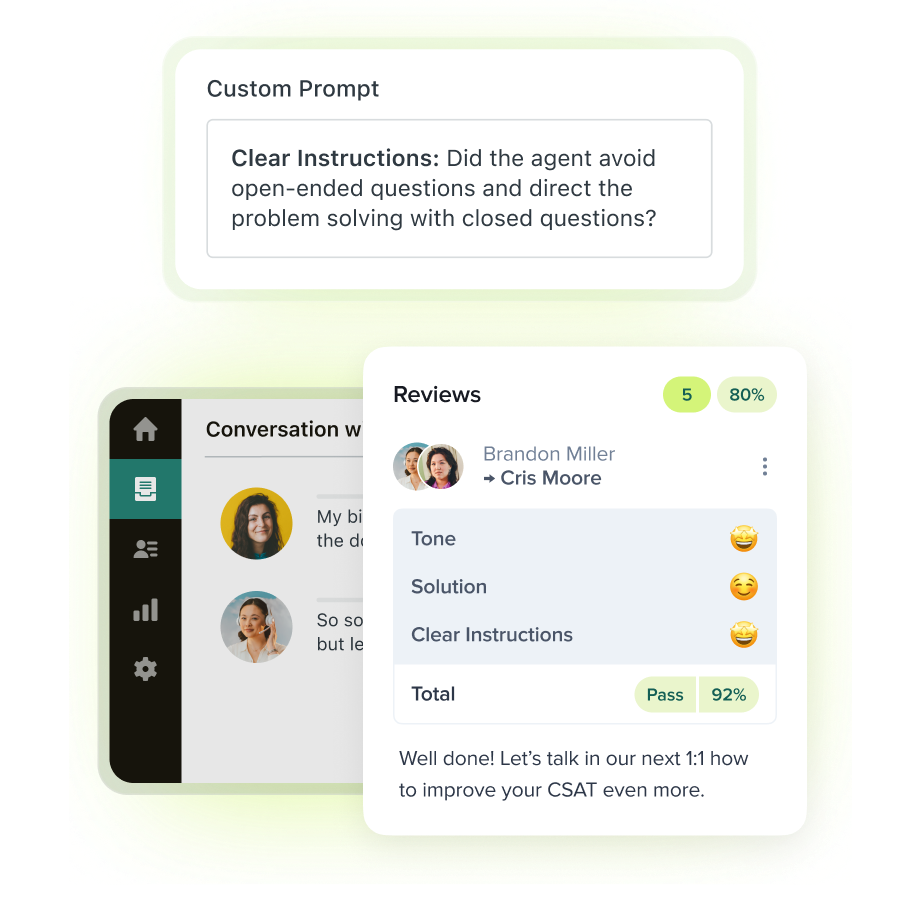
AutoQA is the headline act. It evaluates eligible conversations against built-in categories such as empathy or solution, plus criteria a team writes in natural language. The automated result is tracked as an Auto Quality Score, while manual reviews contribute to a separate Internal Quality Score. That separation matters. A model rating and a human judgment can inform each other without being quietly blended into one authoritative-looking number.
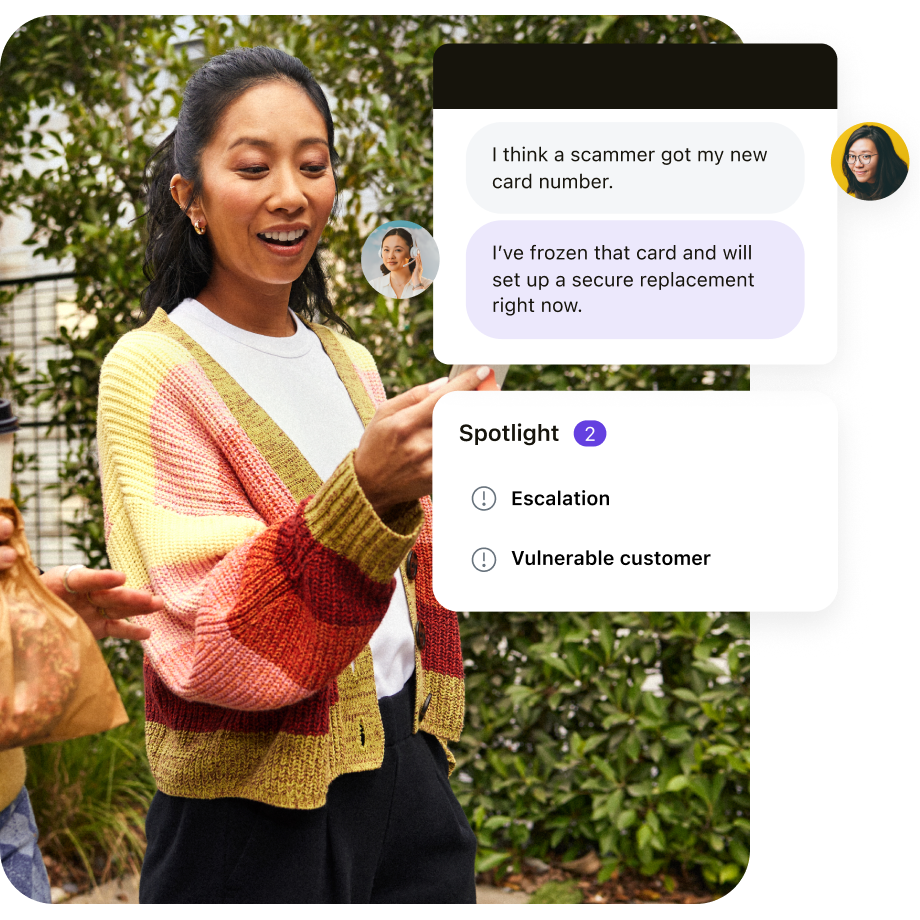
Spotlight is the useful detective. Rather than grading everything as agent performance, it flags conversations worth opening: churn risk, an escalation, a knowledge gap, a frustrated AI interaction, an SLA breach, dead air, or a custom condition. A product team could look for competitor mentions. A regulated team could look for missing language. A bot owner could hunt repetitive loops. This is closer to a metal detector than a performance review, and often more valuable.
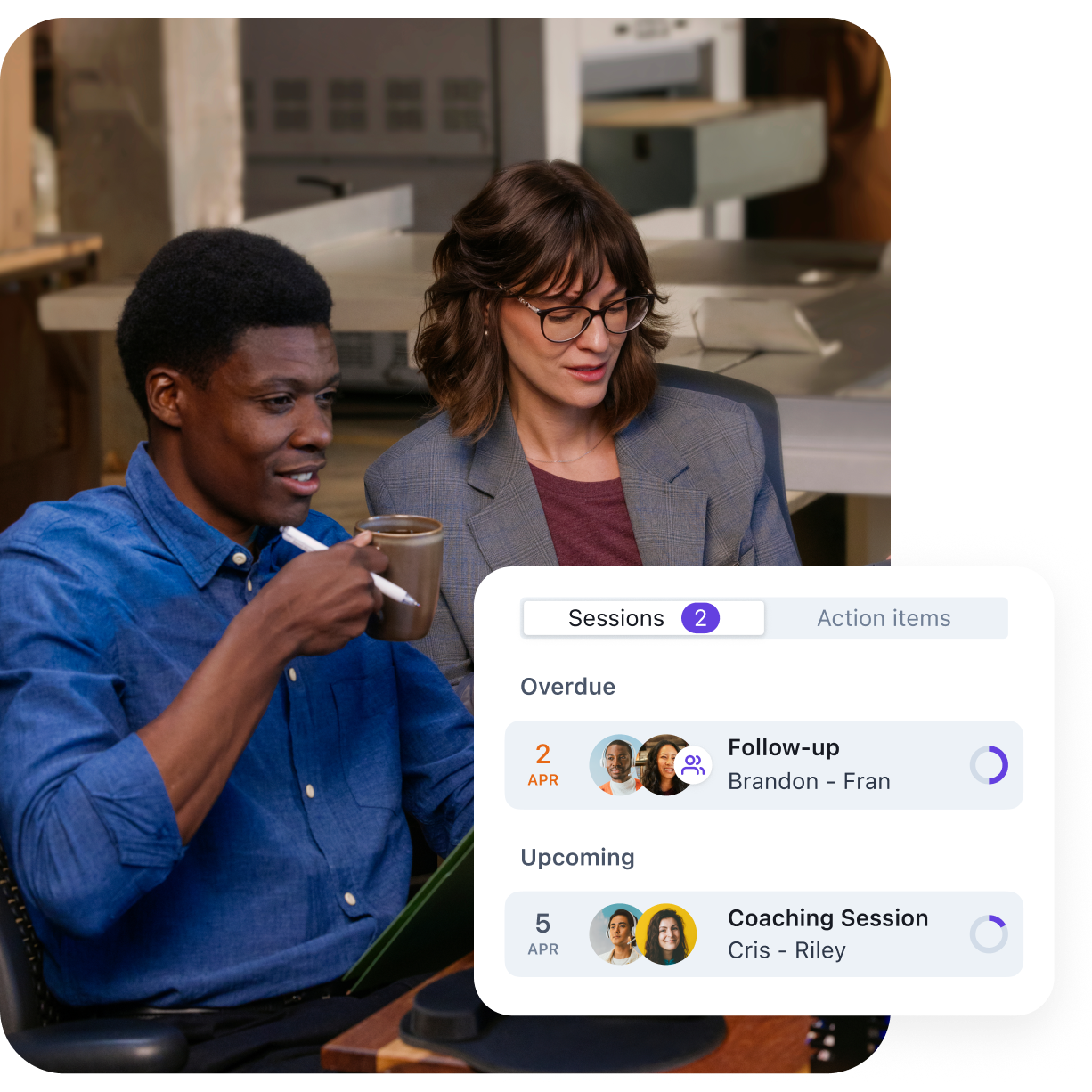
The rest of the product turns discovery into a routine. Reviewers build weighted scorecards, assign conversations, leave comments, compare ratings in calibration sessions, and trace root causes. Agents can revisit feedback and coaching sessions. Dashboards show trends by person, team, category, and time. In 2025, scorecard management moved to the account level, making it easier to reuse standards across workspaces.
Voice and bots joined the review queue
Klaus began in the world of written support. Zendesk has widened the aperture. Voice QA transcribes calls, separates speakers, creates summaries, and can detect dead air, churn risk, unusual calls, or missing recording disclosures. AutoQA scores calls in five default categories: greeting, closing, empathy, comprehension, and solution offered. Zendesk Talk works directly; Talk Partner Edition can bring in other telephony, with a prebuilt Five9 connection among the documented options.
AI Agent QA applies the same basic discipline to bots. Managers can review bot conversations manually or automatically, compare bot and human performance, and find escalations, loops, abandoned conversations, or unresolved issues. This is a sensible evolution. Once a bot handles the conversation, “the agent said it” stops being an excuse. The company still owns the answer.
What happened after the scorecards left Google Sheets
Customer-reported case-study results. Different measures, time periods, and operating contexts; the bars are indexed for legibility, not a shared scale.The evidence is useful, with footnotes
Kahoot! offers the clearest operating story. Its reviews had lived in Google Sheets, tickets were picked at random, and coaching lacked structure. After moving to Zendesk QA, the company says monthly review volume rose from 200 to 500, its internal quality score moved from 92 to 94 percent, reopen rate fell by two percent, and CSAT gained more than five percentage points year over year. The numbers are company case-study figures, but the workflow change is concrete: centralized reviews, automatic assignments, tailored scorecards, and feedback agents could revisit.
“Everything quality-related is in one tool.”Filip, Quality & Training at Kahoot!
Liberty reports a 2.3 percent CSAT increase and a four percent rise in IQS. Its more revealing detail is organizational: reviews cover customer-facing staff in the London store, a central support team, and an outsourced team in South Africa. Audacy's IT operation points to another use. Its administrator says QA provides insight without reading every response and comment individually.
Public reviews add some grit. The old Klaus listing now redirects into a broader Zendesk Contact Center page on G2, so its aggregate rating covers more than QA and should not be treated as a clean Klaus score. One February 2026 reviewer still called the tool “Klaus” and praised it for identifying what the team needed to improve, while noting that colleagues found the workspace complex and sometimes slow. That sounds plausible: QA software earns its keep through configuration and habits. There is a learning curve because the work itself has one.
Zendesk's own settings documentation says automated agent scores are guidance and should supplement, not replace, human performance reviews. Take that seriously. Audit agreement between people and AutoQA, watch for language or cultural bias, and give agents a way to challenge the evidence.
Pricing: the cat now travels with a larger suitcase
The current purchase path is an add-on, not a free-standing Klaus subscription. Zendesk says any Support or Suite customer can buy QA. Its public pricing page lists a Workforce Engagement Bundle at $50 per agent per month, billed annually. That bundle includes quality assurance and workforce management. A base Zendesk subscription is also required; Support Team starts at $19 per agent per month on annual billing, while Suite tiers cost more. Packaging can vary by plan and sales path, so ask for a written quote that names every seat, add-on, channel, and voice dependency.
| Buying question | Why it matters | What to test |
|---|---|---|
| Will it ingest our whole support mix? | Coverage claims mean little if a major BPO or voice source stays outside. | Run email, chat, voice, and bot samples from each source. |
| Can reviewers reproduce AutoQA? | Trust grows when people see the evidence behind a rating. | Blind-grade 100 conversations, then compare agreement. |
| Does it change coaching? | A flagged ticket with no follow-up is merely a colorful alert. | Track time from insight to feedback to repeat behavior. |
| What is the full annual cost? | QA sits on top of a Zendesk plan and may arrive in a bundle. | Price every required agent, reviewer, voice path, and service. |
How to run a trial without fooling yourself
Pick a narrow business problem before the demo. “Improve quality” is fog. “Find refund explanations that omit the seven-day timing,” “reduce bot loops,” or “make outsourced teams score within five points of internal reviewers” can be measured. Build the smallest scorecard that captures the behavior. Ten carefully chosen categories beat a museum of corporate values nobody can rate consistently.
Next, create a human benchmark. Have experienced reviewers grade the same conversations without seeing AutoQA's answer. Compare disagreements by category, language, channel, agent type, and customer sentiment. The newer accuracy metric is designed to show agreement between automated and human ratings; use it as an investigation prompt, not a victory badge. Review false positives as closely as misses, especially if results may affect compensation or discipline.
Finally, inspect the feedback loop. Can a lead move from a Spotlight flag to the original conversation, explain the rating, assign coaching, and later see whether the behavior changed? Can agents find their reviews and comment? Can QA managers calibrate each other? The product is at its best when the answer is yes. Its cleverest model is worth less than a modest scorecard that changes next Tuesday's conversation.
Klaus versus the field
Klaus historically competed with MaestroQA, Playvox, Observe.AI, and Stella Connect. The boundaries have shifted as contact-center suites absorb QA, workforce management, conversation intelligence, and AI-agent tooling. Zendesk QA's clearest advantage is native proximity for a Zendesk shop: conversations, agents, automation, analytics, and coaching can live in one ecosystem. A company centered on another help desk should compare that convenience against a vendor designed to sit across multiple systems.
| Option | Best reason to evaluate | Watch closely |
|---|---|---|
| Zendesk QA | Native Zendesk workflow, full-coverage AutoQA, voice and bot review. | Bundle economics and ecosystem commitment. |
| MaestroQA | Dedicated support-QA workflows and coaching. | Integration depth with your help desk and AI coverage. |
| Playvox | QA combined with workforce and performance tools. | Module overlap and total seat cost. |
| Observe.AI | Conversation intelligence with a strong contact-center and voice focus. | Fit for digital-first teams and implementation scope. |
The verdict
Klaus had a charming cat, but its serious contribution was making support QA feel like an operating system instead of an audit. Review the work, identify the pattern, coach the person, repair the process, and check again. Zendesk has extended that loop to calls and bots, while folding the product into a much larger commercial package.
For a busy Zendesk team with a QA owner, it belongs on the shortlist. The 100 percent coverage claim answers a real weakness in manual sampling, and Spotlight gives managers a practical route into an otherwise absurd pile of conversations. For a small team, a non-Zendesk operation, or a company hoping AI scores will replace management, the fit is shakier. Buy the feedback loop, not the hologram icon.