Kimon Angelides had been giving the product away. For years, the olive oil made from his family’s plots in Greece went to friends and relatives. Other farmers harvested the remaining fruit for larger buyers. Then the recipients began making a suggestion familiar to anyone whose dinner guests have ever become an unofficial sales department: you ought to sell this.
He eventually listened. Avias Ranch, where he is now identified as manager, sells extra virgin olive oil from southern Greece to an American market. Its roots are personal. Angelides says he took over making the oil after the death of his father-in-law, Notis. The business grew out of an existing family practice, with customers arriving first as people who already knew him.
He says he had not planned to create an olive-oil company. That is an intriguing admission from someone with so many company names in his working life. Angelides founded Diabetes America and EosHealth, the company later renamed Livongo. He also founded Vivante Health and FemTec Health. By the time an olive-oil business entered the picture, starting things was hardly an unfamiliar occupation.
The appeal of this particular beginning lies in its scale of intimacy. A bottle can be opened at a table. Its maker can hear what people think before there is a launch announcement or a financial adviser. Angelides’s account begins with that small exchange: something made, something tasted, an invitation to try again. The commercial ambition came afterward.
“I never set out to start a business in olive oil.”
Kimon Angelides, on Avias Ranch
A globe on his father’s desk
Long before the groves, there was Sacramento. Angelides came from a Greek-American family in which education was treated as a serious opportunity. His father, Jerry, was a mechanical engineer; his mother, Helen, later worked with children and supported the arts. His younger brother, Philip, entered public life. Kimon pursued chemistry.
The family’s remembrance of Jerry includes a wonderfully specific educational routine. Each week he chose a country on the globe in his office. His sons were to learn about it, then answer questions the following week. History books came with another ritual: sign page 100 when finished, following the example of Jerry’s political hero, Harry Truman. Even leisure reading apparently had an audit trail.
That remembrance describes a father who wanted economic security for his sons, but also wanted them to contribute through science or public service. It offers a concrete glimpse of the household’s expectations without requiring a tidy explanation for everything that followed. Two brothers could receive the same geography assignment and go on to inhabit quite different professional worlds.
Angelides earned an undergraduate degree at Lawrence University and completed a chemistry doctorate at the University of California, Santa Cruz, in 1977. Postdoctoral work took him to Cornell. His academic appointments included McGill, the University of Florida, Baylor and Durham. The map on the desk had acquired a working itinerary.
Chemistry doctorate
UC Santa Cruz
Diabetes America
Founded
EosHealth
Founded
An academic record with a rupture
His academic career also contains a serious, documented break. Baylor terminated his employment in 1995 following an investigation into research misconduct. Angelides challenged the findings and pursued litigation. In February 1999, a federal Research Integrity Adjudications Panel upheld findings that he had intentionally falsified data and misrepresented results in grant applications and published papers.
The panel conducted an independent proceeding with an in-person hearing and reviewed original records. Its decision recommended a five-year exclusion from federal grants and contracts. This was a formal adjudication, and it belongs in the account of his professional life alongside the institutions, degrees and later companies.
The entrepreneurial years that followed therefore sit beside a contested and consequential academic past. A career can acquire new chapters without the earlier pages disappearing. For Angelides, the public record contains both the creation of businesses and a finding about the reliability of his scientific work. Both bear on how his later emphasis on evidence and process is read.
Building something, then building again
Diabetes America was founded in 2004. In his earlier personal biography, Angelides described its expansion from one employee to more than 200 over four years. EosHealth followed in 2008; it later became Livongo. He founded Vivante in 2016. The sequence reveals a sustained appetite for starting organizations, recruiting people and putting a new corporate structure around an idea.
Recognition followed. In December 2019, Rock Health named him its Disruptive Founder of the Year in the Top 50 in Digital Health 2020 announcement. The award was attached to his work at Vivante and placed him among a wider group of founders, investors and executives. It marked a public endorsement of his company-building work two decades after the federal decision.
Livongo’s subsequent trajectory became a conspicuous part of his founder biography: a public offering in 2019 and a combination with Teladoc in 2020. Those are company milestones. They do not establish an individual founder’s personal proceeds, nor do they compress all the people and decisions involved into one person’s achievement. They do help explain why another Angelides venture could attract attention.
FemTec, formed in May 2020 and publicly launched in October 2021, arrived with an acquisition strategy. Birchbox supplied a recognizable subscription business. Mira Beauty brought product-matching technology. Liquid Grids brought a social-marketing operation. The announced team numbered more than 150. The plan depended on making separate businesses work together, an assignment with considerably more moving parts than a company presentation can show.
The box and the unpaid bill
Birchbox was the acquisition most likely to ring a bell outside investment circles. Founded in 2010, it had built a business around sending customers selected beauty samples every month. FemTec’s purchase, reported at about $45 million, put Angelides in charge of a familiar consumer brand with an established relationship to its subscribers.
The attraction was understandable: the customers were already there, the boxes already had a reason to arrive. But a subscription has a demanding little calendar attached to it. Every new month asks the company to make good on the relationship again. Acquiring that relationship also means acquiring the daily work that sustains it.
By March 2023, the business had a disabled website and unresolved vendor complaints. Customers had experienced unfilled orders. On May 4, Birchbox co-founder Katia Beauchamp’s lawyers demanded nearly $2.1 million from FemTec and Angelides, alleging that an acquisition payment had not been made when due. The demand was an allegation in legal correspondence, rather than a court judgment establishing the debt.
The corporate outcome soon became explicit. In a May 12 announcement, FemTec said Birchbox’s assets had been purchased by Retention Brands, effective April 12, through an assignment for the benefit of creditors. It also announced the transfer of remaining assets to Awesome Health. The assembled portfolio was being separated again.
That sequence changes the texture of a founder’s biography. Acquisition prices are easy to print in large type; the obligations beneath them require smaller, more patient reading. Angelides’s experience with Birchbox includes both the attempt to combine businesses and the creditors, customers and former owner left seeking answers. Any account of the ambition needs room for the outcome.
- 2021The acquisitionFemTec announces the Birchbox purchase.
- 2023 · MARCHThe interruptionDisabled website and vendor complaints.
- 2023 · MAYThe asset saleRetention Brands purchase announced; effective April 12.
A chemist with a harvest to bring in
The olive groves give his present work a different setting, though he resists presenting the venture as a reinvention. In his introduction to Avias Ranch, Angelides describes seeing an opportunity to bring family production to a wider market. His stated aim is to connect the oil’s origin with the experience of using it. The business, he says, has no outside investors.
Avias places its groves above Kalamata in the Peloponnese. Its family history reaches back through Notis Karavitis, Angelides’s father-in-law, whose early business was a patisserie. The family’s account says Notis left his village at 15 and opened the shop at 16. Ingredients and their provenance feature heavily in the story told about him. The name now also identifies an estate and its oils.
Angelides brings his chemistry background into the production language. Avias describes measuring fruit maturity, checking oil chemistry, extracting within three hours and storing oil in stainless-steel tanks protected from oxygen. These are the producer’s descriptions of its process. Their interest here is how closely they resemble the questions a chemist would bring to a kitchen ingredient: what is changing, when, and under which conditions?
The ranch also describes using satellites and soil sensors alongside experienced caretakers. The combination makes practical sense as a statement of intent: gather more information while keeping people who know the trees involved. There is room for instrumentation in an olive grove without expecting a sensor to pick the fruit. Technology can provide a reading; somebody still has to decide what to do next.
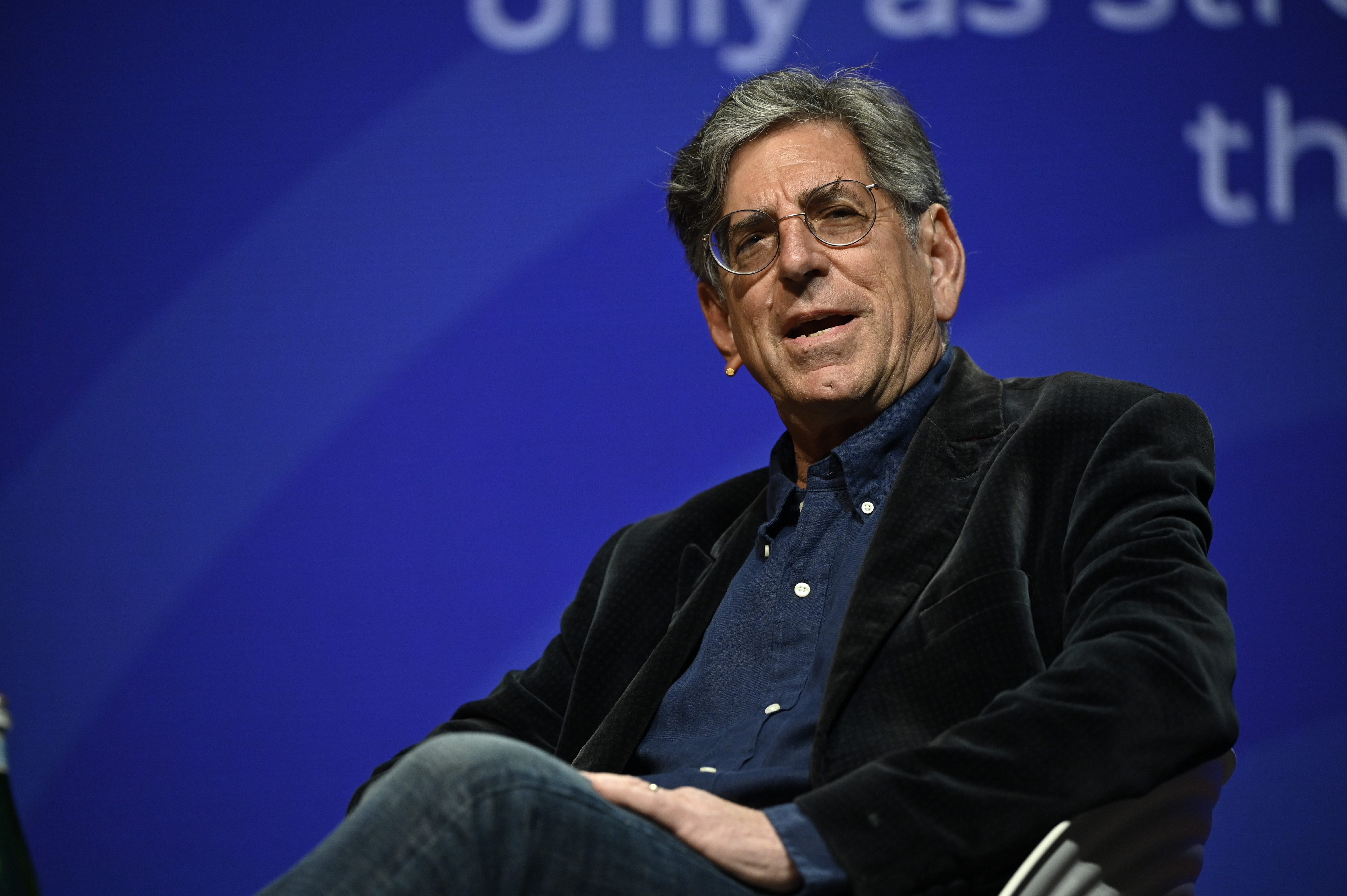
For the people doing the harvesting, the business has a physical routine. Avias describes early starts, nets laid beneath trees, checked tools and a midday pause for bread, olives and fresh oil. That is the ranch’s own picture of its working life. It makes an appealing companion to the conference-stage version of Angelides, seated with a microphone and explaining the next company.
His current range includes Founder’s Selection and Family Reserve oils. The packaging tells its own family story through olive trees, an amphora, harvesters and doves. It is a different vocabulary from the acquisition announcement, but it serves a familiar commercial purpose: helping someone recognize what they are buying and remember who made it.
The ambition remains to bring the Greek product to American tables while keeping control of how it is made. Whether that promise holds is a matter for the continuing work of the business. For now, the most revealing detail is still the earliest one. Before another company could be introduced, there were friends asking for another bottle. A demanding audience, friends. They can always tell you at dinner.