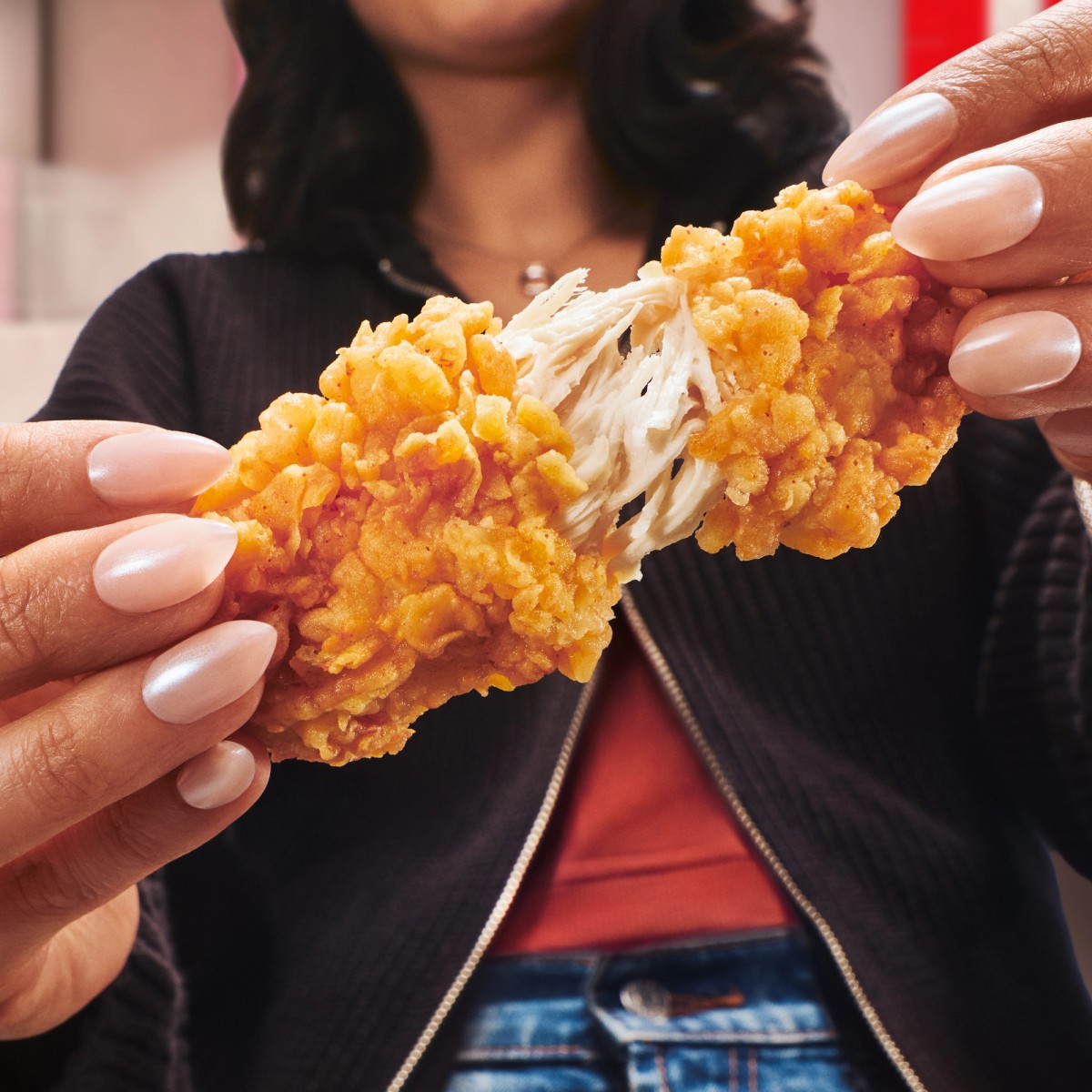
In February 2018, KFC found itself with a peculiar problem for a fried-chicken company: restaurants without chicken. A switch to a new distribution arrangement with DHL and QSL had disrupted deliveries across Britain. Hundreds of outlets closed. Customers could recognize the Colonel from the pavement, remember the taste, and arrive hungry. None of that could put dinner in the fryer.
- A recipe became a repeatable restaurant method.
- Local menus gave a global brand more reasons to matter.
- Reliable delivery remained the price of admission.
The failure offers a useful way into KFC. We tend to understand the company through its most theatrical possession: a secret recipe. But a recipe cannot schedule a delivery, train a cook or decide which breakfast belongs in Beijing. KFC’s real subject is coordination. The bucket is where a large, complicated arrangement becomes something a customer can carry home.
02Five cents bought a very large idea
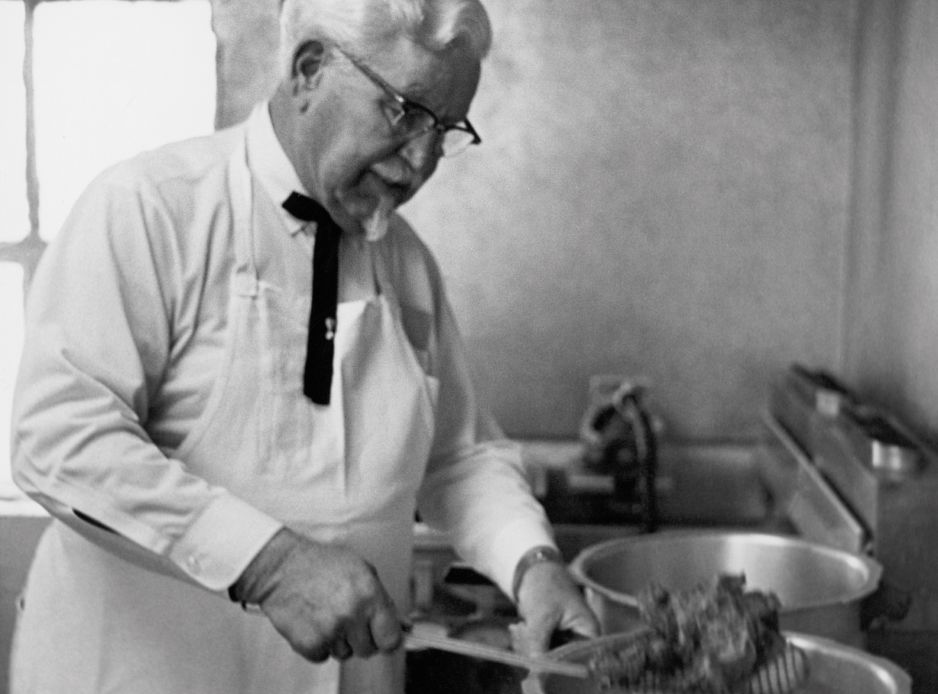
Harland Sanders began serving travelers in Corbin, Kentucky, in 1930. He developed a pressure-cooking method and his blend of 11 herbs and spices. The first Kentucky Fried Chicken franchise opened near Salt Lake City in 1952; the bucket arrived in 1957. Those milestones trace a change in the product itself. Dinner became a method another restaurant could reproduce.
The Smithsonian holds a KFC franchise agreement and rulebook from the 1960s. Its account records Sanders receiving five cents for every head of chicken sold. That small payment mattered: someone else could run the restaurant while Sanders earned from the use of his system. By 1964 there were more than 600 franchisees. Investors bought his interest for $2 million.
The white suit supplied a human signature. The rules supplied the repeatability. Together they let a diner buy from a stranger while feeling acquainted with the cook. The practical lesson for another business is quite specific: before asking other people to distribute your product, identify which decisions they must reproduce and which they can make themselves.
03The customer buys dinner. The operator buys a system.
KFC serves people who want a quick chicken meal, an individual sandwich or enough food to share. Original Recipe chicken anchors the offer; tenders, burgers, sides, desserts and drinks broaden it, with availability varying by market. Takeaway, drive-thru, delivery and digital ordering solve the ordinary problem of getting a meal without organizing an evening around cooking.
That puts KFC beside Popeyes, Chick-fil-A, Raising Cane’s and local chicken shops, as well as the burger chains competing for the same lunch money. Its recognizable combination is bone-in chicken, the communal bucket, the Colonel and a network spanning many markets. A sandwich rival can compete on one item; KFC must make a wider set of occasions feel worth returning for.
For the operator, the proposition includes the brand, operating standards and access to an established restaurant system. Yum! Brands, KFC’s parent, collects franchise-related income as well as sales from company restaurants. In 2025, KFC recorded $36.434 billion in system sales, while division revenue was $3.542 billion. System sales include franchise restaurants’ takings; they are not money KFC itself books as revenue.
Yum reported 99% of KFC units as franchised at that year’s end, rounded. That figure includes master-franchise arrangements. It should not be read as a claim that every restaurant is a small independent business: Yum China, a separate listed company, operates most of its Chinese KFC restaurants itself. The ownership layers matter when comparing costs, margins or employee counts.
04In China, familiarity comes with congee
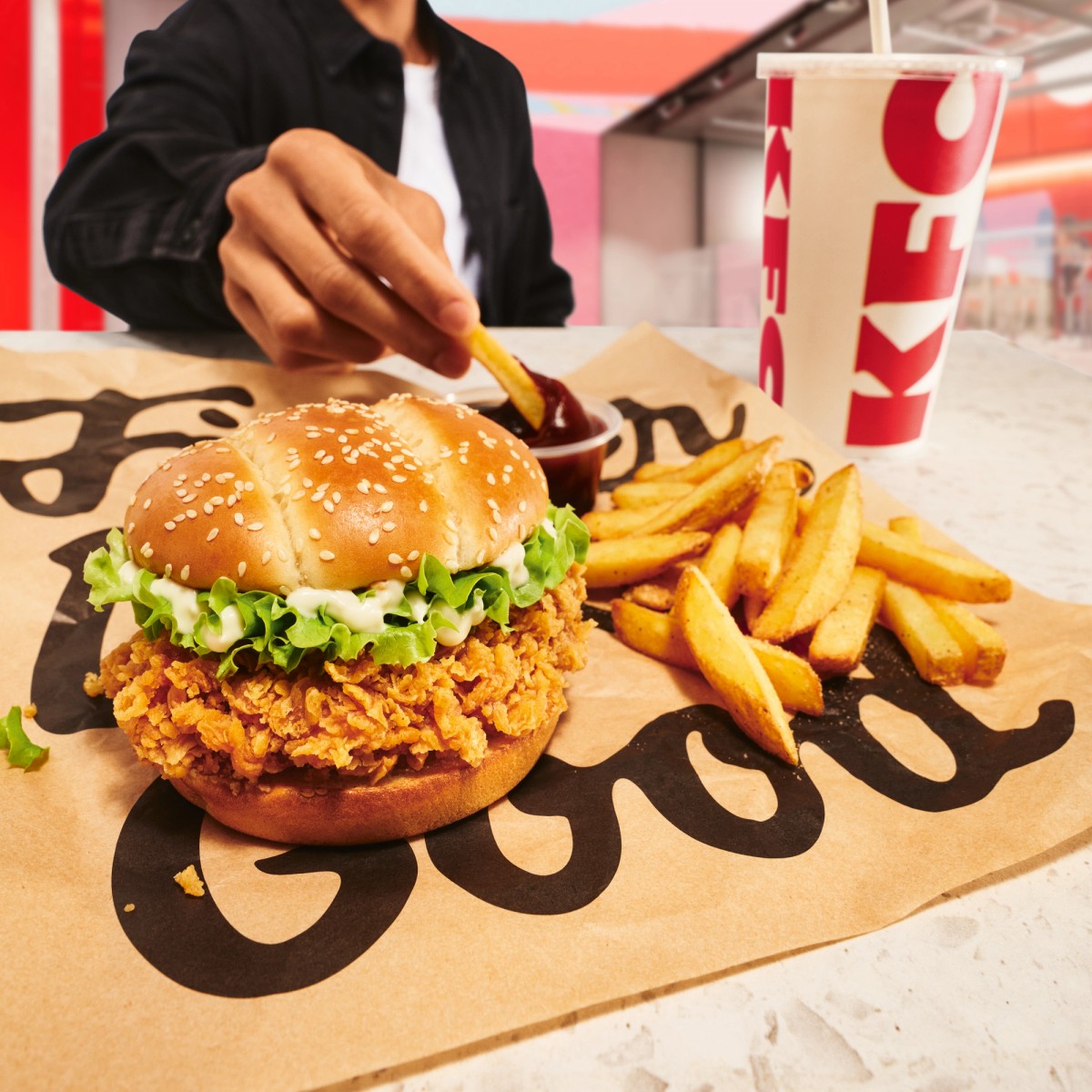
KFC entered mainland China in 1987. It kept the face and the fried chicken while building a menu that also made room for Chinese routines. Yum China describes breakfast products including congee, pancakes, rice rolls and bean curd pudding, alongside regional dishes. Localization reaches beyond translating a sign. It changes the reasons someone might enter the restaurant.
By June 2026, Yum China reported 13,789 KFC stores. Delivery accounted for approximately 54% of KFC company sales in the second quarter. Those numbers describe a business woven into everyday eating and ordering habits. The lesson is to preserve a recognizable core while testing the occasion around it: breakfast, a small order, a drink or dinner arriving at the door.
There is a cost to that flexibility. More occasions can mean more ingredients, preparation steps and delivery demands. Yum China said higher rider costs and value offerings partly offset favorable commodities and streamlined operations in that quarter. A menu extension earns its place only if customers want it and the kitchen can execute it economically.
“Being the world’s favorite fried chicken is hard work.”
KFC / OUR AMBITIONS
05An apology cannot drive a refrigerated truck
The British shortage exposed the opposite problem: the familiar product was wanted, but the system could not reliably supply it. In March 2018, KFC returned distribution for up to 350 northern UK restaurants to former supplier Bidvest. The company said the decision would ease pressure on DHL’s Rugby depot. Closures supplied a powerful reason to change course.
The cost was measurable even without a neat invoice for the entire episode. Yum estimated the disruption reduced KFC’s full-year same-store sales growth by about 0.5 percentage points. The useful response was operational: restore capacity and get food moving. For anyone copying the franchise model, test a supplier transition against actual throughput, recovery time and the consequences of a missed delivery.
- FEBNew distributor arrangement
- THENShortages and closures
- MARBidvest returns to part of the network
06The next experiment is already taking orders
KFC’s current experiments address another constraint: a famous name does not guarantee another visit. Scott Mezvinsky became division CEO in March 2025. In September 2026, the company announced Open House in McKinney, Texas, with breakfast, new drinks, expanded sauces and service designed around more occasions. A working restaurant gives those ideas a place to encounter actual customers.
On October 15, KFC U.S. announced a Coca-Cola partnership, with the transition starting in January 2027 and nationwide availability expected by spring. The scope matters: this is a U.S. change. Elsewhere, local choices continue. KFC’s published ambitions include digital ordering, kiosks and digitized drive-thrus; its foundation supports education and hardship assistance for eligible restaurant employees.
The model depends on capable operators, workable food costs and customers who value the meal enough to come back. It gets harder where delivery is unreliable, menu complexity overwhelms a kitchen or competitors provide a better everyday experience. Sanders sold a method other people could use. Decades later, KFC still has to prove that method at the counter, one order at a time.