Kevin Surace arrived at the office one morning and found someone else there to close his company. Air Communications had a product, customers, and money in the bank. It also had a board that had become so divided that some members had arranged an orderly shutdown. The visitor was there to carry it out. For a young chief executive who also wrote software at night, this was a rather pointed reminder that the code was only part of the job.
The story belongs near the beginning of Surace’s career, before the awards and the invitations to explain the future. It is especially useful because of the way he tells it. “We had a great company and a great team, but I was a terrible CEO.” He blamed his lack of management experience, including his handling of the board. Eventually, he raised another round and the shutdown team went home. The lesson had been expensive enough to remember.
Today, Surace is a co-founder and the CEO and CTO of Appvance, working on AI and software quality. His route there passes through talking computers, soundproof drywall, energy-saving windows, and musical theater. The titles look restless on a résumé. Look at the work itself, though, and a more particular interest appears: the awkward space between having an idea and getting a group of people to make it work.
Before the chat window, there was Mary
Surace grew up in upstate New York, first in Herkimer and then outside Syracuse after his father, a General Electric executive, moved the family. He graduated from Rochester Institute of Technology in 1985 with a degree in electrical engineering technology. His later professional life would take him to Silicon Valley, but the connection to Rochester endured.
At General Magic in the late 1990s, he led work on Portico, a voice-based assistant whose interface had a name: Mary. In his recollections, Mary could help handle calls, manage a calendar, check email, and read information from the web. The ambitions sound familiar now. They were considerably less ordinary when using a mobile phone for almost anything beyond a conversation required patience and a forgiving imagination.
There is something revealing in the errands. An assistant could be described with grand language about intelligent machines. Surace’s account keeps returning to the things a person might want done while trying to get through a day. Read this. Schedule that. Deal with the incoming call. The wonder was attached to an inconvenience.
His own history of the project also names collaborators, including Gary Lang, Danny Lange, Glen Shires, and Viki Paige. That is a welcome correction to the solitary inventor picture. A voice emerging from a machine can sound like one personality. Producing it takes many people, with different specialties, agreeing on what should happen next.
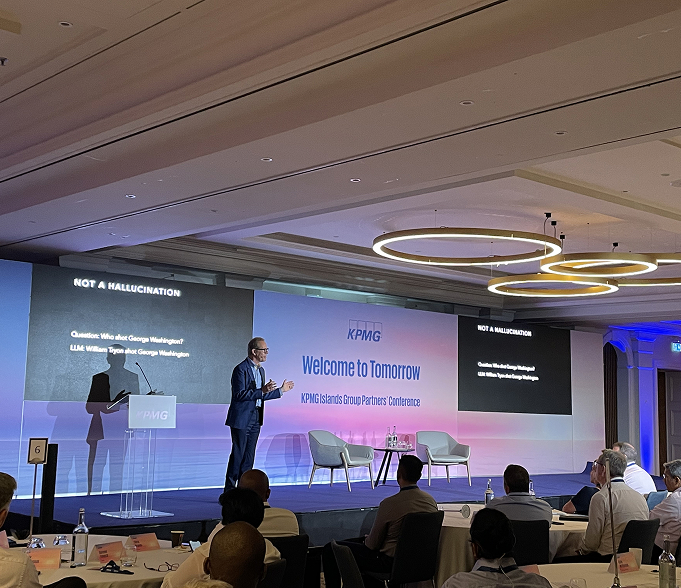
A skyscraper, taken one window at a time
Then came walls. Surace joined Serious Materials in 2002, and the questions became physical: how to make a wall quieter, how to manufacture a building product with less energy, how to stop expensive heat escaping through glass. For someone arriving from communications and software, construction materials offered a different kind of stubbornness. You could not patch a pane of glass over the internet.
His 2009 TED talk introduced EcoRock, a drywall alternative developed by his team. Wallboard is an unlikely guest at a conference associated with futuristic ideas. It does, however, have the advantage of being everywhere. Surace’s proposition was that a familiar material deserved another look precisely because people had stopped noticing it. A wall need not be interesting at dinner to be interesting to an engineer.
That year also brought a much more public test of leadership. Serious Materials bought the assets of the closed Republic Windows and Doors factory in Chicago. When Vice President Joe Biden visited, Surace noticed that the speakers did not include a union worker. He pushed to change that, despite the security complications. “It’s the right thing to do,” he said. “I want it to happen.” Union leader Armando Robles joined the platform.
The small dispute over a microphone gives the factory story a human scale. A reopening ceremony needs more than executives to describe what is at stake. The people whose livelihoods depend on the plant have something to say, too. In December, Surace was named Inc. magazine’s Entrepreneur of the Year. The scene in Chicago helps explain the operator behind the photograph.
The Empire State Building supplied a different challenge. Its windows needed to perform better, while the building continued to function. Serious Materials worked with Johnson Controls on refurbishing the existing units. A temporary operation on the fifth floor allowed windows to be taken apart and rebuilt onsite. The work was scheduled at night, with the units returned before the next working day. Manhattan offices are not usually generous about surrendering their windows.
96% of existing glass and frames reused
Window refurbishment by Serious Materials and Johnson Controls.The completed project reused 96 percent of the original glass and frames. That number is as interesting as the window count. A building known for its height became a demonstration of close attention to existing material. The glass could stay useful; its performance could change. An energy retrofit had become an argument for taking the old object seriously.
The bug is in the routine
At Appvance, the object under inspection is software. Its AIQ platform works on generating tests, exploring applications, executing checks, and recording results. The everyday problem is familiar to anyone who has used an application after an update: something that worked yesterday can fail today, sometimes along a route nobody thought to check.
Software testing has its own version of the window problem. An organization already has an application, existing workflows, and people relying on both. It needs improvement while life carries on around it. New features create new things to examine. Old tests need attention. The work accumulates quietly, until a missed defect becomes very public.
Appvance describes its platform as a way to explore beyond predefined test paths and to bring execution, evidence, and governance into one system. Those are product claims, and their value depends on what happens in a customer’s application. The practical appeal is straightforward: give a team more opportunities to find trouble before a user does.
“Productivity is math, not magic.”
Kevin Surace, February 2026
Surace’s February 2026 essay about disappointment in AI testing is more impatient than a typical sales pitch. He describes the cost of stopping to inspect, correct, and refine machine output. If the reviewing consumes the time saved, a demonstration has not settled the productivity question. The arithmetic matters after the applause.
That criticism sits beside his enthusiasm for using AI. He talks readily about new tools and the possibilities they open. He also has a commercial interest in the answer: Appvance sells automation. Holding both facts in view makes the argument more useful. The question becomes what changed in the work, how much attention it still requires, and whether the result deserves trust.
the app do?
it go wrong?
the checks find?
Generating a test begins a chain of decisions. People still need to understand the outcome.
There is also a conductor in the room
Surace’s other working life makes the software career harder to summarize and easier to picture. He is a percussionist, conductor, music director, and producer. At Acclaim Entertainment Group, his work has included orchestras, musical theater, and corporate shows. A rehearsal has its own unforgiving form of quality assurance. Everyone can hear when something has gone wrong.
His producing credits include Estella Scrooge, the digital musical that mixes A Christmas Carol with characters and threads from other Dickens novels. John Caird wrote the book, and Paul Gordon supplied music and lyrics. Betsy Wolfe played Estella. Surace was an executive producer, part of a project where performance and technology had to cooperate to reach an audience.
There is no need to force a management theory onto a musical. Still, the parallel is hard to resist. A conductor depends on people who know things he does not play himself. A producer has to help separate contributions become a finished work. Timing, preparation, and the willingness to listen are practical necessities. A résumé can list technical and artistic jobs in separate columns; a working day is less obliging.
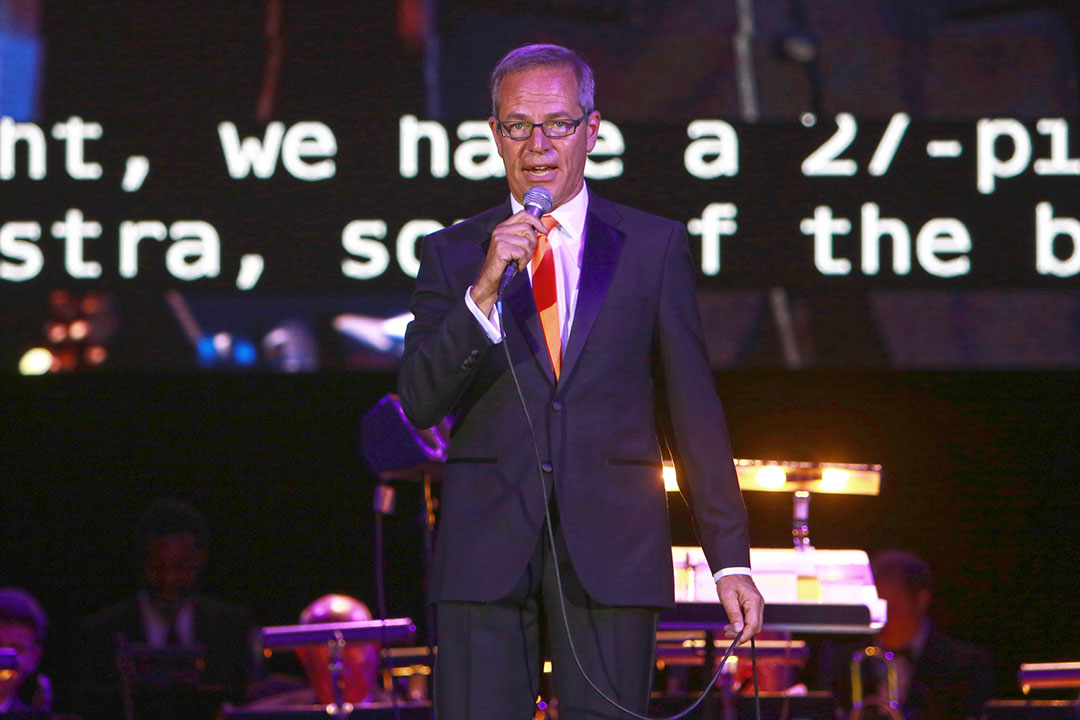
At RIT, those skills became a way to give back. He co-chaired the university’s $1 billion blended fundraising campaign and produced the gala announcing it in July 2018. He also served as master of ceremonies. The university named him its Outstanding Alumnus in 2019, seven years after his induction into its Innovation Hall of Fame. “We all should give back in the ways that we can,” he said.
His current speaking work brings the human side of technological change toward the center. The Joy-Success Cycle, his first book, argues for finding joy as an ingredient in achievement. The proposal fits someone who has continued making music alongside running companies. A completed task can supply satisfaction; interest in doing the task can help get it completed.
The harder question arrives when technology changes the task altogether. Surace’s talks ask where people can put their judgment, creativity, and experience as machines take on more routine work. His answer is optimistic, but it has a concrete setting: an office, a test run, a rehearsal, a room waiting for a speaker. Across those settings, somebody still has to decide what is worth doing. Then the people have to come in on cue.
Keep the conversation going
Kevin’s website · The Joy-Success Cycle · Appvance
LinkedIn · X · Instagram · Facebook · TikTok · YouTube · Medium
WATCH / TED 2009 ↗Eco-friendly drywallA familiar wall gets an engineering rethink.