The beginning of Kevin Spurway's life in technology did not involve a startup garage, a line of code, or even a particularly firm grasp of what the adults were doing. It involved a fourth-grade tour of Wang Computer in Lowell, Massachusetts. His uncle was an executive there. The machines, Spurway later recalled, looked like objects from Star Wars. They suggested a future, even if the boy touring the facility could not yet describe the business behind it.
There was a wrinkle. Spurway would joke that his mathematics were never sharp enough to make engineering the destination. Technology remained the attraction; he simply approached it through language. That route carried him from economics and government at Dartmouth to Harvard Law School, and then through some of enterprise software's most demanding exercises in public explanation.
He is now chief marketing officer at Saviynt, the identity-security company, and an executive advisor to AI-infrastructure startup CogniwareAI. The titles are current. The more durable description is translator. Across MicroStrategy, Appian, Similarweb, Feedzai, and Saviynt, Spurway has repeatedly taken on products that can be useful, expensive, consequential, and almost comically hard to explain in one breath.
The lawyer who preferred the product room
Spurway graduated from Dartmouth in 1994 with an A.B. in Economics and Government, then earned his J.D. from Harvard in 1998. Even at law school, he knew he wanted technology somewhere in the picture. He considered venture-capital work or an in-house legal role. His career took a different turn, one he has described as requiring a couple of false starts.
A college professor had told him to find a career he could care about. The advice was neither exotic nor easy. Marketing eventually gave him the combination he was looking for: technology close enough to remain interesting, business close enough to matter, and language close enough to shape.
The law degree did not become an abandoned credential. Spurway has said it helps him choose language precisely and gives him an advantage in the less theatrical corners of a CMO's job, from vendor contracts to data privacy. Lawyers and marketers both learn that a loose word can become an expensive one. The difference is that the marketer must also make the sentence memorable.
A career timed to category moments
His record reads like a tour through changing enterprise anxieties. At MicroStrategy, where he was senior vice president of marketing from 2010 to 2014, the subject was analytics. At Appian, where he moved from operations into senior marketing leadership, it was low-code software and process automation. Similarweb dealt in digital intelligence. Feedzai sold AI-based defenses against fraud and financial crime. Saviynt governs who and what can reach a company's systems.
The nouns changed. The assignment did not: establish why a technical category deserves executive attention, then make the proof legible to people who do not live inside the product.
MicroStrategy
Senior vice president of marketing during the expansion of enterprise analytics.
Appian
Operations, then marketing leadership through the company's 2017 public listing.
Similarweb
Joined the C-suite before the digital-intelligence company listed publicly in 2021.
Feedzai
Led global marketing for the financial-crime prevention platform.
Saviynt + CogniwareAI
CMO in identity security, alongside an advisory role in AI-inference infrastructure.
The public-market moments stand out. Appian completed its IPO in 2017. Similarweb followed in 2021, less than a year after announcing Spurway as CMO. An IPO is partly a financial event and partly a brutal editing exercise. A private company's story, familiar to insiders, must suddenly survive analysts, reporters, customers, employees, and the federal paperwork. Spurway's background seems almost purpose-built for that crossing.
The Lego on the customer's desk
At Appian, Spurway gave the philosophy a physical form. Low-code development was commonly explained through building blocks, so the company celebrated successful customer projects with custom Lego sculptures. It was a charming object with a serious job. The sculpture marked a go-live, reinforced the product metaphor, and gave the customer's team a trophy for work completed.
Spurway described it as a chance for customers to celebrate and for Appian to deepen the relationship. That second half matters. His team built customer video testimonials and maintained a dedicated post-sale customer-marketing function. Marketing did not stop when a contract was signed. The customer became the most credible narrator of what happened next.
He paired those stories with educational material mapped across the buying journey. The aim at the top of the funnel was not merely to attract a click. It was to publish something useful to a person trying to understand the space or a particular application. Enterprise buyers have excellent radar for empty calories. Spurway's answer was quality, consistency, and the discipline to say less.
Simplicity, in this formulation, is not a bright coat of paint. It is compression after comprehension. The marketer must first understand the mechanism, the buyer, the risk, the competitive distinction, and the emotional stakes. Only then can a sentence become short without becoming silly.
Grant, gears, and a fast estate car
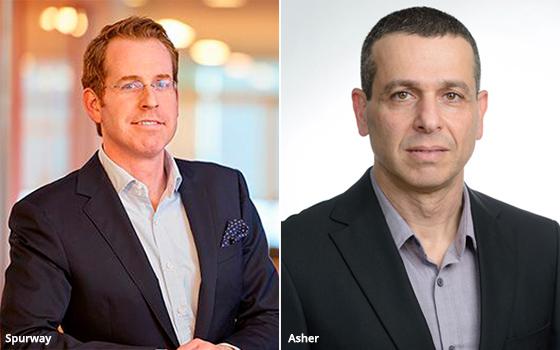
The paired interview that introduced Spurway and Asher at Similarweb supplied details rarely found in an executive biography. Spurway said he loved reading history. At the time, he was midway through Ron Chernow's biography of Ulysses S. Grant, drawn to what he called Grant's unwavering moral character and steady, persistent leadership.
Then the conversation changed lanes. Spurway enjoyed the visceral experience of driving fast. He had managed to join that enthusiasm with family practicality by owning one of the world's fastest estate cars. In America, he noted, the form is called a station wagon and is deeply unfashionable. This was the joke: sports-car energy concealed in the silhouette of the school run. He also said his three young children occupied most of his free time.
The portrait is usefully at odds with the corporate vocabulary around him. There is the history reader who admires steadiness. There is the driver who wants acceleration. There is the lawyer who notices precision and the marketer willing to put Lego on a customer's desk. None of those details proves a management theory. Together, they make the theory easier to see: serious work does not have to present a permanently serious face.
Turning on the light
When Spurway arrived at Similarweb, he described the internet as a black box for marketers trying to understand the behavior of customers, competitors, and audiences. Similarweb, he said, was like turning on a light. The metaphor met his test: visual, immediate, emotionally satisfying, and simple enough to repeat.
His stated goal was to enlarge the universe of people who recognized the company and understood what its product could do. That sentence avoids a common marketing confusion. Awareness and understanding are different. A buyer can recognize a name and remain utterly unable to explain why it matters. Spurway wanted both, in that order, with growth as the consequence.
Can the message teach something useful, state a real difference, and work in the head as well as the gut?
At Feedzai, he brought the same operating bias to an AI-native fraud platform. Saviynt's account of his tenure says he energized demand generation to accelerate revenue growth and the company's move toward profitability. The words are corporate, but they point to the operator behind the prose: pipeline, measurement, and commercial consequence.
Identity gets a larger cast
Spurway joined Saviynt in August 2025. President Paul Zolfaghari, who had worked with him before, described an empathetic leader with a strong work ethic, a focus on pipeline generation, and a habit of data-driven decisions. Spurway said he had been impressed by the talent and energy of the people at the company.
The timing placed him inside another vocabulary shift. Identity security once summoned a fairly stable cast: employees, administrators, contractors, passwords, permissions. Cloud systems multiplied the doors. Machine identities multiplied the visitors. AI agents added actors that can move, decide, and request access at machine speed. The marketing problem is inseparable from the governance problem. If a company cannot describe who or what is acting, it will struggle to decide what that actor may do.
Spurway framed the mission around securely managing all identities, including rapidly growing numbers of AI agents. In December 2025, Saviynt announced a $700 million growth-equity round led by KKR at a valuation of roughly $3 billion. Spurway called the financing a source of significant resources for the market opportunity he saw: organizations needing to govern AI before moving it from experiments into production.
His public posts since then have stayed close to that boundary. He has promoted Saviynt's work on intent awareness for agent access, a product showcase involving customers already using AI-identity capabilities, and a partnership with Zscaler meant to connect identity decisions with real-time enforcement. He has also continued advising CogniwareAI, founded by Ambarish Desai, a colleague he has known for more than two decades from Appian's early days.
The sentence before the scale
It is tempting to tell an executive story entirely in milestones: titles, financings, listings, revenue curves. Spurway's record has those. Yet his most revealing contribution may be a standard for the sentence that precedes the chart.
Make it precise enough for the lawyer. Useful enough for the buyer. Concrete enough for the customer to recognize. Human enough to feel. If possible, leave room for a Lego sculpture or a joke about a station wagon.
The fourth grader at Wang Computer saw machines that looked like science fiction. The adult marketer's work is less glamorous and more necessary: take the machine apart in language, remove the noise, and show people what it allows them to do. In an industry now rushing to name every new feature after intelligence, clarity may be the rarer technology.