A chain is meant to catch the light. That was part of Kevin Leyes’s first business: jewelry for the musicians who were giving Argentina’s trap scene its sound and its look. Years later, he would be selling a rather different proposition to people with conspicuous lives: ways to make parts of their digital existence harder to see. The distance between those businesses is shorter than it looks. Both begin with a question about what a name can carry.
Born in González Catán in 2000 and raised in Pontevedra, west of Buenos Aires, Leyes learned to work with what was available. Computers offered a way to make something without first owning a shop. Music offered a community he already understood. Jewelry gave that community something tangible. Public relations turned the knowledge into a service. Today, as president of LeyesX and CEO of Leyes Media, he is concerned with the consequences of being recognizable.
His career has a pleasingly awkward shape. A tidy biography would assign him a profession early and stick to it. Leyes has been a web developer, a jewelry entrepreneur, a communications executive, and a recording artist. The connective tissue is identity: designing it, putting it into circulation, and deciding how much of it should remain public.
The classroom with no closing time
Before there were companies, there was a computer. His father gave him his first one when he was nine. Leyes began teaching himself programming, making websites and games. In 2012, recognition in the national Desafío Dale Aceptar programming competition gave that private interest a public consequence. An activity pursued at home had acquired an audience beyond home.
He described his education as a mixture of tutorials, forums, online courses, and long stretches in front of a screen. There is something recognizable about that curriculum. The lesson arrives when a thing breaks; the exam is whether you can make it work again. Its timetable is inconvenient, but its feedback is wonderfully direct.
Leyes did try a more conventional route. After secondary school, he began computer engineering at Universidad Nacional de La Matanza. He later said he left before completing six months because the company he was starting demanded more time than he could give both pursuits. He had reached an ordinary scheduling problem with unusually consequential options: attend class or attend to customers.

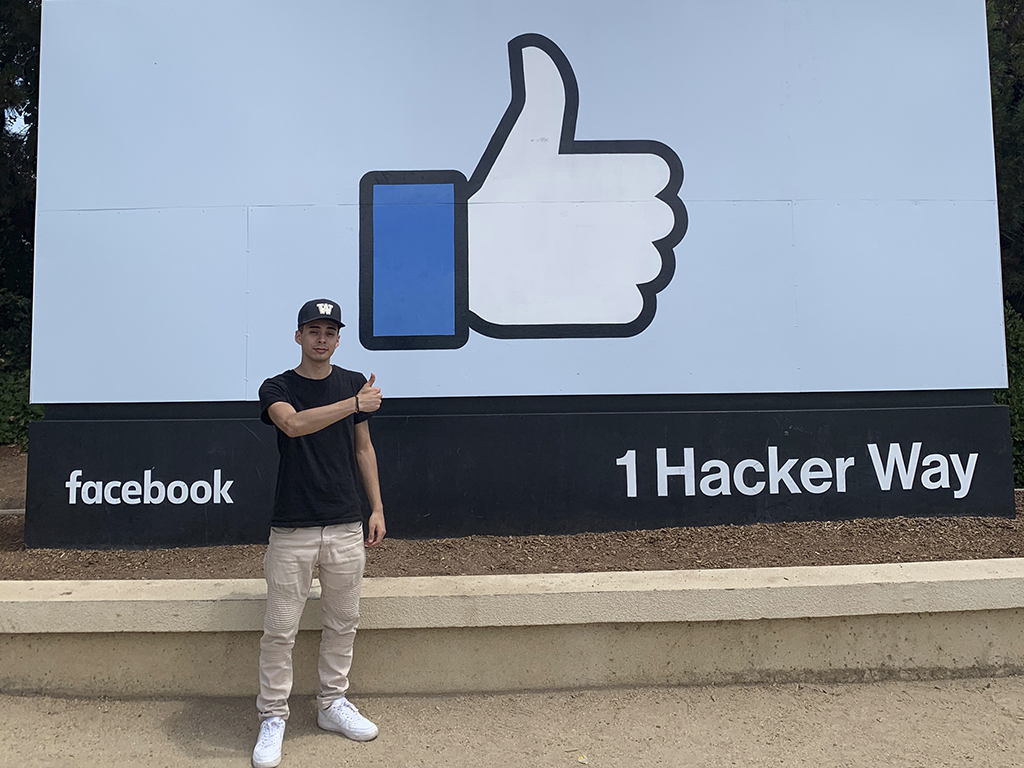
In 2017, the U.S. Embassy and State Department selected him for the Youth Ambassadors program. In 2019, he participated in TrepCamp’s entrepreneurship program in Silicon Valley, associated with the University of California, Berkeley. These were educational exchanges and training experiences. They put him in rooms with people working on businesses and gave his ambitions a larger geographical frame.
The trip required more than an acceptance. Ahead of TrepCamp, he had a partial scholarship and still needed to cover outstanding costs, including travel and accommodation. He started a fundraising campaign. The episode is a useful corrective to the postcard version of a Silicon Valley visit. Getting through the application process and getting onto the plane were separate jobs.
A business that spoke fluent trap
Team Leyes began in December 2017. He had tried clothing, then moved toward jewelry, an area he felt he knew through his interest in reggaetón and trap. His customers included Khea, Ecko, Seven Kayne, Blunted Vato, and Cacha. The product belonged to the scene rather than arriving with a market researcher’s clipboard.
He explained that designs were made locally, while manufacturing partners in the United States and Europe handled production. He also managed logistics, promotion, and customer service, with help from his family. The romantic description is young designer. The working description includes answering questions about deliveries. A pendant may sparkle; an unanswered customer message rarely does.
The enterprise also exposed him to the less photogenic machinery of international trade. In early 2020, he described how Argentina’s currency movements squeezed margins and pushed prices higher. Looking abroad became a practical response to conditions at home. His business already crossed borders before he personally moved to the United States.
The jewelry venture later became VVS & Co. By December 2025, the brand was describing plans for digital customization with 3D previews and augmented reality. Those ambitions extend an early instinct: let customers participate in the identity a product expresses. The proposed technology changes the fitting room; the desire to wear something personal is familiar.
What matters in the early jewelry chapter is the combination of skills. He could make a website, understand an audience, arrange production, and promote a product. Those functions eventually became separable businesses. At the beginning, they were all on one young founder’s to-do list.
His mother gets a business credit
Leyes Media was founded in 2019 by Kevin and his mother, Eliana Ianni. That detail makes the usual family acknowledgments rather literal. She appears in the company’s story as a cofounder, with a role recognized in its award credits. The person who helped sustain the household also helped build the enterprise.
In August 2022, the agency signed a distribution and artistic representation agreement with his sister, Paloma Leyes, a dancer, model, and actress. Its work then included publishing, music distribution, social media marketing, and public relations for artists, creators, and brands. A family connection had become a professional arrangement with specific services behind it.
The agency received a platinum MUSE Creative Award in 2022 for its entry titled “Leyes Media: Best New PR Agency.” The official category was Advertising - Advertising / Other. That distinction matters: an award recognizes an entry within a particular competition. The record gives a concrete marker of the agency’s development without asking a trophy to explain the whole business.
Leyes also became a business writer. His published work has covered negotiations, consumer psychology, product promotion, and the use of social platforms. Writing about those subjects places him on both sides of the publicity transaction: helping clients become subjects of coverage, while putting his own ideas before readers.
The client steps up to the microphone
There is a recording career running through this business story. At the end of 2019, Leyes built a home studio and taught himself to produce music. His first single, “Pichaera,” with J Gonz, arrived in September 2021. “Tímida” followed in January 2022. Kinginz filmed its video in Miami; Leyes directed and edited it himself.
The overlapping jobs are characteristic. Making the song was one task. Shaping how the song would be seen was another. The early programmer and the communications founder were still at work inside the recording artist, each insisting on a credit.
He founded Los Reyes, a collective whose members included Kinginz, Kaskote, Nico Jaffe, Paloma, and himself. In a music interview, he described wanting a voice listeners could recognize immediately and an interest in moving among R&B, reggaetón, trap, RKT, and turreo. Recognition, in this setting, had to happen by ear.
His stated interest in trap included writing more personal, motivational lyrics. That aspiration adds something to the business biography. The same person who arranges other people’s public stories wants to tell his own in a form that can survive beyond an interview. A company biography explains what you do. A song gets to choose its own subject.
Released in 2022. Filmed in Miami by Kinginz; directed and edited by Leyes.
When a familiar name becomes an entry point
Leyes’s recent business writing turns toward the risks attached to personal visibility. In December 2025, he described losing more than $100,000 across scams, fraud, impersonation, and other digital exploitation. He presented those experiences as part of what drew him to studying how personal information can be assembled into routes of attack.
The figure is his own account of losses. Its significance here is the change in attention it describes. A name, an old account, a forgotten address, or a public profile can have uses their owner never intended. A founder accustomed to making people discoverable had begun examining the other party doing the discovering.
“That gap is where I spend most of my time now.”
Kevin Leyes, on executives’ personal digital exposure, December 2025
LeyesX’s current offering focuses on identity risk: mapping exposure, reducing opportunities for targeting, monitoring threats, and preparing responses to impersonation and synthetic media. Its vocabulary is more restrained than the jewelry business’s. Here, the desirable outcome may leave very little to photograph.
In January 2026, he argued for rehearsed responses to cloned voices and fabricated video. In another essay that month, he emphasized preserving evidence and making verifiable company information easy to find. These are his proposals for handling contested identity. They bring communications work into the same discussion as operational procedures.
The irony is hard to miss. He began with objects designed to announce their wearer and now leads a business concerned with limiting what strangers can learn about a person. His work has moved from the visible object to the information around it.
The old jewelry chain still offers a useful image. Every link contributes to the whole, and each connection matters. Across Leyes’s changing occupations, he has kept returning to the same problem: how to construct an identity that travels. The newer question is what travels with it, who gets hold of it, and how much control its owner can keep.