A successful signup has the manners of a closed case. The form disappears. A welcome message arrives. Someone, somewhere, has become a customer. For Oluwatobiloba Ololade, the co-founder and CEO of Dojah, that small moment has grown into a much longer assignment. Establishing who a person is can get an account opened. It cannot settle everything that account will do.
His route into the problem began while he and Ayomide Oso were trying to build something else: an expense management app. They needed access to data APIs, the connections that allow one piece of software to request information from another. Instead of moving through the product work, they were approaching stakeholders separately to obtain those connections. The dependency was consuming the project.
There is a particular indignity in having code ready for information that will not arrive. A computer can execute a request in a moment; the conversation required to make that request possible can take rather longer. Ololade’s eventual business emerged from paying attention to that difference.
An expense app acquires an expensive problem
The two builders had worked together at Elta Solutions, a development shop serving software companies. They knew the experience from inside a product team. Accessing the right data was making their own work slow, and they suspected that other teams were running into the same difficulty. They carried out user research to test the suspicion.
“We found it difficult to get the data APIs we needed.”
Tobi Ololade, recalling the work that preceded Dojah
That step gives the origin story its weight. A frustrating integration can invite an elaborate workaround. Ololade and Oso investigated whether the obstacle was shared widely enough to merit a company. The founders’ account describes a problem that repeated across markets: different data sources, different integrations and uneven reliability. A business crossing a border had another set of connections to assemble.
Dojah was founded in Lagos in 2021. Its initial purpose was to make identity verification and customer onboarding accessible through a common set of tools. A team could use the infrastructure while concentrating on the service it actually wanted to offer. The expense app had supplied a practical research assignment, though presumably its original budget had not included founding a second business.
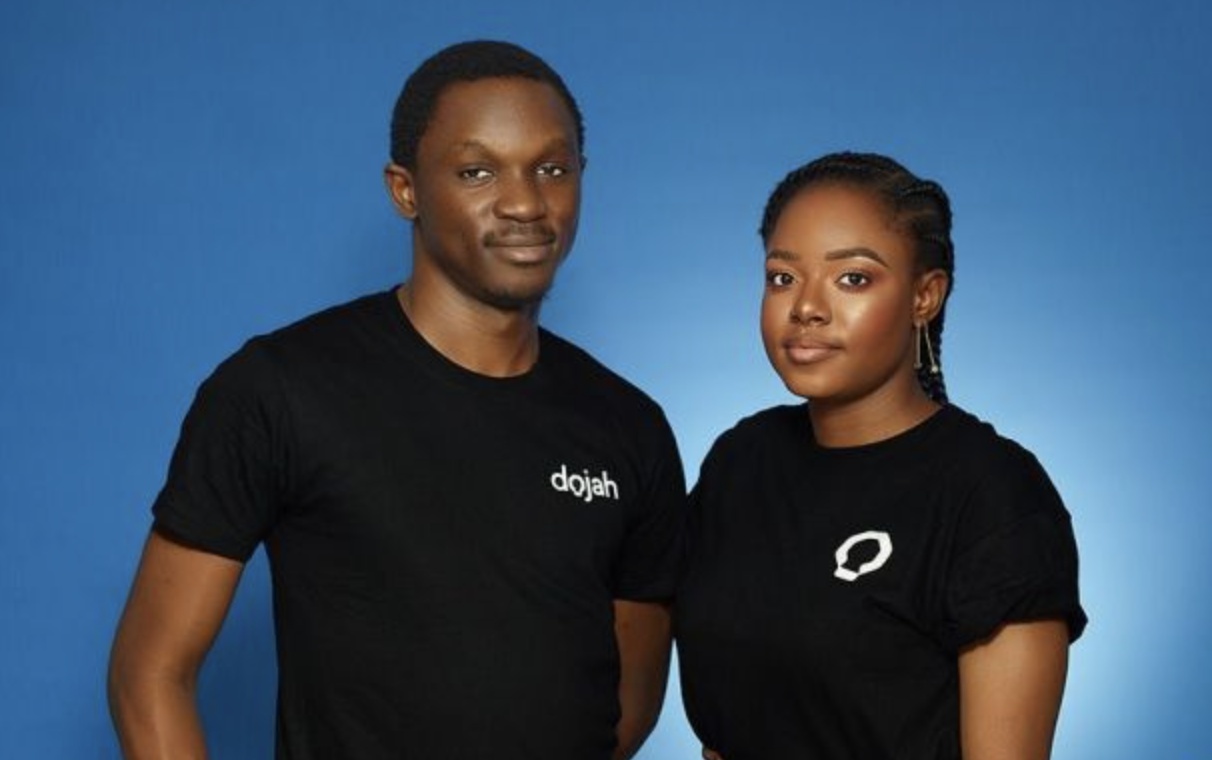
Oso became co-founder and Head of Product; Ololade became co-founder and CEO. Their shared starting point matters more than a tidy division of titles. Both had experienced the difficulty they were asking customers to pay them to solve. They could describe the delay in the language of the people doing the work.
A degree, a development shop, a wider field
Ololade studied computer engineering at Obafemi Awolowo University, completing his degree in 2013. His professional career was already underway: he began as a lead developer at Elta Solutions in 2012. University and commercial software work overlapped, rather than arriving in a neat sequence with a graduation photograph between them.
He also ran a business as a student that served clients in several countries. That detail places international customers early in his working life. Long before Dojah joined an accelerator, he had experience of doing business beyond a single domestic market. The later cross-border ambition had a personal precedent.
His next roles broadened the range of systems in view. He became a director at Kedesa, a messaging software business, in 2015. From 2017 to 2021, he was head of technology at TradeBuza, whose work supported agricultural businesses managing outgrower schemes and commodity trading. Between 2019 and 2021, he also held an engineering leadership role at fintech company Moneymie.
Those entries put him in contact with quite different commercial settings. A messaging service, an agricultural platform and a financial product have different customers, but all require software to fit the work people are already trying to do. An elegant system becomes useful when it can survive that encounter. His career supplied several versions of it.
By the time he co-founded Dojah, Ololade had held technical responsibility in businesses whose products depended on information moving between organisations. The company’s premise sat close to that experience. Access, integration and dependable results were already part of his working vocabulary.
The calls begin to multiply
Dojah entered Y Combinator’s Winter 2022 batch. Before joining, it had reported onboarding more than 500 businesses and processing over two million API calls, with identity and onboarding endpoints in Nigeria, Ghana, Kenya, South Africa and Uganda. There was already work passing through the system.
For Ololade, the accelerator chapter arrived after customers had begun using the service. Oso described its immediate benefit in practical terms: the association helped conversations with important stakeholders. In a business built around connecting organisations, easier conversations belong close to the product itself.
During 2022, Dojah reported five times the API calls of the previous year and three times the customers. It added 12 people to the team. The numbers describe several kinds of growth at once: more businesses adopting the service, more requests moving through it and more people responsible for keeping it working.
The product range widened too. EasyOnboard offered a no-code route for assembling verification flows; EasyLookup allowed information checks without writing an integration. This was a useful expansion of the audience. The person responsible for onboarding at a business does not always have an engineer available whenever a process needs changing.
A CEO with an engineering background has a particular set of obligations here. A promise made in a sales conversation eventually becomes a request that software must answer. Growth adds more of those requests. It also adds more people who need to understand what a result means. The job expands in two directions at once.
The account has a life after signup
Ololade said more than 90 percent of Dojah’s first customers were in fintech. Conversations with those businesses revealed a recurring difficulty beyond verification. Getting a genuine user through onboarding did not remove the need to spot suspicious activity later. Customers wanted help with what was happening inside their products.
The distinction is easy to miss when a signup flow is treated as a finish line. An account may begin with valid information and later behave suspiciously. A legitimate customer can also lose control of an account. The original identity result remains part of the evidence, while the business has another decision to make.
In May 2023, Dojah launched EasyDetect. The product introduced configurable rules, events and conditions, with alerts for suspicious activity. It addressed problems such as counterfeit accounts, fraudulent orders and the time spent manually examining transactions. The company was taking on work that continued after its original checks had finished.
- IdentityCheck the person or business entering the service.
- ActivityMonitor transactions and behaviour after onboarding.
- ResponseFlag suspicious events for a business to review and act on.
EasyDetect’s configurable approach gave businesses room to apply rules to their own circumstances. A payment product and an online shop need to recognise different patterns. Their teams also need a usable way to respond when a rule raises an alert. Detection earns its place in the workflow through the decisions it helps people make.
For the founder, this broadened the assignment substantially. Identity verification supplies evidence at a particular moment. Monitoring keeps accepting new evidence. The product has to remain useful as the account changes, rather than treating the first completed form as the last relevant fact.
The company’s relationships widened during the same year. Dojah joined Visa’s inaugural Africa Fintech Accelerator cohort in 2023, and its customer announcements included businesses such as Cleva and Lenco. Product development was taking place alongside more conversations with organisations running financial services in practice.
The engineer keeps the brief open
Ololade’s public work continues to join executive and technical responsibilities. At StartupSouth9, he appeared as Dojah’s CEO and engineering lead, discussing business growth and community impact. His formulation centred on “creating products people need”. It is a useful test for a founder whose company began with a difficulty his own team could describe in detail.
That test also applies inside the organisation. Dojah’s work on operating standards has included attention to information security and service management. Ololade has connected those efforts to clearer processes as the business grows. A provider entrusted with identity information has its own processes to keep in order.
Infrastructure creates an unusually reciprocal business relationship. Dojah asks customers to rely on its checks, and customers need reasons to rely on Dojah. Good intentions cannot return an API response. Procedures, technical work and people handling the consequences all have a part to play.
The company’s later development includes Profiled Risk, bringing identity, compliance and fraud signals into an ongoing view of risk. Its fifth-anniversary account describes a direction that follows the earlier change: keep assessing what happens across the customer’s relationship with a service. Ololade’s original integration problem has become a continuing operating responsibility.
The shape of his career makes that progression intelligible. He built for clients as a student, led engineering in several settings and then co-founded a service other businesses could build upon. Each stage put someone else’s work on the other side of his software.
A customer still reaches the welcome screen. A product team still wants the integration to work. Somewhere behind those ordinary moments sits a collection of decisions about evidence, access and behaviour. Ololade’s company has made those decisions its business. The greeting is brief. The work that follows has kept getting longer.
Follow the work
Profiles, product history and conversations.
- Dojah’s website ↗
- Ololade on LinkedIn ↗
- Ololade on X ↗
- Dojah at Y Combinator ↗
- The 2022 founding story and YC announcement ↗
- The founders on expanding into fraud prevention ↗
- Dojah’s 2022 operating review ↗
- Five years of Dojah ↗
- Watch: Dojah’s anniversary video on YouTube ↗
- Dojah’s YouTube conversations ↗