Kenneth Jacobs went to Germany to talk about mergers and acquisitions and found himself thinking about a bargain with the devil. On that business trip, he happened upon Goethe’s house. The encounter supplied the opening of a March 2025 essay about American trade policy: Faust, immediate rewards, and the awkward matter of what comes due later. Even a banker occasionally finds a more useful model outside the spreadsheet.
There is something revealing in that detour. Jacobs’s professional life has been spent around transactions, but his own career makes more sense over a long stretch of time. He joined Lazard in 1988. He became its chairman and chief executive in November 2009, led it through September 2023, and stayed to advise clients as his responsibilities changed. The promotions are easy to list. The more interesting question is what he kept doing between them.
By October 2026, another assignment was on the calendar. Vanguard had elected him its next nonexecutive chairman, to succeed Mark Loughridge following Loughridge’s retirement at the end of December. A career built inside a financial advisory firm was moving further into the governance of an investment manager serving individual savers. The scale and audience were changing again. Judgment would remain part of the job.
Learning the house from within
Jacobs earned his economics degree at the University of Chicago in 1980 and his MBA at Stanford in 1984. He worked at Goldman Sachs before joining Lazard. In 1991, three years after arriving, he became a partner. The apprenticeship took place inside a firm where the relationships between bankers, clients and national offices were central to the business.
In January 2002, Jacobs became deputy chairman and head of North America. His remit involved adding substance to the franchise: new advisory practices, more sector expertise, and offices in places including Boston, Houston and Washington. Restructuring, capital-structure advice and private-fund advisory were among the activities he helped develop. Lazard also expanded its US middle-market business through an acquisition. These were practical changes to where the firm could work and what it could offer.
That experience matters to the later CEO story. Before Jacobs was responsible for the whole institution, he had been responsible for expanding a substantial part of it. Opening an office gives growth an address. Building a practice requires people capable of doing the work after the announcement has been filed away. His path to the top passed through both tasks.
When Lazard appointed him chairman and CEO on November 17, 2009, the board emphasized collaboration, client relationships and his record of building businesses. It chose someone who knew the organization from the inside. Jacobs, in turn, presented continuity as part of his brief, including the continued operation of Financial Advisory and Asset Management as separate businesses. He was taking charge of a firm whose professional identities extended beyond any single chief executive.
The problem with a room full of stars
A small travel detail helps bring that management style into focus. During an early European trip with Jacobs as CEO, Vernon Jordan was surprised to find them flying commercial. Jordan had previously accompanied Bruce Wasserstein in a private jet. The contrast survived because it was concrete: an airline booking can communicate something that a paragraph about culture struggles to convey.
Jacobs described his approach as managing in a “transparent and collegial way.” William Rucker, who led Lazard’s London office, called him first among equals. Neither description eliminates the authority of the chief executive. Both suggest how Jacobs wanted that authority to work among experienced colleagues with clients and reputations of their own. A partnership mentality could persist inside a public company.
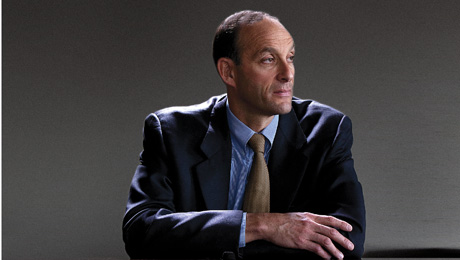
By 2018, Jacobs was talking about the competition for people in a changed advisory industry. Experienced bankers had moved from large integrated banks into independent firms. He argued that the next challenge was “attracting, retaining and developing talent.” The emphasis on development is worth pausing over. Hiring an established banker is a transaction of its own. Helping a younger colleague become valuable asks for a longer commitment.
This was a business argument about how an advisory firm sustains itself. Expertise has to remain available when the client calls. A network needs people who can work across it. Jacobs’s North American expansion and his later emphasis on talent belong in the same account: the firm needed both a broader reach and the human capacity to make that reach useful.
Two businesses, one demanding cycle
For all the attention paid to dealmaking, Lazard under Jacobs also depended on asset management. One business advised clients on consequential financial decisions. The other managed investments. Their results gave the chief executive two distinct sets of activities to oversee, each exposed to financial markets and client decisions.
The 2021 figures make that combination visible. Lazard reported annual operating revenue of $3.139 billion, then a record. Financial Advisory contributed $1.778 billion and Asset Management $1.329 billion. US GAAP net income was $528 million; adjusted net income was $576 million. Those last two numbers measure the same year under different accounting presentations. They should keep their labels attached.
Two sources of revenue.
Two sets of client relationships.
The result belongs to the organization’s bankers, investment teams and other colleagues as well as its leadership. It is also a useful marker in Jacobs’s tenure. More than a decade into his time as CEO, both businesses were producing record annual operating revenue. The figure gives weight to the career chronology without pretending that one good year explains fourteen years of management.
Lazard’s wider history during those years included its sovereign advisory team’s work on Greece’s 2012 debt restructuring and the creation of a Shareholder Advisory business in 2013. These were firm achievements, with teams and specialists behind them. They illustrate the variety of problems crossing the chief executive’s desk: governments’ debts, companies’ shareholders, investment portfolios and the ordinary demands of running a listed business.
The institution keeps the calendar
In 2023, Lazard reached its 175th anniversary. Jacobs introduced the commemorative history with an observation about old business letters. Nineteenth-century partners had worried about clients, financial footing, opportunities and people. The vocabulary of finance had acquired many accessories in the meantime. The questions still wore remarkably well.
“Are we doing our best for clients?”
Kenneth Jacobs, reflecting on Lazard’s early business letters
He returned to adaptation and the ability to keep capable people. Coming from the head of a firm with a long past, that was a practical reading of history. Longevity required repeated decisions about what to preserve and what to change. An anniversary book could celebrate the old offices and familiar names while leaving room for a business that would look different again.
The anniversary also fell in a year of succession. Lazard announced in May that Peter Orszag would become CEO on October 1 and Jacobs would become executive chairman. Orszag had joined the firm in 2016 and led Financial Advisory. Jacobs would continue advising clients on strategic financial matters. The chief executive’s responsibilities passed to a colleague; client work continued across the handover.
At the end of 2024, Jacobs relinquished his board seat. He became senior chairman and senior advisor to the board in January 2025, while Orszag added the chairmanship to his CEO role. Jacobs’s senior-chairman tenure ended in July 2026. He remained a senior advisor. The sequence is a reminder that leaving an executive office can involve several stages and several useful jobs.
Other institutions had been part of his working life for years. The University of Chicago elected him a trustee in 2005. At the time, it noted that he had arranged Jeff Metcalf Fellowships for College students. A graduate returning as a trustee is a familiar story; helping students obtain early professional experience gives that connection a tangible expression. Jacobs now serves as a vice chair of the university’s board.
He is also a vice chair at the Brookings Institution, a director of the Partnership for New York City and a member of the Council on Foreign Relations. France inducted him into the Legion of Honor in 2017. Those affiliations place the banker in conversations extending into public policy, education and civic life. His public writing, including the Goethe-framed trade essay, offers another view of those interests.
Another chair, another constituency
Jacobs joined Vanguard’s board in February 2026, along with the boards of trustees of its funds. In July came his election as the next nonexecutive chairman. Vanguard paired that announcement with the election of John Murphy as lead independent director. Loughridge’s retirement was set for December 31. As of this profile’s October publication, the transition was still ahead.
Vanguard brings a distinctive ownership arrangement to that assignment: its funds own the company, and the funds’ shareholders own the funds. Its customers include people saving through workplace plans and investing through financial intermediaries. For Jacobs, the new chairmanship extends a career in which corporate decisions, investment management and institutional responsibility have repeatedly met.
The job will have its own demands. His previous experience supplies a long record of working inside organizations whose value depends on decisions made for other people. Clients, colleagues, students and fund shareholders are different constituencies. Each has a reason to care about what happens after the immediate business has been completed.
That brings the story back to the German detour. A transaction can be judged at signing. Its consequences continue afterward. Jacobs has spent decades in the interval between a decision and its results, first helping clients, then running Lazard, and now taking on another boardroom responsibility. Goethe supplied a memorable warning about bargains. The banker’s next calendar entry offers a more everyday test: keep the institution useful to the people it serves.
Keep the conversation going
- Lazard: Kenneth Jacobs’s official biography
- Kenneth Jacobs on LinkedIn
- Vanguard’s July 2026 chairman announcement
- Lazard’s 2023 leadership transition
- Lazard’s 2021 financial results
- The 2011 profile and press photograph
- The 2018 conversation about banking talent
- Jacobs’s Lazard anniversary letter
- Watch: Lazard’s 175-year retrospective
- Read: America’s Faustian Trade Bargain
- More essays by Kenneth Jacobs
- University of Chicago: the 2005 trustee election