A surgeon can see the anatomy. A device can reach the tissue. The patient can leave sooner. For the inventor, this sounds like the end of the story. For the business, it may be the beginning. Someone still has to train physicians, collect evidence, build a sales organization and make the economics work. KCK Medtech invests in that awkward distance between a convincing invention and a functioning company.
- Evergreen capital gives KCK a flexible investment timetable.
- Former medical technology operators help portfolio teams execute.
- Sonex, Allotex and RefleXion show where the money goes.
The firm, founded in 2015, belongs to the medical-device corner of venture investing. Its portfolio stretches from hearing and vision to orthopedic procedures and cancer treatment. These are businesses whose products have to fit inside healthcare: its clinical routines, purchasing decisions and payment arrangements. A beautiful demonstration leaves a considerable amount of work unfinished.
A fund with a different clock
In a 2025 interview with executive-search firm McDermott + Bull, senior managing director Greg Garfield described KCK’s fund as single-family sponsored and evergreen. The essential detail was almost comically plain: “there’s no fixed term.” The fund can invest through debt or equity, in public or private companies, at different stages of their lives.
That flexibility is the proposition. If building value takes longer than expected, the investment structure gives KCK room to respond. Its operating team supplies the other half. Garfield described a gap he saw in medtech investing: companies needed investors with a closer understanding of the problems operators encounter as their businesses grow.

KCK says it helps identify talent, solve operating problems and sometimes contributes its own people. For a founder, the useful question is how that assistance translates into a particular hire, launch or difficult decision. The firm’s service is capital accompanied by experience; the devices belong to its portfolio companies.
At LSI USA 2025, KCK’s Viral Gandhi described typical first checks of $10 million to $30 million, usually with KCK leading the round and seeking a board seat. This places the firm in a different conversation from an investor writing a small exploratory check. The capital arrives with an expectation of involvement.
The alternatives have different appetites. On the same LSI panel, Deerfield described a broader healthcare mandate, while Broadview Ventures described early-stage cardiovascular and stroke investing. KCK offers a more specific combination: medical devices, substantial initial checks and operating involvement. Which investor fits depends on the company’s stage and the work ahead.
Forty million dollars for the next room
Consider Sonex Health. Its ultrasound-guided instruments allow physicians to visualize anatomy during carpal tunnel and trigger finger procedures. The change is partly about the setting: procedures traditionally performed in hospitals or surgery centers can move into office-based procedure rooms. The operating room is expensive real estate. Moving an appropriate procedure changes the practical proposition for everyone involved.
In early 2022, Sonex disclosed a $20 million KCK commitment. Twin Cities Business reported that it would arrive in tranches; the company said it was intended to support commercial adoption and prospective post-market studies. The distinction matters. A commitment is money promised under an agreement, with disbursement governed by its terms.
In September 2023, Sonex announced a $40 million Series B led by KCK, which had also led its Series A. A separate Horizon debt facility accompanied the financing. Sonex planned to widen access to its instruments and expand real-world clinical evidence. Selling more devices and demonstrating their value were proceeding together.
KCK commitment, disbursed in tranches
Total Series B, KCK-led
Different financing measures. Round size does not measure investment return.Four years of evidence. Then a factory.
Allotex offers another view of the sequence. The Boston-Milan company uses precisely shaped human corneal tissue for vision correction. Its July 2023 announcement of a $30 million Series B first close, led by KCK, explicitly identified four-year treatment data as an investment driver. Evidence was doing financial work.
By November, Allotex had added Junson Capital to its investor group. The stated uses included expanding production facilities and preparing for market introduction and US clinical trials. John White represented KCK on the board. A promising clinical result had opened the next set of requirements: make enough product, prepare the next study, reach the next market.
The earlier approach also had a specific problem to solve. Allotex’s July release described biocompatibility issues that had troubled synthetic corneal inlays. Its proposed answer used donor corneal tissue. That was a product rationale, rather than proof that every commercial or clinical obstacle had disappeared.
Seven years is a business detail
RefleXion makes the timetable especially tangible. KCK Group led its $46 million Series B in 2016. SCINTIX biology-guided radiotherapy received FDA clearance in 2023 for qualifying lung and bone tumors. Seven years separated those milestones. Additional financing occurred along the way; that initial round was one step in the development.
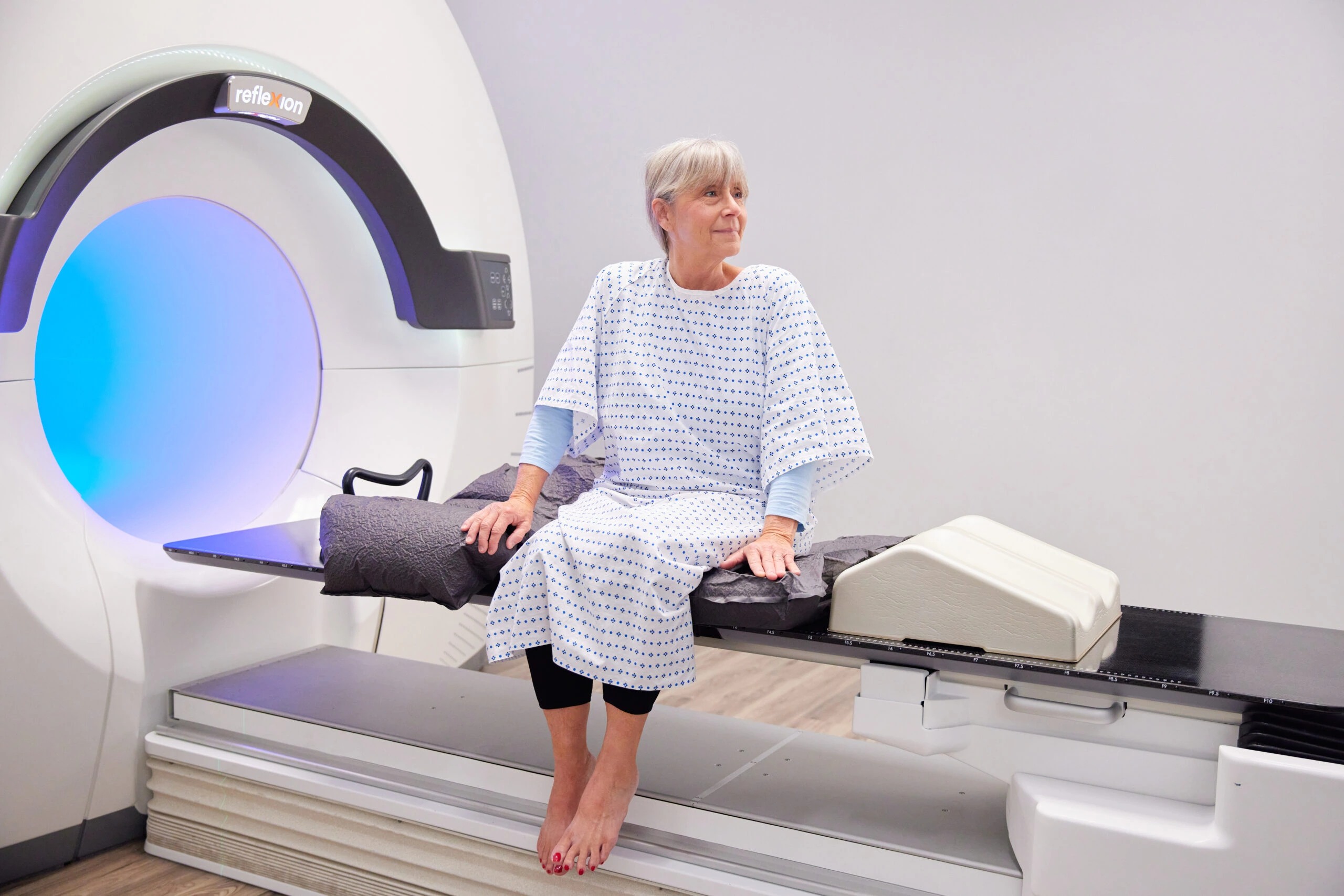
The work continued after clearance. In April 2026, RefleXion announced expanded Medicare payment for SCINTIX at freestanding centers following a Noridian decision. In October, another KCK portfolio company, Aerin Medical, announced preferred-vendor status with US ENT Partners, a network spanning more than 1,500 physicians and 300 member practices. Clinical permission, payment and distribution are separate achievements.
Patience still has an exit
There is a useful limit to the evergreen idea. In February 2025, NeuroPace repurchased 5,270,845 shares from KCK Ltd., exhausting that entity’s remaining holding. A flexible fund lifetime still leaves room for a sale. The transaction does not, by itself, reveal KCK’s total profit or the return on its original investment.
Clinical permission, payment and distribution are separate achievements.An observation from the portfolio
The lesson founders can borrow is to finance the sequence they actually face. Budget for clinical evidence, production and adoption as distinct jobs. Ask an investor which of those jobs its team can help perform. A founder seeking a small check or a passive shareholder may find KCK’s described approach a poor fit.
Long-term capital cannot supply missing clinical benefit or persuade a payer by itself. Its usefulness depends on what the company does with the time. KCK’s proposition is that experienced people and a flexible timetable give that work a better setting. The interesting test comes after the device works, when someone has to make it part of everyday care.