In September 2024, a participant in Kickstart Innovation’s startup program offered a small clue to how Katka Letzing works. NEUR.ON, a legal technology company, described the introductions, pitches and meetings that opened its cohort. Then came its recollection of her favorite warning: “if you don’t sign PoC agreements by the end of this month, I will find you.”
A proof of concept rarely enjoys such dramatic billing. Usually it occupies a spreadsheet, waiting patiently for somebody with budget authority. In this telling, it had acquired a deadline and a pursuer. The anecdote catches something useful about the CEO and co-founder of Kickstart: the meeting is a beginning. Somebody still has to turn the conversation into an agreement.
Letzing’s working world contains startup founders, corporate executives, investors, public institutions and researchers. They arrive with different calendars and different definitions of urgency. She has spent much of her career arranging encounters across those differences. The public record follows her from European classrooms to international exchange programs in California, startup activity in Asia and, eventually, Zurich. Cooperation is the recurring occupation.
Before the pitch deck, the exchange program
Letzing studied business and international relations at CMI Prague and ESMA Barcelona. Her early work included finance and education. Later, she spent more than a decade in Silicon Valley, working for the Institute of International Education and on U.S. Department of State programs and White House initiatives. The programs involved startups and other organizations from more than 170 countries.
The Department of State’s own archive identifies her as a lead program officer and marketing manager at the institute’s West Coast Center in San Francisco. This was a career in getting people into contact with one another across national and professional boundaries. Long before she was asking founders about corporate partnerships, her work already depended on making introductions useful.
From 2013, her activities included startup acceleration in Asia, with engagements involving Startup Malaysia. She also co-founded a cosmetics startup in Prague and helped it expand through Europe. Those experiences placed her on both sides of the introduction: supporting entrepreneurs and participating in the work of building a company herself. The itinerary looks international; the practical thread is quite consistent.
Her move to Switzerland brought a surprise. Accustomed to California’s fundraising environment, she found Swiss startup capital more constrained. As a Czech-American who had worked across several markets, she could compare the opportunities available to founders rather than assume every startup scene worked alike. That difference helped make another form of support appealing: access to an established organization willing to become a business partner.
- 01Prague & BarcelonaBusiness · International relations
- 02Silicon ValleyInternational exchange · 10+ years
- 03AsiaStartup acceleration · From 2013
- 04ZurichStartup + corporate partnerships
A Swiss address, a different kind of accelerator
Kickstart was taking shape in 2015 through digitalswitzerland and Impact Hub Zurich; its first accelerator edition ran in 2016. By 2018, Letzing was publicly identified as program co-lead and FinTech vertical lead. In 2019, the program became Kickstart Innovation, independent and more explicitly focused on commercial collaborations with later-stage startups.
The emphasis matters. A founder with a working product and a team capable of delivering it needs a route into an organization that might use it. Kickstart’s model puts startups in contact with potential partners and helps them develop pilots and commercial projects. The startup program charges participants no fees and takes no equity. For a founder, ownership survives the introduction intact.
Letzing was already clear about that logic in 2018. Asked about producing a unicorn, she acknowledged the Silicon Valley appetite for billion-dollar valuations while also directing attention to the problems companies solve. Her recurring proposition was that “innovation only happens in collaboration with different partners”. The interesting unit of progress was a relationship capable of supporting real work.
There is a suitably unusual setting for these encounters. At Kraftwerk, a former power station beside Zurich’s Sihl river, shipping containers provide offices and meeting rooms. It is a place where an ambitious discussion can take place inside a steel box. Letzing’s colleagues include co-founders Christoph Birkholz and Georgios Kontoleon; building this network has always been a collective enterprise.
“Make it happen!”
Katka Letzing · WeCoCo conversation, 2020
What happens after everybody shakes hands
The numbers give the activity some scale. By October 2026, Kickstart’s website reported more than 530 startups supported and more than 400 commercial partnerships facilitated. Its international alumni had collectively raised over CHF 3.1 billion. That last figure belongs to the alumni’s fundraising record; it is not a fund Letzing personally manages or money that Kickstart itself invested.
The distinction is useful because the job is easy to misunderstand. Kickstart organizes relationships in which a startup and an established partner can investigate a specific opportunity. An introduction creates a possibility; a pilot produces evidence. A commercial relationship requires further decisions. Putting all three under the cheerful heading of innovation can make the distance between them disappear.
One example supplies a more tangible picture. AXA and Veezoo worked on conversational software for analyzing company data. Kickstart describes a rollout to more than 250 AXA agencies, with over 1,800 agents using it, and more than 15,000 employee queries in 2020. These are historical results, but they illustrate what sustained use looks like after an initial project.
The 2025 program offered other, more provisional examples. Coop and FruitfulAI agreed to evaluate automated label and content checks at an Eisberg production facility. Circly and Halba Swiss Chocolates worked on testing automated demand forecasting. Each had a bounded operational question. Chocolate, packaging and data are less glamorous than a promise to reinvent everything, and considerably easier to discuss with the person responsible for delivery.
CHF 3.1B+ raised collectively by international alumni. Organization-level figures; alumni fundraising is separate from Kickstart investment.
The guest list keeps getting wider
Letzing’s interests extend beyond finding a customer for an individual startup. Kickstart’s Mission 2050 brings environmental and social goals into its work with organizations. Its stated concerns include circularity, biodiversity, ethical supply chains and inclusive workplaces. These ambitions return the discussion to the choice of problem: which changes deserve the time and resources required to put a partnership together?
Her contribution to Switzerland’s Circularity Gap Report made a similar argument. She pointed to industries whose existing systems needed rethinking and called for stakeholders to work together on change. In that setting, collaboration is a way to gather the businesses and institutions whose decisions determine whether a promising alternative can enter everyday use.
There is also a quieter strand of work. Capacity’s 2024 annual report lists her on its board with responsibility for startup expertise and innovation. The organization supports people with refugee and migrant backgrounds in their professional lives. SICTIC includes her on its advisory board, and her professional biographies describe coaching student entrepreneurs in her free time. Access runs through the career at several different scales.
She has also taken part in conversations about women founding companies. At Startup Nights in November 2024, she appeared on a panel alongside Anastasia Barner and Lea von Bidder. Earlier, a WeCoCo conversation explored opportunities for women to participate in Kickstart. Her visibility has included recognition as a Bilanz Digital Shaper in 2019 and 2023, alongside the less visible work of helping a founder prepare for a useful conversation.
The AI conversation goes for a drive
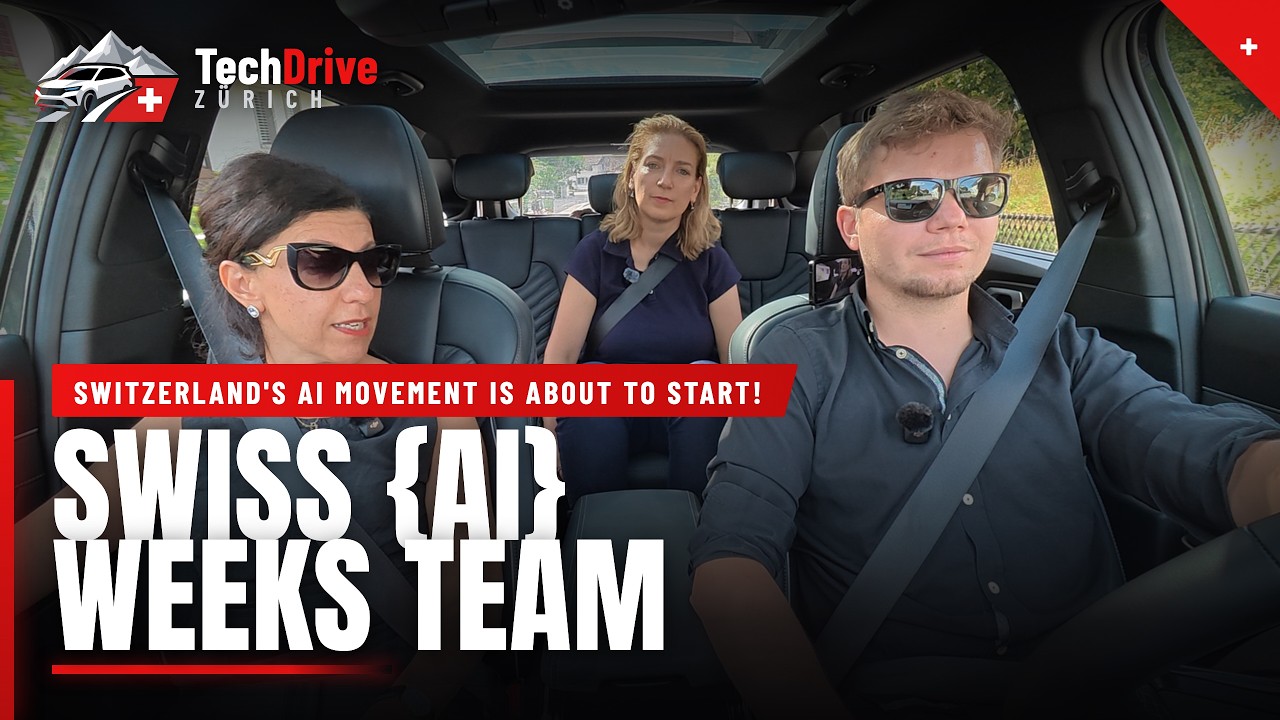
By 2026, artificial intelligence had become another setting for her organizing work. Swiss {ai} Weeks lists Letzing on its team and sounding board. In July, the Venture Client Summit Zurich placed her on a panel about the state of AI in Switzerland, alongside representatives from Swiss Re, the ETH AI Center and the canton’s AI Innovation Sandbox.
An October 19 TechDrive Zürich episode paired her with Kickstart AI lead Anna Hakobyan for a conversation filmed inside a car. Their subject was turning Swiss research capability into practical adoption: connecting researchers, companies, public bodies and communities. The setting was less formal than a conference stage, though the question was familiar. Who needs to work together before a technical possibility becomes useful?
The episode’s published account emphasizes openly released Swiss language models, practical applications within companies and events spread across language regions. It also distinguishes trying a tool from scaling it responsibly. That is recognizable territory for Letzing. The technology changes; the work still involves people who need to agree on a problem, contribute different resources and decide what happens after the first experiment.
A reserve for herself, a table for others
Away from the partnership announcements, Letzing offers a more domestic account of her priorities. As a student she taught English in Prague and spent money on skiing equipment. Her grandmother taught her to save. She still keeps a financial reserve, while travel and treating other people are expenses she is willing to make room for.
Her preferred way to explore a country is to spend time with local people and learn about their culture. She describes that kind of travel as a gain in perspective. The detail sits comfortably beside a career spent arranging exchanges: an interest in what becomes possible when somebody else’s experience enters the room.
Asked in 2018 about her wishes for the future, she wanted the network and its projects to grow into long-term collaborations with positive impact. Years later, her work continues to turn on the same practical demand. A founder may have a promising product. A large organization may have a useful problem. Between them sits a sequence of decisions. Letzing has made that middle ground her business, with enough impatience to keep the paperwork moving.