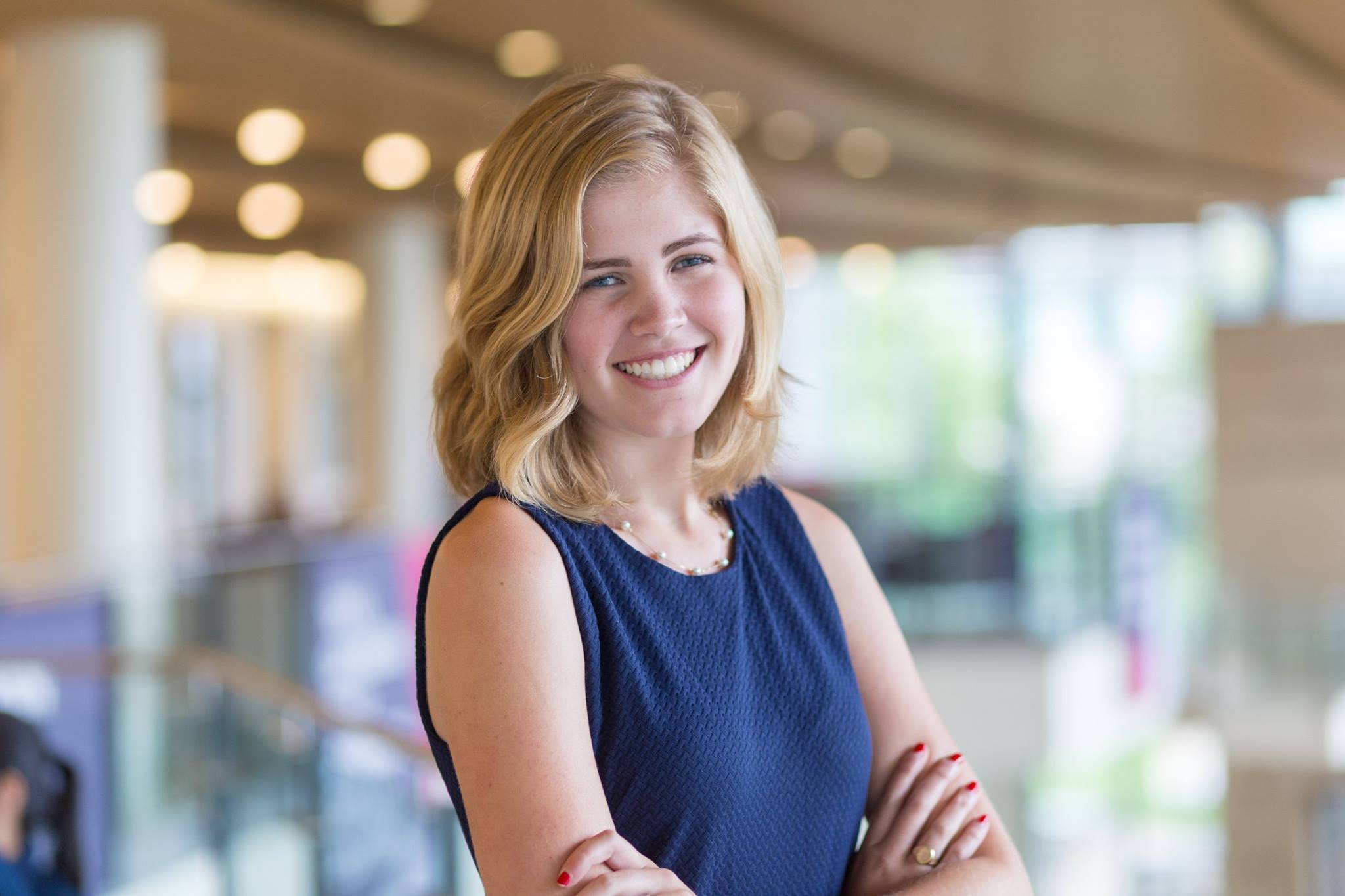
Partner • Khosla Ventures
Katie
Katie
Mishra
She joined the robotics team for a free t-shirt. Silicon Valley is still catching up.
She joined the robotics team for a free t-shirt. Silicon Valley is still catching up.
It started with a green t-shirt. A high school freshman in the Bay Area signs up for the robotics team because it comes with free spirit-week swag. Three months later she's debugging code at midnight. A decade after that, she's writing checks at one of Silicon Valley's most storied venture firms. Katie Mishra's career arc is not a straight line — it's more like a well-played poker hand: patient, strategic, and tilted heavily in her favor by the river.
Mishra joined Khosla Ventures in November 2024 as an enterprise-focused investor, and was promoted to Partner by October 2025 — a trajectory that compressed what usually takes years into eleven months. The move made sense. She arrived at KV not as a career VC cutting her teeth on pitch decks, but as someone who had already built things, shipped products, raised capital, and learned which startups are worth betting on from the inside out.
"Thrilled to announce I have joined the brilliant team at @khoslaventures as an investor focused on enterprise. I have long admired their optimistic commitment to the future, with early bets on companies like @OpenAI. I am honored to learn from KV's bold and impactful team."- Katie Mishra, November 2024
Before Khosla, Mishra was one of the first hires at World Labs — the spatial AI company co-founded by Fei-Fei Li, the Stanford professor who helped pioneer modern computer vision. She joined as an early product manager, a role she landed the way many things happen in Silicon Valley: a VC she'd pitched at Kangaroo, her prior startup, referred her across the table. It's a detail she's noted with wry self-awareness. "I've been a founder, first PM, and now VC," she wrote on X. The sequence is its own credential.
Kangaroo is the chapter that tells you the most about how Mishra operates. Starting from an AI game engine she was building on the side, she co-founded the company with actress Kiernan Shipka — Sally Draper from Mad Men — plus Harvard CS grad Maria Zlatkova. They raised $3.3M from Greylock, Human Capital, and Michael Ovitz. Mishra recruited a 12-person team, brokered deals with movie studios and Hollywood agencies, and launched a metaverse storytelling platform before the term "metaverse" became a punchline. The company let fans create interactive story games with celebrities and NFT projects. It was early, ambitious, and built by three women who didn't wait for permission.
Earlier still, there was Meta research, satellite work, and a Stanford degree in Computer Science with an AI concentration — where she won the BASES Undergraduate Startup Challenge. And before any of that, a nonprofit. At 16, as a junior in high school, Mishra founded Code Circle to teach computer science to middle schoolers after she found Google's standard CS curriculum couldn't hold their attention. She built it to 35 members. She wrote her own curriculum. She was already thinking about product-market fit before she had the vocabulary for it.
"I was hired as the PM bc I was referred by a reputable VC on the other side of the table — have already learned so much about which startups to join to max EV if you're an eng looking to be part of one of the top growing enterprise companies."- Katie Mishra on X, November 2024
At Khosla, Mishra focuses on AI's impact across enterprise software, infrastructure, robotics, and consumer. The firm — known for early positions in OpenAI and a portfolio spanning biotech to space to fintech — suits her range. She's not a specialist who backs one narrow thesis. She's a pattern-matcher who's been in enough rooms, on enough sides of the table, to recognize the difference between a company that's growing and one that's merely running.
What makes Mishra interesting beyond the resume is the texture of her thinking. She writes a Substack called "katie's game" that ranges from longevity optimization to hosting dinner parties to analyzing AI research tools, to a long account of her first World Series of Poker tournament — where she admits to not playing a single hand for the first thirty minutes, studying the table before committing a chip. Her self-assessment: "Harnessing my own psychology continues to be my biggest challenge." In venture capital, that kind of metacognition is worth more than most pattern-matching heuristics.
She published three books before college — winning a New York book pitching contest at ten years old. She presented space research at the United Nations. She performed on stage at a three-Michelin-star restaurant. She competes at the WSOP. None of these things make her a better investor in isolation. Together, they sketch a person who refuses to stay in one lane, and who has the execution track record to prove the range is intentional, not scattered.
The t-shirt, it turns out, was the best trade she ever made.
Three books before college: Gukky Tales, Haze, and Epiphany Island. At ten, she won an honorable mention at a New York book pitching contest. She entered high school planning to become a professional writer. The code interrupted that plan — and she never looked back.
She joined Gatorbotics — her high school's robotics team — for the free green t-shirt. The upperclassmen taught her to code. She stayed. That accidental entry point became a Stanford CS degree, a Meta research role, satellite work, and eventually a seat at Khosla Ventures.
Co-founded Kangaroo with Kiernan Shipka (Mad Men's Sally Draper) and Maria Zlatkova (Instagram Stories team, Harvard CS). Brokered partnerships with movie studios and Hollywood agencies. Raised $3.3M. Built a team of 12. Did it before "metaverse" became exhausting.
Three WSOP tournaments, GTO chart study sessions, and a running thesis that the table is a lab for decision-making under uncertainty. Her assessment: "Harnessing my own psychology continues to be my biggest challenge." Not many VCs say that out loud.
Worked on satellite-building projects and presented space research at the United Nations — two data points that resist easy categorization. From orbit to enterprise software: the through-line is systems thinking and a refusal to believe hard problems are someone else's job.
Founded Code Circle after getting frustrated that Google's CS curriculum lost students to video games. Built it to 35 members, won national awards, and figured out product-market fit for education before she had the vocabulary for either term. The instincts were already there.
"Thrilled to announce I have joined the brilliant team at @khoslaventures as an investor focused on enterprise. I have long admired their optimistic commitment to the future, with early bets on companies like @OpenAI."
— On joining Khosla Ventures, Nov 2024"I've been a founder, first PM, and now VC — was hired as the PM bc I was referred by a reputable VC on the other side of the table."
— On her career path, Nov 2024"Harnessing my own psychology continues to be my biggest challenge."
— Post-WSOP reflection, Substack 2023"At my first World Series of Poker tournament, I didn't play a single hand for the first half hour."
— World Series of Poker, SubstackJoined her high school robotics team purely for a free green t-shirt. Stayed for the code.
Published three books before going to college — and won a New York book pitching contest at age 10.
Co-founded Kangaroo with Kiernan Shipka — the actress who played Sally Draper in Mad Men.
Competed in three World Series of Poker tournaments, including the $400 Colossus in Las Vegas.
Presented space research at the United Nations. One presentation. One podium. Global audience.
Performed on stage at a three-Michelin-star restaurant. The context remains gloriously unexplained.
Went from Associate to Partner at Khosla Ventures in approximately 11 months.
Writes "katie's game" on Substack — covering AI tools, longevity, poker strategy, and dinner parties in one newsletter.