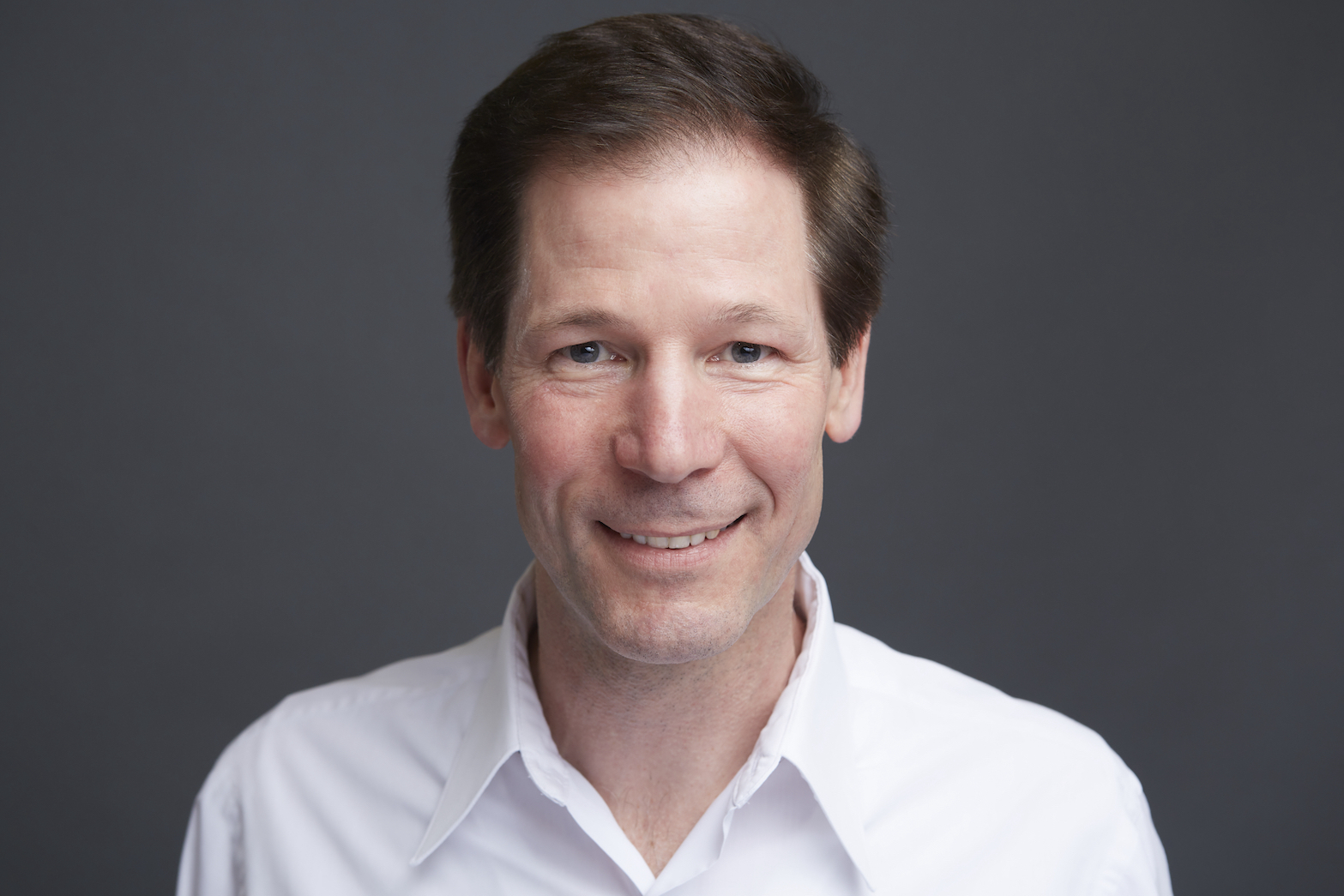
The Cambridge Polymath
Karl Ruping does not look like someone trying to fix three industries at once. He looks like someone who edits the patent claims himself, because he can, because he has the bar membership to do it, and because the chemistry on page 14 is something he understands twice over - once as a scientist, again as a lawyer.
From a building at 1 Broadway in Cambridge - the address most known for housing MIT spinouts that became famous - Ruping runs Tiba Biotech. Tiba is small. Nineteen people, the headcount of a respectable sandwich shop. Its ambition is not. The company builds biodegradable nanoparticles to deliver RNA payloads. Vaccines. Therapeutics. Gene therapy cargo. The kind of work that asks chemists, virologists, and FDA reviewers to all agree at the same time, which is harder than it sounds and slower than anyone wants.
He is also the managing partner at incTANK Ventures, the seed fund he founded that specializes in writing the first check into companies coming out of Boston-area universities. He is, separately, an associate at Harvard's Asia Center, working on the intellectual property side of computational research across the Asia-Pacific region. Three jobs, all visible on LinkedIn, all real.
Tiba is named for a Swahili word evoking medicine and healing. The founders did not pick a portmanteau. They picked a verb.Field Note - Editorial
What Tiba Actually Builds
RNA medicine, as a category, has a delivery problem. The molecule is fragile. The body, sensibly, treats foreign nucleic acid like garbage and tries to chew it. To get RNA where it needs to go - intact, in the right cell, doing the right thing - you wrap it. Most of the industry wraps it in lipid nanoparticles, the same chemistry that carried the mRNA in the COVID-19 vaccines that ended up in arms in 2021.
Tiba's bet is different. The platform uses synthetic biodegradable nanoparticles. The pitch: safer, more stable, friendlier to the body's clearance systems, and - this is the part everyone in vaccine logistics cares about - less dependent on the cold chain that makes lipid nanoparticle vaccines hard to ship to places without industrial freezers.
The company's keyword list reads like a textbook on the field: rna payload capacity, rna design algorithms, self-amplifying rna payloads, rna nanostructure design, rna delivery in veterinary medicine, multi-antigen rna vaccines, biodegradable nanoparticles, computational rna design. They are building the platform and the chemistry both, and using their own compute to design RNA constructs that fit the carrier.
Where Tiba Plays - A Map of the Pipeline Themes
Estimated focus mix based on publicly listed program themes.
Their work has attracted the people who care most about pandemic preparedness. Tiba has been linked publicly to collaborations or programs involving the NIH, BARDA, and CEPI - three of the most consequential funders in the field of vaccines that have to work in scary moments. The NIH is the basic-research engine. BARDA is the biodefense procurement arm. CEPI is the global coalition formed after the Ebola scare to fund vaccine platforms that can pivot in weeks. Three of them, paying attention to a 19-person shop.
The Investor Hat
Before Tiba, and during Tiba, there has been incTANK Ventures. It is a venture firm Karl built around a specific theory: the best early-stage biotech bets are sitting unloved in Boston-area university labs, and they need a check writer who can read the patent file and explain the science to the LPs in the same meeting. He does both.
The fund's known investments include Agrivida, which works on agricultural biotech and the conversion of non-food cellulosic biomass into renewable fuels and chemicals. AgaMatrix, a diabetes management business that built a global distribution network. Misfit, the wearable device company that was sold to Fossil Group in 2015 for around $260 million. Three different sectors. Three university-rooted teams. The kind of portfolio you build over fifteen years of taking afternoon meetings in Kendall Square coffee shops.
A patent lawyer who is also a chemist, who is also a venture capitalist, who is also a CEO, can talk to a postdoc and a board member and the FDA without an interpreter in any of the three rooms.
The Quiet Third Job
The least-discussed line on his bio is the Harvard one. Karl is an associate at Harvard's Asia Center, where he works on technology policy and intellectual property rights in the Asia-Pacific region. His scholarly interest, by his own account, is the international patent protection of computational sciences - bioinformatics, molecular modelling, high-performance computing. It is the deeply technical seam where software patents, drug discovery patents, and cross-border IP enforcement all overlap.
His publication list goes back to 1998, with early work on software patentability in the United States and Japan. That is twenty-five-plus years of being one of the people who actually reads the comparative patent statutes between major jurisdictions. It is also, conveniently, exactly the kind of expertise a biotech CEO needs when their nanoparticle chemistry has to be defensible everywhere a clinical trial might run.
The CEO who can explain his own claim language is the CEO who keeps the most equity.Founder Folklore
A Timeline, Loosely Assembled
What Makes Him Unusual
One. He has three jobs at three institutions that most people would consider mutually exclusive demands on time. Operator, investor, scholar. He does not appear to view them as separate.
Two. He is a registered U.S. patent lawyer, a member of the New York and Massachusetts bars. Most biotech CEOs sign a check to outside counsel. Karl marks up the draft himself.
Three. His scientific background is computational. In an industry that increasingly runs on RNA design algorithms and molecular modelling, that turns out to matter more than the org chart suggests.
Four. He is not loud. He does not appear on the conference circuit in the volume his resume would justify. There is no podcast. No newsletter. No Twitter feed of takes. The signal comes from what gets built, and what gets funded, and what gets filed.
The Long Game
If Tiba's platform works, it will not look like a single drug. It will look like a delivery chassis - a way to put a lot of different RNA cargo into a lot of different cells in a lot of different bodies, animal and human. Vaccines that don't need a freezer. Gene therapy that doesn't need a lipid envelope. Veterinary vaccines that protect the livestock economy from the next zoonotic jump. Cancer immunotherapies that target the tumor and not the patient.
It is the kind of thing that takes longer than any one venture fund's clock. Karl, helpfully, has his own fund.
He is at the strange seam where the chemistry, the IP, the capital, and the policy meet. Very few people sit comfortably at all four corners at once. The ones who do tend to build platforms.