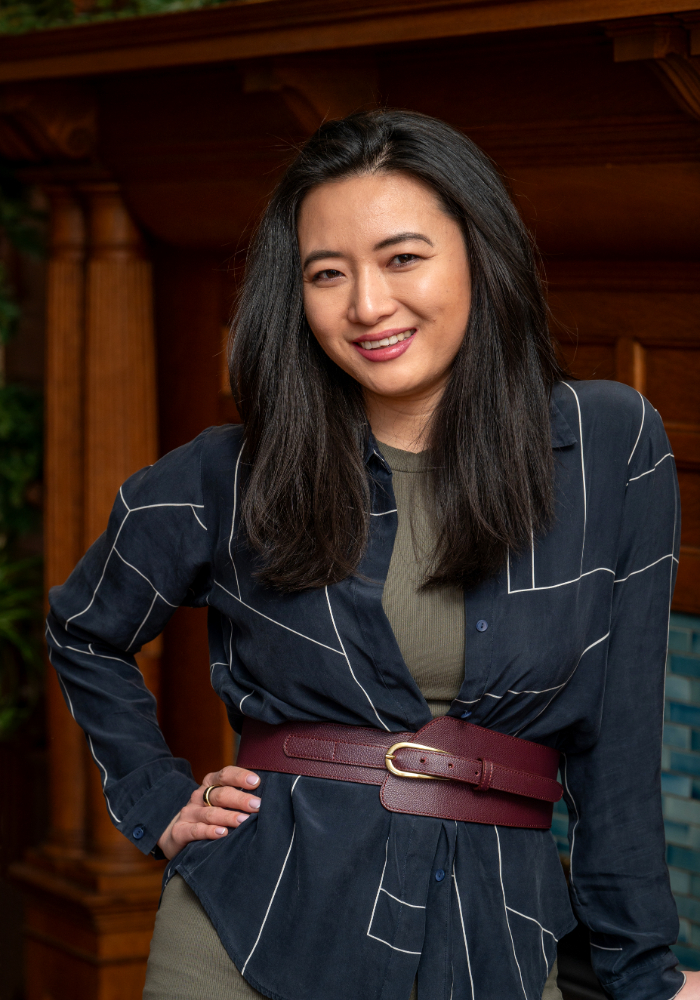
The founder betting everything on the second draft
Jane Chen runs Letterly from Cambridge, Massachusetts, but the thing she actually runs is a quiet argument with how schools teach writing. Her platform pairs an AI that drafts feedback with more than fifty human editors and coaches who read what the machine wrote before it ever reaches a child. Kids between eight and eighteen sign up, pick a topic they genuinely care about, and then do the part almost everyone skips - they rewrite. Again. And again. The company's north star is not a letter grade. It is a byline.
Today Letterly serves more than 3,000 students across 30 states and seven countries, and it has helped publish nearly 13,000 student-written articles in its own online journal. In February 2025 the company closed a $2.5 million seed round. None of that is the interesting part. The interesting part is that Chen believes the entire education system has the timing backwards - and she has receipts.
The goal is to get the student published.
Ask most edtech founders about AI and they will sell you speed. Chen sells the opposite. In her model the algorithm handles the fast, tedious first pass of feedback, and humans handle the judgment. The learning, she insists, does not happen when a student turns in a first draft. It happens in the revision - the slow, unglamorous rewrite where a sentence finally becomes yours. It is a strange thing to build a technology company around: the belief that the machine should make room for the human, not replace it.
From the trading floor to the classroom floor
Before any of this, Chen spent roughly a decade on Wall Street - first as an investment banker, then as a hedge fund analyst. The work took her to Europe, where she ran a fund that, in its first year, finished second in all of Europe. She describes the whole finance chapter with a dry, deflating sarcasm, calling it "super-exciting, thrilling stuff." You can hear the eye-roll.
She could not sustain the lifestyle, and more to the point she could not sustain the meaning of it. Feeling she had "already been a banker," she left. What she did next tells you who she is: she volunteered as a writing tutor for immigrants, and she drove across the country teaching writing. Somewhere in those miles she noticed a pattern that would become the whole thesis of her company - the only students who took writing seriously were high school seniors trying to get into college.
These are problems that should have been dealt with 10 years prior.
That frustration is the engine. If writing only gets serious at seventeen, the kids who did not grow up with tutors and dinner-table debates never catch up. Chen had been one of the kids on the wrong side of that gap, and she was not going to leave it alone.
The girl who came home without words
Chen was born in New York City to Chinese immigrant parents and spent her formative years in Shanghai. When she came back to the United States, she did not speak a word of English. She earned a scholarship to a competitive private school on Manhattan's Upper West Side, and later studied History at Harvard, where she was named a Blankfein Family Scholar.
It is not hard to draw the line from that childhood to Letterly. A kid who arrives without the language, gets one shot through a scholarship door, and has to write her way into belonging - that is the exact student Letterly is built for. The company's stated mission is to democratize access to literacy and the liberal arts, so that any student can build the skill and confidence to thrive, regardless of circumstance. Chen is not describing a market. She is describing herself.
No one signed up.
I didn't want to leave this world knowing that I didn't do everything I possibly could to contribute just a little bit.
500 kids in a single summer
The first version was called Eyre Writing Center. The launch was humbling - "no one signed up." Chen kept at it, eventually gathering about 30 students at the Chinese Community Center in Latham and at Saratoga CoWorks. Small, hand-built, unscalable.
Then the pandemic arrived and did the strangest thing: five hundred students signed up for a single summer camp. Overnight, a modest writing center had demand it could not meet with folding chairs and one-on-one sessions. That surge forced the pivot to a technology platform, and Eyre became Letterly. The company now runs on a core team of about seven, backed by fifty-plus contracted editors and coaches - the humans who stay in the loop.
Making writing cool again.
The bet underneath it is simple and a little subversive: kids do not hate writing. They hate writing about things they do not care about, without enough practice, and without feedback that helps. Remove those three frictions and, Chen argues, the writing takes care of itself. Letterly's whole product is an attempt to remove exactly those three things.
What Letterly is actually fixing
Chen frames the problem as three writing-education gaps. The platform is engineered against each one.
Into the schools
The next frontier is institutional. With funding from the Robin Hood Foundation, Letterly is building a school-specific product, piloted at Brooklyn Technical High School - the largest high school in the country. Partners have ranged from Australia's national science agency to Saratoga Living magazine, which put the company on its cover for "making writing cool again."
Chen headquartered the company in Cambridge, but its roots run through Saratoga Springs and New York's Capital Region - the community centers and co-working spaces where the whole thing started with thirty kids and a sign-up sheet nobody used at first. For a founder who came home without any words, building a machine that hands children their own byline is a fairly precise revenge on the odds.
Five things worth knowing
She traded a Wall Street trading desk for writing bootcamps aimed at eight-to-eighteen-year-olds.
Letterly is deliberately un-flashy about AI: the machine drafts feedback, but fifty-plus humans review it.
Her core belief - the real learning happens in the revision, not the first draft.
Before there was an app, she literally drove across the country teaching writing.