On the 18th green at Pebble Beach, Karen Murphy O’Brien began thinking about a different kind of public relations business. It was 1989. She was working the golf tournament, already an experienced publicist, when the thought took hold: she wanted to do the work her own way. The location supplied a pleasingly tidy ending. Her business was about to supply a rather less tidy beginning.
She was a senior vice president at Mahoney/Wasserman, where entertainment clients included actors and musicians with names that needed little introduction. Her responsibility was the corporate side, largely hospitality. She knew the work. Going out on her own required a second sort of confidence: believing she could build the organization around it.
Brett O’Brien, her future husband, suggested they start together. He had recently graduated from Wharton, bringing finance and entrepreneurial management to the conversation. Karen brought the publicity experience. “So I decided to take a huge leap off the cliff,” she recalled. The landing involved considerably less scenery.
The difficulty of a one-name client list
They launched Murphy O’Brien in May 1989, working from an apartment. Their first client was the Sunset Marquis Hotel & Villas. A single hotel is enough to start an agency. It is also a remarkably short answer when a prospective second client asks whom else you represent.
Those early meetings exposed the peculiar arithmetic of starting a service company. Experience belongs to the people in the room; reassurance often arrives in the form of other customers. Karen and Brett had to sell their judgment while still assembling that evidence. The agency’s later history makes the beginning seem obvious. At the time, they had to get up and try again.
There was a useful division of labor between them. Karen understood where her abilities lay and welcomed a partner whose interests differed. They had been neighbors before they were business partners. Familiarity became part of the operating arrangement, alongside the less romantic requirements of running a company.
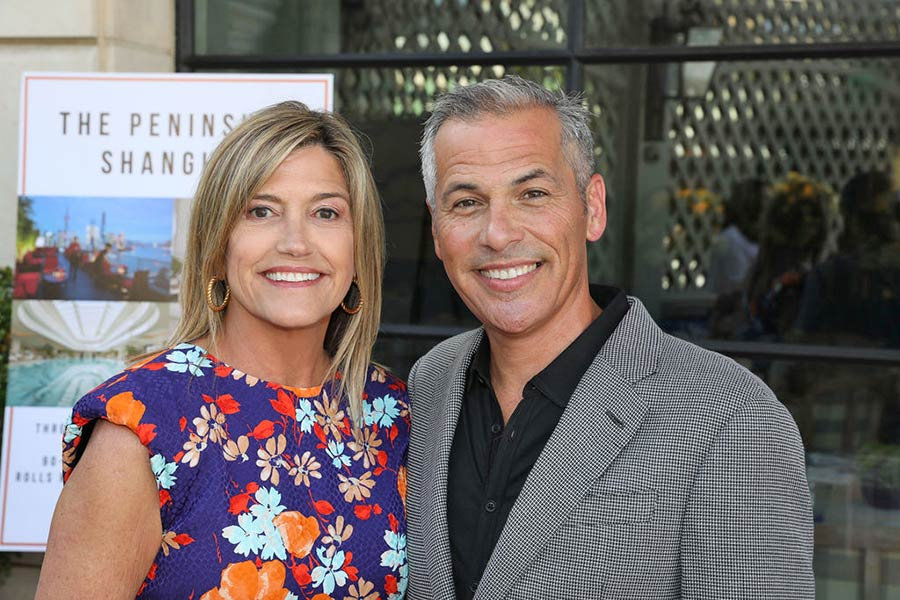
By the agency’s 25th anniversary, its work included hotel openings, consumer brands, tourism campaigns, and social media initiatives. Its Nicaragua tourism work had earned the PR Daily Awards’ 2013 campaign-of-the-year grand prize. The first hotel had become a beginning rather than a limit.
A desk with a guest list
One way to understand Karen is to look at what she kept within reach. In 2013, her desk held travel magazines, a family photograph from Hawaii, fresh flowers, and See’s chocolates. There were awards, too, but a visitor could apparently begin with a nut and chew before considering the evidence of professional distinction.
Two Chinese lions stood guard, linked to the agency’s relationship with The Peninsula Hotels. A Baccarat glass butterfly, a gift from her staff, marked her work with Chrysalis. The objects belonged to different parts of her life, yet shared a surface. Clients, family, colleagues, and community all had a place there.
She described her desk as a reflection of the people and places she valued. It is a revealing description for someone in hospitality publicity. Her working space offered its own small form of hospitality: something to look at, something to talk about, something sweet to eat.
“I love to surround myself with the people and places that matter the most and my desk reflects that notion.”
Karen Murphy O’Brien, 2013
When the industries move
The company expanded into real estate in 2003, following the overlap between hotels and properties offering villas or fractional ownership. The logic was close to home. A hotel guest and a prospective property buyer might be considering some of the same places, though the decisions demanded different kinds of communication.
Then the property market collapsed. The agency had exposure to clients caught in the financial crisis, including a resort connected to Lehman Brothers. Karen described turning attention toward the travel and lifestyle sides of the business. The three specialties offered some room to maneuver when one faced trouble.
By early 2014, a dedicated digital division was being planned. The possibilities had expanded beyond securing a place in a printed magazine. Clients could need a different mix of services and a different way of reaching an audience. The business that began by pitching hotels was also learning how to sell the changing work of publicity itself.
- 1989Agency launches with the Sunset Marquis.
- 2003Real estate joins the practice.
- 2014A dedicated digital division is planned.
- 2026Third consecutive Inc. Best Workplaces recognition.
The award she kept choosing
At the agency’s 30th-anniversary party in 2019, the setting was The Peninsula Beverly Hills. There were orange cocktails, members of the media, and the familiar social choreography of a publicity business celebrating itself. Karen could point to more than 300 awards earned on clients’ behalf over three decades.
Asked which recognition mattered most, she chose the Los Angeles Business Journal’s workplace award. The answer connected the celebration to something less visible than a campaign: the experience of spending years inside the company. At that point, ten management team members had more than a century of combined tenure.
That is an unusually useful number in a profession fond of counting coverage. It describes accumulated working knowledge. People remember the client’s history, the difficult launch, the promising idea that needs another attempt. A long relationship carries context into the next conversation. Replacing that context takes time, however impressive the new presentation looks.
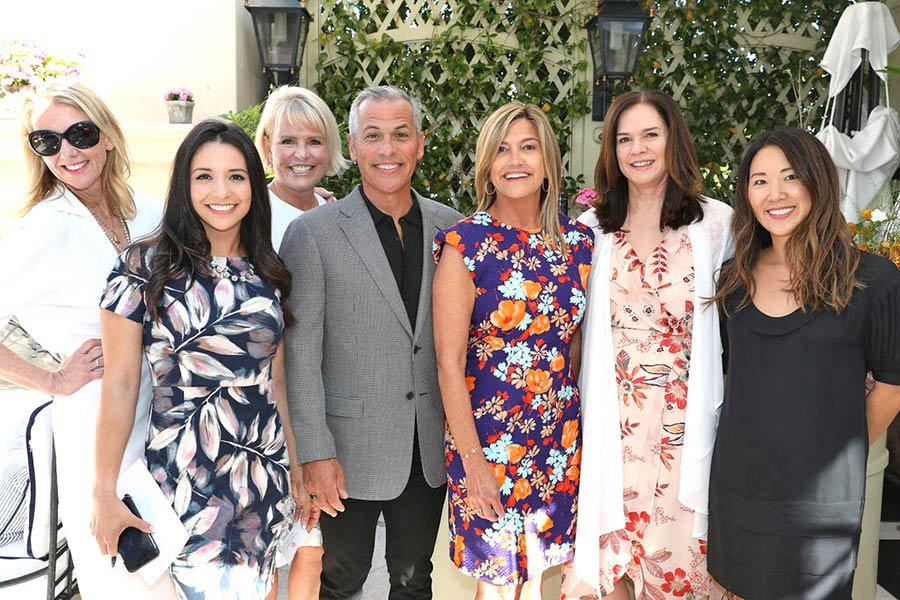
Her company’s 2026 Inc. Best Workplaces recognition followed appearances in 2024 and 2025. The listing highlights regular feedback, monthly mentorship, and companywide training. These are modest-sounding activities next to a hotel launch. They are also activities that must happen repeatedly to mean much.
Leaving room for another leader
Karen has spoken about building a service business capable of functioning through its management team, with experienced colleagues taking responsibility. For a founder, that means allowing the company to acquire judgment beyond the judgment of its owner. A name on the door can identify the business without having to make every decision inside it.
Her account of dependability is equally plain. She recalled receiving her high school’s Most Dependable award and connected that quality to keeping business commitments. The anecdote is appealing partly because dependability receives rather less applause than disruption. It becomes more interesting after someone has relied on it for twenty years.
In a 2014 description of her working day, Karen talked about finding time to take an exceptional employee to lunch. Meetings could make visibility difficult; a meal created a smaller setting for attention and mentoring. Her family routine was similarly concrete: Brett made bacon, she made eggs, and the morning carried on around children getting to school.
She also described a household full of music. She was a classically trained pianist; one child sang and played, while another made music using technology. During work breaks at home, she sometimes visited his garage vocal booth to listen to his hip-hop recordings. An executive reviewing strategy could also be a mother being asked for an opinion on a track.
The piano was there first
Her education began in music, with Florida State University’s College of Music listed on her professional profile. Piano remained a passion, though teaching it did not appeal to her. Hospitality became another direction. She worked as PR director at the Hyatt Regency Maui before moving to Los Angeles in 1986.
Looking back in 2024, she remembered building early business presentations on a Macintosh SE with dual floppy drives. Her ambitions had grown to include expanding the New York office and supporting the women around her. Away from work, she wanted more time at her concert grand piano and more evenings entertaining family and friends.
The travel stories have their own comic timing. Brett proposed on a cruise, and the excitement helped them miss the ship. On their honeymoon, a missing bag intended for Anguilla eventually turned up in Antigua after he suggested checking the similar-sounding destination. Even a professional life devoted to travel leaves room for luggage to develop independent ambitions.
She once answered a question about forgetting things by explaining that she packed too much for that. Her preferred travel reading and favorite places mattered, but so did the practical business of getting there with everything she wanted. Behind the polished hotel story is someone who has also waited for a bag.
A wider circle of work
Chrysalis remains part of her public working life. Its current leadership roster lists her on the board, and she appeared on the committee for its May 2025 All In for Changing Lives fundraiser. The organization helps people facing economic barriers prepare for and secure employment. Her communications experience has another use in that setting.
A Visionary Women biography also records board service with the National Children’s Chorus. Music and opportunity meet again there. These connections add texture to a career that might otherwise be reduced to a sequence of client names.
Today the agency lists travel, real estate, and lifestyle work, with services spanning media relations, partnerships, social media, and influencer campaigns. Karen remains its founder and CEO. The tools keep changing. The next conversation still requires preparation, attention, and a reason for the other person to want it. After thirty-seven years, being asked back remains a substantial piece of the work.