A protection relay keeps a record of trouble. Somewhere in its memory is the account of a fault: measurements, timings, the evidence an engineer needs to understand what happened. At Portugal’s transmission operator REN, the difficulty was getting those accounts into the same room. Different relay vendors used different communication protocols. Some records needed conversion before an analysis system could read them. The grid had witnesses. It needed an interpreter.
- Kalkitech connects utility equipment to software that monitors, controls and analyzes it.
- Its buyers include utilities, equipment makers and system integrators.
- The practical attraction: collect useful data from a mixed fleet before deciding what to replace.
64 substations, several dialects
REN worked with Kalkitech and Portuguese integration partner Infocontrol on an automated fault-record collection system. SYNC 3000 gateways gathered files from relays speaking both international standards and proprietary languages. Where necessary, they converted records into COMTRADE, a common format for disturbance data, and sent them to a central server.
A pilot came before the wider installation. The project covered 64 of REN’s 82 substations; the August 2018 announcement reported completion at more than 55. Those are historical deployment figures, rather than a live inventory. Their significance is the sequence: define the output, test the difficult connections, then repeat the installation. The analysis software could spend its effort on the electrical event.
This is a revealing place to begin a company profile. An electrical grid accumulates equipment, and equipment accumulates dialects. Replacing every device to accommodate a new application would make the application a remarkably expensive guest. Kalkitech makes its living helping the guest understand the household.
A business hiding in the translation
Kalkitech calls its work digital transformation. Strip away the phrase and the job is concrete: acquire data from field equipment, translate or organize it, and make it available to control centres, enterprise systems and cloud applications. The company sells hardware, software and the engineering needed to join them together. It occupies the passage between operational technology, which runs physical systems, and information technology, which processes their data.
Its catalogue has a pleasingly unglamorous range. SYNC 2000 protocol converters sit alongside remote terminal units, substation data concentrators and even Bell 202 modems. Elsewhere are smart-meter libraries, configuration tools and cloud middleware. A modem and a data hub can belong to the same business because their customers live with several technological generations at once.
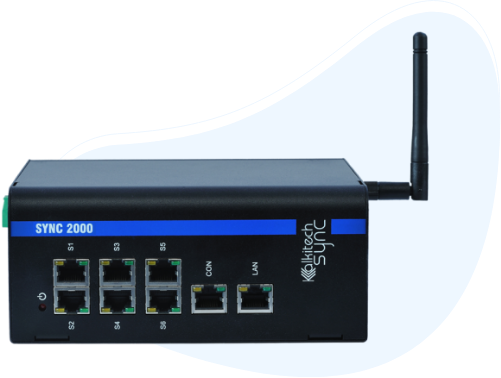
KALKI.IO Edge moves some of that work into software running near the equipment. Its Utility Gateway can collect disturbance files, support remote device management and act as a substation data concentrator. It comes in Debian, RPM and Docker packaging, with redundancy features for devices and communications. Engineers can choose a software deployment when that fits their hardware and operational requirements.
KALKI.IO Data Hub handles the next step: making collected information usable by other systems. It is offered as hosted software or on customer infrastructure. In a 2022 AWS partner case study, product executive Nirmal Thaliyil described the proposition with unusual economy:
“Kalkitech takes away the burden of integrating data from different devices communicating on different protocols.”Nirmal Thaliyil / Product Management & Marketing / 2022
The case study described 1,000 global customers. That dated figure helps establish the reach of the business; it is not a claim about this morning’s customer count. The users include utilities and private-sector companies, with applications spanning electricity, gas and water metering.
Conceptual flow. Deployment varies by device and application.
The trouble with paying for an idle million
One of Kalkitech’s more instructive products contains meters that do not exist. Its DLMS Million Meter Simulator lets utilities and software providers test a head-end system against a virtual fleet. A head-end is the system collecting readings from meters. Before installing a large physical fleet, a buyer can investigate how that collection system behaves under simulated demand.
According to an AWS account published in October 2021, the original simulator ran on customer premises. Customers maintained hardware and operating systems throughout the year and paid an annual licence, even when testing occupied only part of it. The awkwardness was economic: a useful tool could be an idle expense.
Kalkitech responded to demand with a service-based option. It hosted simulator instances on Amazon EC2 and used AppStream 2.0 to put the existing configuration application into a browser. That avoided waiting for a complete web rewrite. AWS reported a two-month conversion. The lesson for another software business is practical: change how customers obtain the tool before insisting on rebuilding every part of it.
To make the existing on-premises simulator available as a cloud service.
Scale came with conditions. The documented architecture supported up to one million simulated meters per instance through a private cloud network or VPN, versus 10,000 over the open internet. For a buyer, that distinction belongs in the test plan. A capacity claim without its network conditions is a number dressed for the wrong occasion.
Solar brings more guests to the conversation
Distributed energy resources add another translation problem. A utility or software provider may need readings and control access from batteries, solar inverters and other equipment spread across sites. Kalkitech’s DER Data Hub is middleware for remote monitoring, control and integration. It gives downstream applications a connection to those assets; the application still has to decide what to do with them.
A 2023 AWS technical account describes sending Data Hub information to S3 for storage or Kinesis for streaming. It also describes deployment across availability zones, optional regional failover and encryption. These are design choices with operational consequences. They do not remove the need to validate a particular utility’s network, access rules and recovery requirements.
For customers, the appeal is specialization. A team building an energy application can concentrate on its calculations while buying the connection layer. A utility can gather information from an existing fleet. An equipment manufacturer can integrate protocol support into a product rather than develop every communication component from scratch.
There are alternatives. SEL’s RTAC platform offers utility automation, data concentration and protocol conversion. Moxa’s MGate 5119 connects several power-industry protocols with IEC 61850 MMS. Kalkitech’s distinguishing proposition is the combination of conversion hardware, edge and cloud software, testing tools and engineering services. That breadth is useful when a project spans those layers; a focused gateway may suffice for a narrower connection.
A cloud company with a manufacturing floor
Prasanth Gopalakrishnan founded Kalkitech in May 1998. Co-founder Sushil Cherian’s background is in control and automation. The company’s technical work extends into standards committees as well as product development. In 2014, according to its company history, it acquired Applied Systems Engineering, adding an established utility-protocol testing business. Testing and connection belong close together: an interface must do more than appear on a feature list.
The commercial model follows that range. Utilities can buy products directly; equipment makers and integrators can incorporate them into larger systems. Software licensing, hosted services and engineering engagements sit alongside hardware sales. An IFC disclosure in 2012 described proposed initial financing of $4.5 million with GEF for product development and business expansion. That proposal is a historical financing document, not a current valuation.
Kalkitech also reaches beyond communications. ELTRIX plant-performance software separates heat-rate deviation caused by equipment degradation from deviation caused by operating conditions. That distinction helps operators consider whether to adjust operation or investigate maintenance. It reflects the company’s mix of power-system, thermal and software expertise.
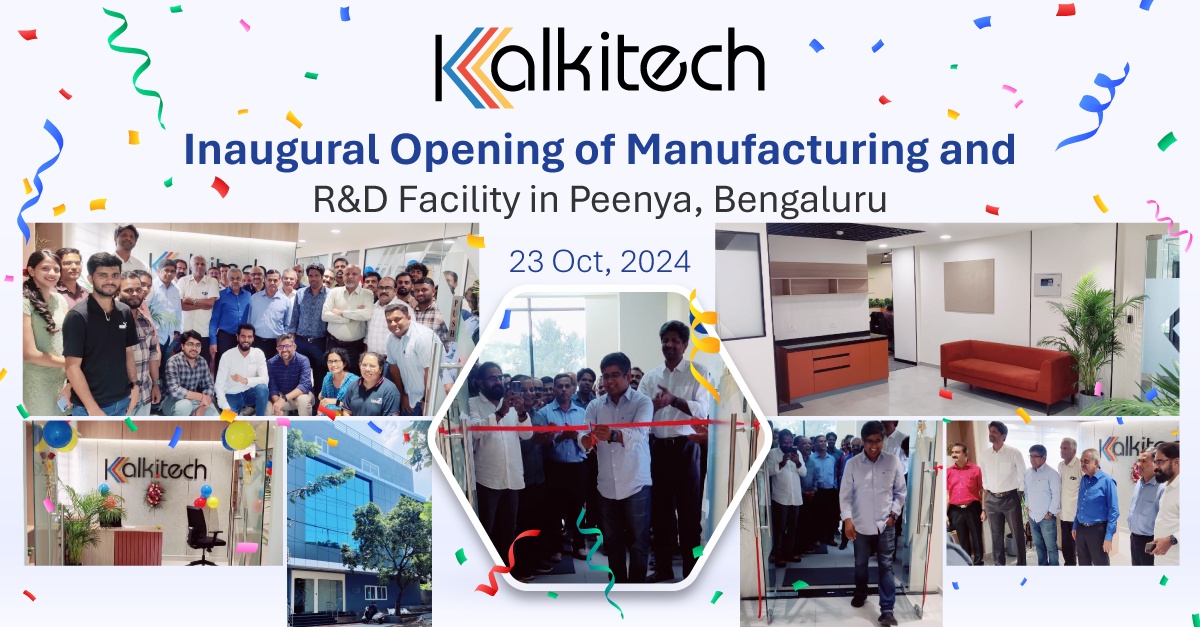
The Peenya opening puts a physical address on that engineering work. Kalkitech said the facility was its fourth in India. Its membership in the E4S Alliance, announced in 2022, places it among companies working on interoperable secondary-substation platforms. Both developments fit a business whose value depends on making systems cooperate.
For a prospective customer, the REN project offers the most useful starting point: choose the information you need, inventory the devices that hold it, and test the difficult combinations before committing to scale. Translation can preserve useful equipment and spare an application team years of accumulated protocol work. The first question is wonderfully ordinary: what, exactly, needs to talk to what?
See the connections for yourself
Explore Kalkitech’s website, its product range and technical video library. Watch the Kalki.io platform introduction or smart-metering demonstration.