Kaivan Khalid Sattar has tried selling motorcycle finance in Luganda. For a founder trained in mathematics, economics and the language of American banking, this is a pleasing expansion of the syllabus. A risk model may help decide whether to lend. It cannot, by itself, introduce you to the person who will be making the repayments.
That distinction runs through Sattar’s career. At the Federal Reserve Bank of New York, he worked on models concerned with the stability of banks. At Asaak, the company he founded in Uganda in 2016, he concerns himself with people buying the vehicles they use to earn a living. The scale of the borrower changed. The question of repayment remained.
His route between those worlds took in Columbia University, an agricultural project, several years of experimentation and a partnership with a motorcycle taxi platform. Eventually it took him to Mexico. It is an unusually circuitous route for a business built around helping people get from one place to another.
A banker’s education, with fieldwork
Sattar was born in the United States to Bangladeshi immigrant parents. Childhood visits to Bangladesh brought him into contact with poverty and the possibilities of finance. His later education gave those early observations a technical vocabulary: a bachelor’s degree in mathematics and economics at New York University, followed by a master’s in operations research at Columbia.
He joined the New York Fed in 2012. His work included economic research and, later, developing models for credit card and auto asset-backed securities in the bank stress-testing programme. These are demanding subjects with a modest gift for conversation at dinner. They also offer an education in what happens when assumptions about repayment meet an uncooperative world.
He subsequently worked as a data scientist at LendingHome. His professional record places that job in 2016 and 2017, overlapping with Asaak’s beginnings. The transition into entrepreneurship was more untidy than the familiar photograph of a founder walking confidently out of an office would suggest. Careers, like companies, can have more than one thing happening at once.
Field research had already taken him to Ghana, India and Bangladesh. Uganda entered the story through Engineers Without Borders while he was studying at Columbia. There he met Edward Egwalu, who would become Asaak’s operating partner. The business grew out of a relationship made around an agricultural project, well away from an investor’s conference room.
Joins the New York Fed
Founds Asaak in Uganda
Turns toward motorcycle finance
Asaak enters Mexico
The motorcycle came after the experiment
Asaak’s present focus can make its early years look deceptively inevitable. The company first tried lending to farmers, then explored working capital for small businesses and loans to salaried employees. The problem was familiar to anyone who has ever assigned a household budget: money does not remain politely inside the category written on its envelope.
The company’s own account of its shift, published in April 2020, described a review of its loan portfolio. Financing business assets had performed better than handing over general-purpose cash. That gave the team something concrete to organise around. A motorcycle could be put straight to work; a loan intended for a business could find several competing destinations.
SafeBoda helped connect that insight to customers. The ride-hailing platform had drivers who needed bikes, and Asaak had a reason to finance them. Other relationships followed, including Bolt, Jumia and savings cooperatives. Trip records and savings behaviour offered ways to assess people whose financial lives did not arrive neatly packaged as bank statements.
For Sattar, this was also a lesson in narrowing the brief. An ambition to improve access to finance can cover almost everything. A driver seeking a motorcycle presents a much more definite problem. There is a purchase to finance, a machine to maintain and an income-producing activity against which to judge the arrangement.
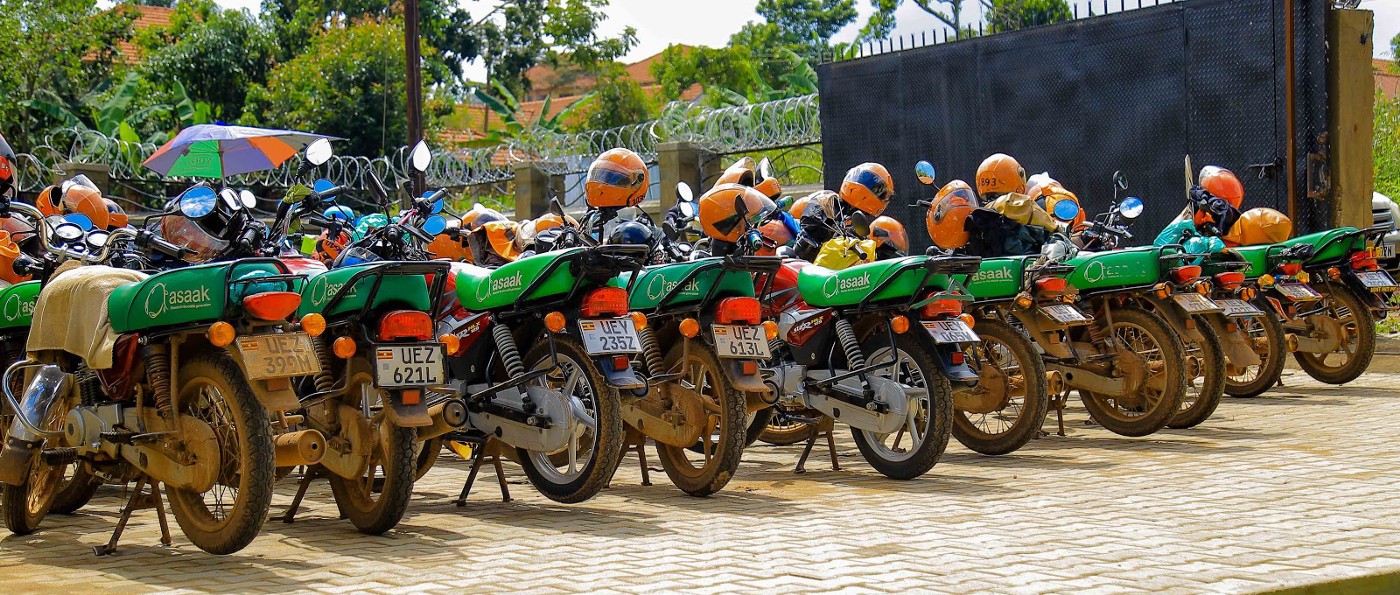
First the bike. Then the rest of the working day.
The motorcycle also revealed a series of smaller problems. Asaak’s regular discussions with drivers exposed the inconvenience of buying fuel in tiny quantities, between fares. Its answer was a fuel product that put funds onto a prepaid card for purchases at partner petrol stations. The loan followed the input the customer needed to keep working.
That is a useful glimpse of how Sattar’s business developed: by staying near a particular working day. Buying the vehicle begins the relationship. Fuel, repairs and a smartphone can become further financing needs. Each product also raises another lending decision. An expanding catalogue brings responsibility along with revenue.
“The vehicle is the entry point into our credit ecosystem”
Kaivan Khalid Sattar, August 2023
By January 2022, Asaak had announced a $30 million pre-Series A financing round combining equity and debt. That last distinction deserves to survive the headline. Money invested in a company and money borrowed to support lending perform different jobs. The announcement belongs to that moment in the company’s history.
Pre-Series A financing, combining equity and debt.
Conceptual illustration of Asaak’s approach. Further lending depends on assessment.
An unexpected turn toward Mexico
In 2023, Sattar spent weeks travelling through East Africa while considering expansion. The next destination turned out to be across the Atlantic. Asaak acquired FlexClub’s Mexican operations, taking over a vehicle-financing business serving mobility workers. FlexClub retained its South African business. The distinction matters: this was a particular operation changing hands, rather than the purchase of the entire company.
A shared investor helped bring the companies together. Javier Serrano, who had helped build the Mexican operation, became general manager of Asaak Mexico. For a founder entering an unfamiliar market, a functioning local team was a substantial part of the attraction. Experience is rather less portable than a slide deck.
Sattar later wrote that the deal increased revenue by a third overnight and allowed the company to spread currency and interest-rate risks between markets. He also acknowledged the difficulty of making acquisition decisions before every uncertainty has disappeared. His account is practical about the attraction: buying an operation can provide people and accumulated knowledge that starting from scratch would require years to assemble.
The customer experience supplied a smaller, more revealing connection between Uganda and Mexico. Families came to collect vehicles together. In Uganda, the company had made room for children accompanying customers; in Mexico, couples arrived to take delivery of cars. A financing transaction sits inside a household. That observation travels rather better than assuming every market will behave alike.
The close call he put in writing
There is an awkward detail in Sattar’s account of the acquisition: Asaak had once been weeks from shutting down. Bridge financing and a more focused business model helped it continue. He did not present the Mexican purchase as the effortless next chapter of an uninterrupted ascent.
That admission gives the preceding years their proper weight. A company can look coherent when described backwards. Customers arrive in tidy segments, partnerships appear in chronological order, and a pivot sounds like a decision made over coffee. Being weeks from closure suggests the original experience involved considerably less leisure.
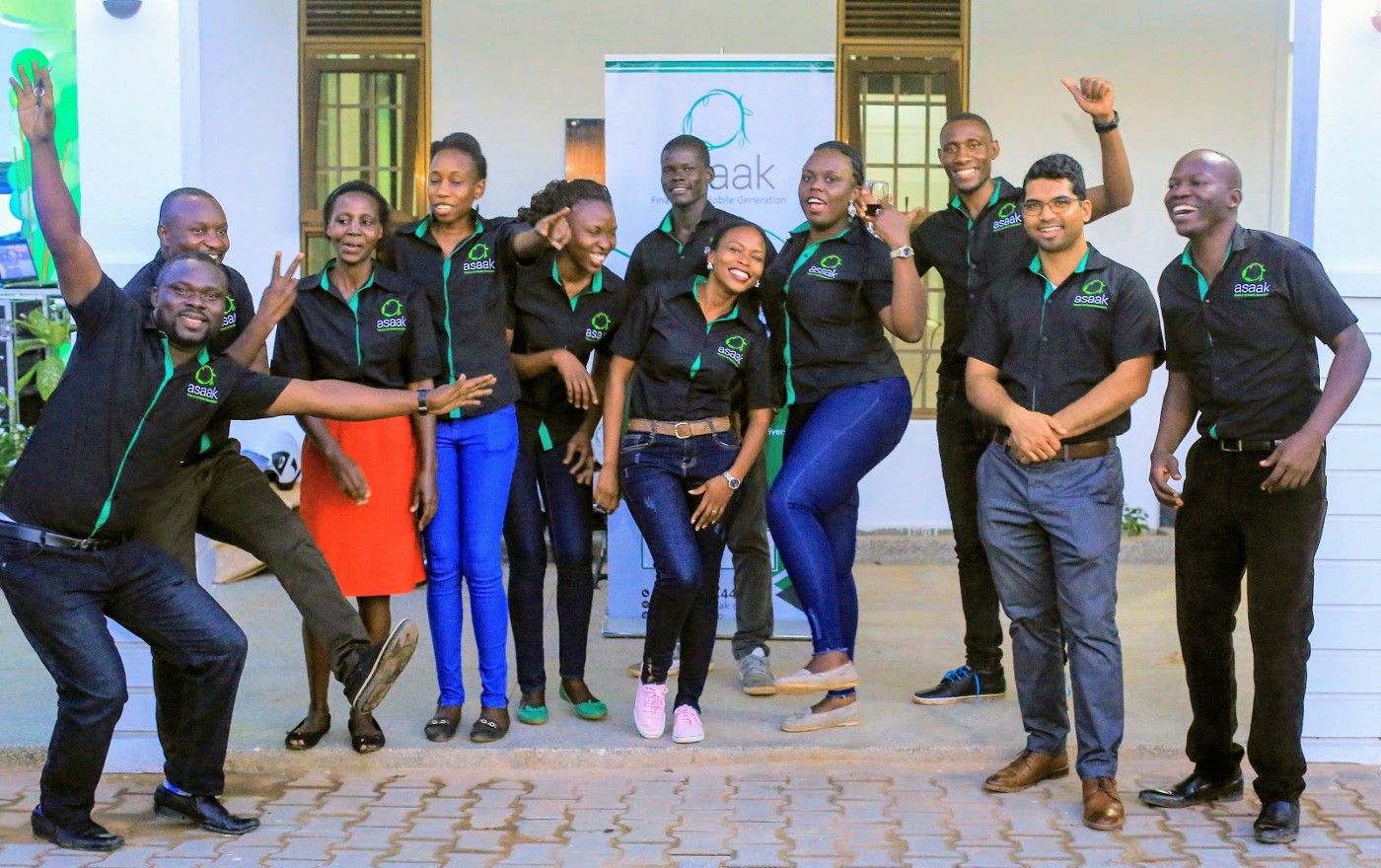
His colleagues have different responsibilities within that story. Egwalu leads operations, Anthony Leontiev is chief technology officer, and Dylan Terrill is chief business officer. The company’s leadership page continues to identify Sattar as CEO and founder. His work sits among theirs, rather than floating above the organisation as a solitary act of inspiration.
There is a more personal adjustment, too. Sattar has described learning to handle disagreement across cultures and recognising that direct American communication does not always work well in Uganda. Knowing how to express a position is one skill. Knowing how it will be heard requires another kind of attention.
Seven languages, and a longer conversation
“I speak 7 languages,” Sattar said in 2021. Two were Ugandan languages; he described pitching drivers in Luganda and wanting to learn more. Alongside the quantitative training, it is a revealing choice of effort. A founder can ask customers to understand his product. He can also take on some of the work of understanding them.
There is evidence of that attention beyond his own company. In a public 2023 post, Badili founder Rishabh Lawania described Sattar walking him through venture debt and credit lines during a lengthy call. Their connection was useful in the unfashionable, specific way that good professional friendships often are: someone knew the details and made time to explain them.
The business has continued to change. In November 2025, Asaak was reported to have deployed more than 2,000 electric motorcycles in Uganda in under four months through partnerships including Spiro. By July 2026, Sattar was discussing Meza, lending software built inside Asaak and subsequently offered to other financial institutions. The accumulated work of running a lender had become a product in its own right.
That July interview also returned to the pace of lending. Asaak’s onboarding includes explanation of obligations in local languages and involvement from guarantors; approval need not happen in minutes. After a decade spent bringing technology into credit, Sattar was still describing the value of taking time with a borrower.
It is a fitting place for his story to pause. The former bank modeller has a company operating in Uganda and Mexico, vehicles to finance and software to sell. Yet a recurring part of the work remains a conversation: what someone earns, what they need, and what they have agreed to repay. He has found several languages in which to have it.