A motorcycle has two prices. There is the price of buying it, and there is the price of spending years without owning it. For a boda boda rider who rents a bike to carry passengers, that second price arrives every working day. Asaak’s business begins in the space between those two numbers: finance the motorcycle, let the rider work, and give the payments an ending.
- Motorcycle finance gives working riders a route to ownership.
- Repayment history can open access to fuel, phones and further credit.
- A Ugandan lending operation has grown into Mexican vehicle leasing and software for other lenders.
That makes Asaak a useful company to study even if you never need a motorcycle loan. It has had to answer an unusually concrete question: how do you lend to someone whose ability to earn depends on the thing they cannot yet afford?
01 The cash experiment
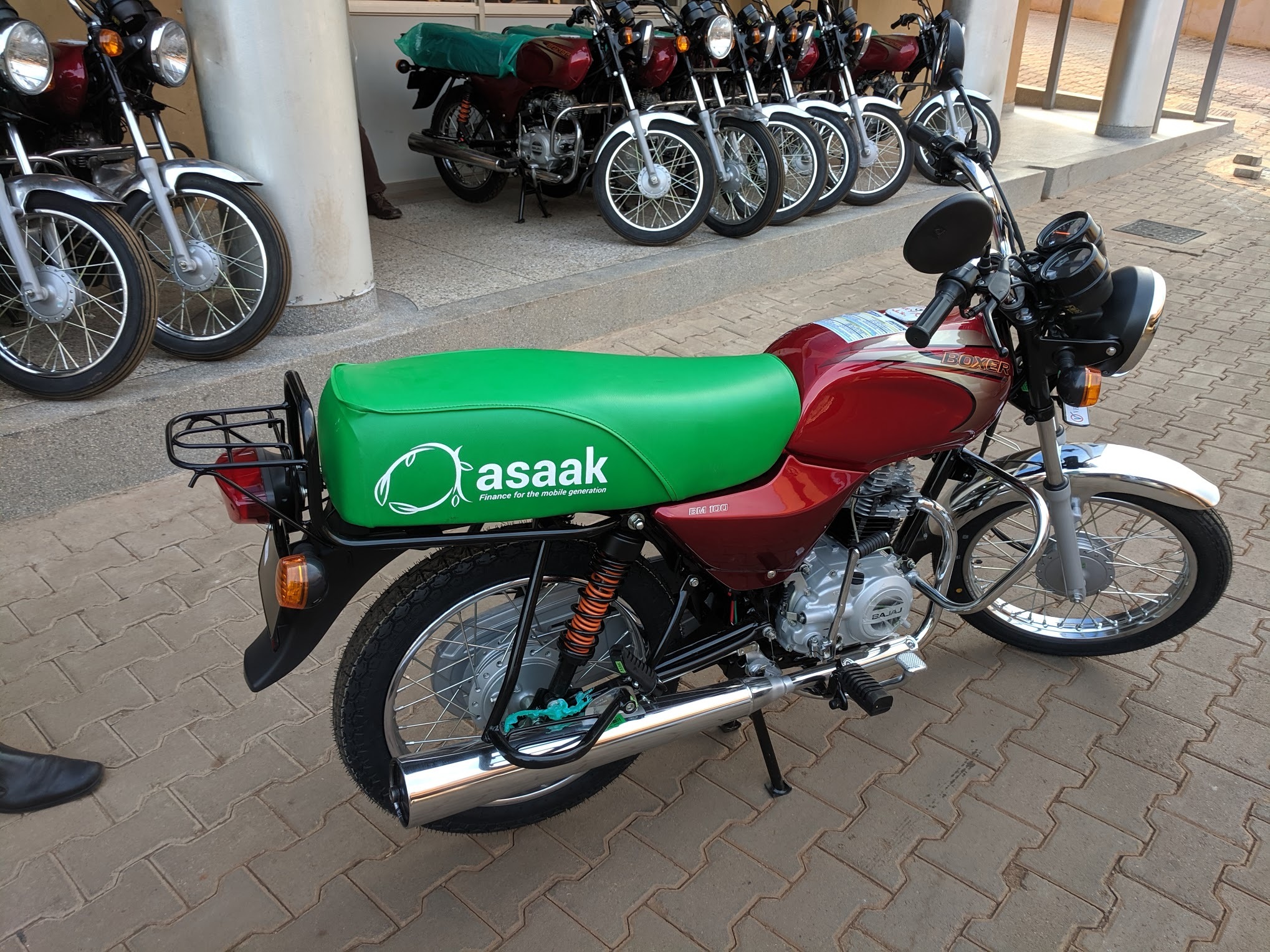
The company’s route here was crooked. Kaivan Sattar began lending in Uganda in 2016; the US corporation followed in 2017. Early experiments covered farmers, small businesses and salaried borrowers. In his later account, cash often went somewhere other than its stated purpose, making repayment and collection harder. A motorcycle offered something more specific to finance.
The customer discovery had an unexpected address: Hangzhou. At an Alibaba fellowship in 2019, Sattar met SafeBoda’s then fintech head, Nick Kamanzi. The introduction led to conversations with riders at SafeBoda’s academy in Kampala. There was already work, already demand and already a vehicle-rental bill. Ownership was the missing piece.
Asaak’s founding team brought together Sattar, technology chief Anthony Leontiev, operations chief Edward Egwalu and business chief Dylan Terrill. Their practical task was to connect the money, the motorcycle and the person who would make the repayments.
That combination requires more than an app. Underwriting, branch operations and access to funding have to work together. Asaak’s stated values emphasize customers, learning, integrity and fairness. Sattar has also described maintaining culture while opening branches as a challenge. A lending decision eventually becomes a conversation between people, often far from the team that designed the software. It is a surprisingly hands-on kind of fintech.
02 Ownership has a payment schedule
Today, Asaak’s Ugandan product page offers motorcycle ownership plans over 12, 24 or 30 months. It also advertises smartphone financing and a fuel card. The logic is easy to follow: getting the bike is the first obstacle; keeping the rider equipped and moving creates the next set of financial needs.
The initial deposit listed in Asaak’s FAQ. The full repayment schedule depends on the motorcycle and the individual offer.
The published application requirements include valid identification and two guarantors with valid IDs. Filling in the form takes about five to ten minutes; subsequent processing can take one to three business days. A credit officer verifies the application. Borrowers can apply digitally or visit a branch, and repay through mobile money, the app or bank transfer.
For a prospective customer, the useful comparison is the entire contract: deposit, installments, duration and what remains for living expenses after running the motorcycle. A small recurring payment can still be a heavy obligation. Ownership becomes valuable when the borrower can reach the final payment.
Consider the incentives. A rental payment buys another period of use. An ownership plan puts a finish line on the obligation, provided its terms are met. But fuel, maintenance and days without work still have to fit around that plan. The comparison belongs in the rider’s working budget, alongside every other expense.
03 The customer brings a work history
Asaak occupies the territory between conventional lending and informal vehicle rental, alongside asset financiers such as Watu and Tugende. Its emphasis is on distribution through business partners and assessing people through evidence of work. Platform records can reveal trips, earnings and customer ratings where a conventional financial history is thin.
The company uses that information in its own credit assessment. Subsequent repayments add another record. Fuel and phone loans give it reasons to keep serving a customer beyond the original motorcycle transaction. This is also the commercial logic: an acquired borrower can become a repeat borrower.
- 01 / AssessWork history
- 02 / FinanceEarning asset
- 03 / LearnRepayment record
- 04 / ExtendFurther credit
A sequence of decisions, not a promise of automatic approval.
The money behind those decisions matters. Historical disclosures describe interest income, debt facilities and arrangements in which Untapped purchases loans and pays origination and servicing fees. The 2022 financing announcement combined equity and debt. Those dollars serve different jobs: building the company and financing the assets borrowers use.
Untapped’s partnership offers a particularly readable example of testing before expansion. The two companies began with 40 motorcycles in November 2020. In December 2021, Untapped announced financing for more than 2,000 over the following year. The larger number was a commitment, rather than a count of completed purchases.
04 A parked bike cannot repay a loan
Uganda’s lockdowns exposed a weakness in the whole arrangement. Riders had motorcycles, but restrictions on movement cut their income. According to Catalyst Fund, Asaak used relationships with Jumia and other commerce companies to help customers move into food and cargo deliveries. It also introduced driver referrals, charging recruitment fees to drivers and employers.
The episode suggests a lesson for anyone financing tools for work. Knowing how to collect is only part of the job. Knowing where the customer can earn may matter just as much. The asset alone cannot protect the relationship when its market disappears.
05 The road goes to Mexico
In August 2023, Asaak announced its acquisition of FlexClub’s Mexican operation. It took over a local vehicle-financing business and team while FlexClub concentrated on South Africa. Asaak’s Mexican website now offers vehicle leasing to platform drivers. Sattar later described geographic diversification as a way to manage foreign-exchange exposure, too.
“The vehicle is the entry point into our credit ecosystem”
Kaivan Khalid Sattar · August 2023
Another expansion came from inside the company. Asaak made its lending software available to other institutions as Meza. The product covers applications, disbursement, collections, borrower communication and reporting. Selling that system gives the company a second customer: the lender facing operational problems Asaak has already encountered.
What can another business copy? Start with an expense customers already bear. Test whether financing can turn it into something they own. Build distribution where those customers already work. The conditions still matter: dependable demand, serviceable assets and affordable capital. Without earnings that survive the repayment schedule, a route to ownership is only a route on paper.