On a typical morning in 2020, Kaivalya Vohra and Aadit Palicha chose a Mumbai neighborhood and went looking for grocery shops willing to try their software. They could speak to 10 or 20 in a day. Perhaps two or three would download the app. Some would delete it after the young founders had walked away. By evening, Vohra had a fresh list of objections from shopkeepers. By night, he was coding fixes.
It is a wonderfully unromantic start to a company famous for romance with the clock. The early service, KiranaKart, connected customers to local stores. It put two teenagers in front of retailers who already knew how to sell groceries and saw little reason to take instruction from an app. Vohra had no sales experience. He learned by making the same pitch repeatedly, hearing what failed, and returning with changes.
Their small group also handled customer support and deliveries. They tried overnight service; when they could not find delivery partners after 10 p.m., the founders and friends took orders out themselves. Vohra later described the period as “chaotic.” There is a great distance between an order moving through a phone screen and a founder carrying it to a door. He covered both.
Dates and the ten-minute promise describe the company’s founding period, not a guarantee for every order.
Two school friends, one difficult grocery run
Vohra and Palicha had known each other since childhood. They met in third grade in Dubai, studied computer science, and planned to attend Stanford. When classes moved online in 2020, they took time away from university and worked on a business instead. During the first pandemic wave in Mumbai, ordinary grocery shopping had become strangely difficult. Online slots could be six or seven days away. Local shops had their own disruptions. The gap between needing milk and receiving it was no longer a small inconvenience.
At Vohra’s family home in Andheri, the two noticed older neighbors having trouble getting daily necessities. They began with a question that sounds modest enough: why was it so hard to get groceries on time? KiranaKart was one answer. For months they tried to persuade neighborhood sellers to join a marketplace. That work taught them about inventory, prices, demand and delays. It also taught them what a marketplace could not easily control.
A good app cannot make an absent product appear on a shelf. It cannot make a shop’s inventory list accurate by wishing harder. A promise made to a customer depends on stock, picking, packing and transport, each with its own chance to fail. The founders eventually changed the model. Zepto would place goods in small warehouses near residential areas, then coordinate the journey through its own technology and operations. The customer saw a short delivery estimate. The company inherited a long list of responsibilities.
The objection from Lokhandwala Circle
The ten-minute idea met skepticism at home. Vohra recalled calling his mother to explain the shift. She knew the streets around Lokhandwala Circle, near the house where she had grown up, and doubted a dark store there could make such a delivery possible. It was the sort of objection a founder might file under family concern. In fact, it was a useful operational question. Put the stock close to a customer. Then what? Can somebody find the item quickly? Is it actually there? How long is the ride through that particular neighborhood?
Vohra’s answer was less about heroic speed on the road than about reducing distance and uncertainty before a rider starts. In a 2022 interview, he said the average journey from one of Zepto’s hubs to a customer was around 1.7 kilometers at the time. A nearby store matters; so does a system that predicts what nearby people might buy. The geography is not a slogan. It is a set of small, repeated decisions about where to keep thousands of items.
The two founders had different strengths. Vohra described himself as the more technical one and credited Palicha with storytelling: the ability to explain a vision to recruits, investors and colleagues. Yet their roles were never sealed off. Vohra had already spent days making a sales pitch to cash-based retailers. He learned that an elegant system has to meet somebody else’s habits, doubts and working day. Palicha’s narrative had to be made true by product, warehousing and operations.
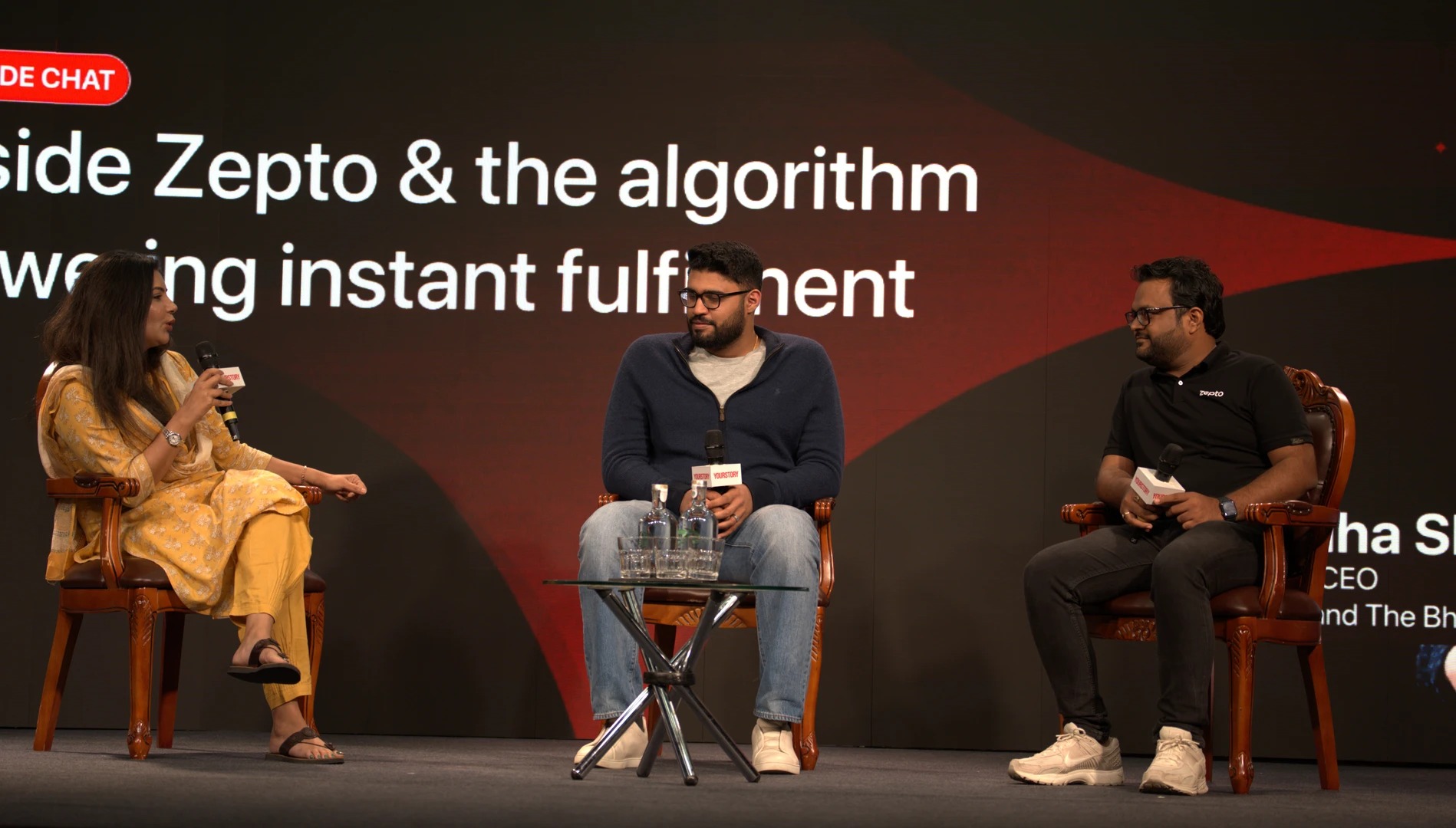
Stanford could wait; the orders could not
The Stanford decision is often compressed into a tidy dropout story. Vohra’s telling takes longer. He and Palicha initially took a gap year because classes were online. By the time that year was over, they had raised capital and were expanding beyond Mumbai. The business had become a live choice, not an idea to pursue someday. Convincing their parents, Vohra said, was harder than deciding for themselves. His family worried about the degree he would give up. Growth eventually made the choice easier for them to accept.
The pair joined Y Combinator in 2021 and launched Zepto that year. Their childhood familiarity helped, but it did not remove the need to assemble a much larger team. When asked about Zepto’s early progress, Vohra pointed to people across operations, finance and engineering. He spoke about experienced supply-chain leaders joining a company started by people young enough to be their junior colleagues. His position gave him room to challenge inherited assumptions while learning which lessons from older businesses still applied.
There is a small comic detail in his view of design. Vohra admitted he was not the strongest visual designer, then moved directly to the question he cared about: how few steps does a customer need to place an order? A beautiful button matters less if the customer cannot complete the job. In quick commerce, a clumsy interaction wastes seconds before the physical trip has even begun. His product thinking and the warehouse’s work meet at the same point: remove friction the customer can feel.
The systems under the stopwatch
The speed that made Zepto legible to customers also made its business expensive and competitive. Blinkit, Instamart and other services were working on similar problems. For a while, the most visible score was the size of a funding round or the valuation attached to it. Vohra’s account of progress sounds more granular. Can a store stock the right assortment? Can a customer find it? Can the order be picked without delay? Can the company spend on growth without confusing activity for progress?
At a 2025 TechSparks conversation, he talked about the distinction between wasteful spending and deliberate investment. It is an important distinction for a company paying for warehouses, inventory, software and a delivery network at once. He also described how technology had expanded beyond the original grocery promise. Search and demand prediction help decide what customers see and what stores hold. New categories complicate storage and returns. Fashion, once barely present on the platform, required Zepto to handle a wider choice of goods and items that might come back after a customer tried them.
The company’s governance page now calls Vohra President of Technology & Product; Nikhil Mittal is listed as chief technology officer. Titles change as companies grow, and this one reflects a wider brief than the early days when Vohra coded shopkeeper feedback himself. In 2025 he was still talking about the old discipline of execution. The products may expand, but a customer’s order still has to move correctly from a nearby shelf to a front door.
Public attention often fixes on his age. Vohra entered a Hurun India rich list at 19, and the 2026 list again named him its youngest entrant, with an estimate of ₹2,600 crore. Such numbers describe a dated estimate of wealth, much of it tied to a private company whose value can move. The more revealing figure in his story may be the two or three shopkeepers who downloaded an app after a day of pitches. That number captures the difficulty of winning one person at a time.
A promise small enough to fit on a screen
Zepto is named for a tiny unit of time, a zeptosecond. The name is clever. The work behind it is rather less neat: inventory in the right place, a delivery radius that makes sense, a product that lets a customer finish the task, and people able to correct the system when it fails. Vohra came to that work through a route that included rejected pitches, late-night code and deliveries made by the founders themselves.
He has said Zepto’s fundamentals will remain focused on efficient execution even as its consumer offering changes. That sounds almost dull next to a ten-minute headline. Dullness has its virtues in logistics. A customer does not need a founder’s adventure every time they order bread. They need the bread to arrive. The achievement Vohra is still trying to build is a machine whose many difficult steps feel, from the other side of the door, like one easy thing.