Julia Huang had an excellent view of Long Beach. This became a problem. Her advertising agency occupied a high-rise office, with the city arranged attractively below it. You could see a great deal from up there. Knowing the place was another matter. Huang began asking whether her colleagues actually understood the downtown outside their windows. Eventually, she decided to change the windows.
Intertrend Communications moved into the Psychic Temple, a battered historic building on Broadway. The name offered an advertising agency rather a lot to live up to. Predicting the future, however, was less urgent than participating in the present. Huang wanted a business with a relationship to its surroundings, where coming to work also meant coming into contact with a neighborhood.
That decision makes a useful entrance into her life. Huang has spent decades helping companies understand Asian American audiences. Along the way, she has also backed creative ventures, helped bring murals to Long Beach and arranged meetings between people whose careers would rarely put them at the same table. Again and again, her work returns to the distance between observing people and actually meeting them.
A dinner with consequences
Before advertising, there were other kinds of business. Huang was raised and educated in Japan and Taiwan, then studied communications at the University of North Carolina at Chapel Hill. Product development and mergers and acquisitions took her through New York and Los Angeles. She arrived at entrepreneurship by a route with several changes of direction, rather than the customary childhood lemonade stand.
The founding story begins with an airline executive at dinner. He wondered why his airline attracted relatively few Asian passengers despite its routes to Asia. Huang had a fairly direct explanation: the advertising was failing to speak to them. In her recollection, she was critiquing the work socially, before she had an agency of her own.
The executive invited her to pitch. Northwest Airlines became her first client, and Intertrend began in 1991. This is a pleasingly awkward origin for a communications business: a woman tells a prospective customer that his communications are inadequate, and he asks her to do better. Tact is useful. Occasionally, the useful thing is a sufficiently well-aimed objection.
She had never worked at an advertising agency before starting one. That detail complicates the familiar advice to wait until you have mastered a profession before opening a business in it. Huang had experience across countries and corporate settings. The unexpected opportunity asked her to put that experience to a new use.
The building that changed the view
By 2012, the Psychic Temple was a restoration proposition requiring an unusually patient imagination. A city landmark, it had deteriorated badly. Intertrend purchased it from Long Beach for $1 and took on the renovation. A dollar sounds like a bargain until the building begins explaining itself. The real commitment lay in the work required to make it usable.
The plans called for 15,000 square feet of mixed-use space, including ground-floor retail. Huang was drawn to the high ceilings and open plan. A creative company, she felt, needed an environment with some character. This one came with character in quantities that a commercial landlord might ordinarily prefer to leave out of the brochure.
Restoring the building also made the agency answerable to a particular block. The address became part of how Huang understood her responsibilities as a business owner. An office with a view lets a city become scenery. A building with a shopfront asks what you are contributing when people pass the door.
“Creativity doesn’t live just within our four walls.”
Julia Huang, 2026
There is a practical distinction here. Clients may be elsewhere; neighbors are present. Investing in a place requires a different time horizon from delivering a campaign. Huang's decision put those two clocks inside the same business. The renovation gave her cultural interests somewhere tangible to meet her commercial work.
Who gets invited into the room?
Huang founded Imprint Lab as another outlet for that curiosity. Its team brings together people with backgrounds in strategy, entrepreneurship and community arts. Through Imprint, the question extends beyond what a brand should say to what a new venture might make possible. A business incubator is, after all, a fairly elaborate way of giving an interesting idea a chance.
The older Imprint conference programs offer a small time capsule of her interests. In 2007, the schedule included blogging, pop culture and the rising visibility of Asian American YouTube performers. Actor Daniel Wu, producer Dan the Automator and Justin Kan appeared in the program. Huang delivered the welcome and closing remarks. Online culture was already being treated as something worth assembling people to discuss.
Her speaking events grew into Unexpected Connections. For the 2018 edition, an entire day at the Beverly O'Neill Theatre brought together business and creative figures, including John C. Jay and David Choe. Earlier gatherings had included a conversation between Jay and food critic Jonathan Gold. The guest list made room for expertise that did not share a job title.
Huang wanted Long Beach to host conversations with a reach beyond its own civic affairs. She also discovered, as organizers tend to, that a good event consumes alarming amounts of money. Her enthusiasm did not depend on pretending otherwise. The expense was part of the bargain: if people were going to find unexpected common ground, somebody first had to arrange the chairs.
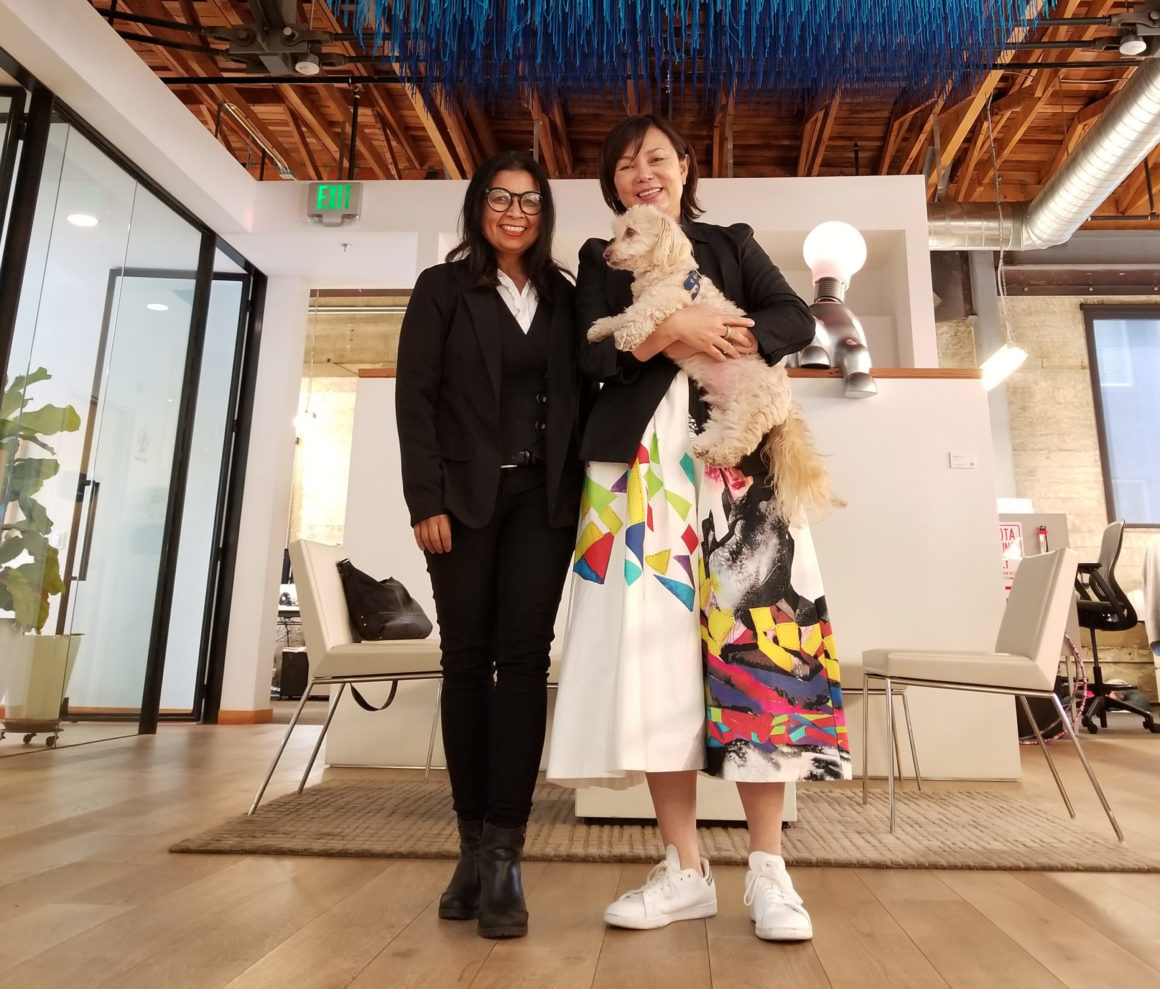
Architecture meets a four-legged client
Some connections are more unexpected than others. Architecture for Dogs brings designers into the lives of animals whose critical vocabulary is largely behavioral. Developed by Kenya Hara and Nippon Design Center with Imprint Venture Lab, the project commissions structures suited to particular breeds. Its contributors include architects Shigeru Ban, Toyo Ito and Kengo Kuma.
The proposition has a light touch and a precise brief. Change the inhabitant, and familiar assumptions about scale, movement and comfort need another look. A dog does not care about an architect's reputation. It is an unusually effective arrangement for keeping a design discussion close to the user.
The exhibition has traveled to venues including Design Miami, the Long Beach Museum of Art and Japan House London. At its Miami launch, there were public hours when dogs could investigate the pieces themselves. Huang also contributed photographs to the project's account of that gathering. The people who made the work got to meet some of the intended audience.
Closer to home, another project put creativity directly into public view. Huang helped bring POW! WOW! to Long Beach in 2015, working with a wider group of local partners and festival founder Jasper Wong. The murals became an encounter available on an ordinary city street. You did not need an appointment with the agency to see something it had helped make happen.
Artists had their own part in that relationship. James Jean credited Huang with supporting his Long Beach projects. That is a more personal measure of cultural work than an attendance figure: somebody can name the person who helped an idea find a wall.
A book recommendation, with something of herself in it
Huang joined the Long Beach Public Library Foundation's board in 2022. Its announcement also noted her KCRW board service and her support for the city's cultural life. Libraries and radio belong comfortably in this picture. Both create ways for people to encounter a voice or experience they might otherwise miss.
In 2023, asked to recommend a book for the foundation's Leaders are Readers series, she chose Hua Hsu's Stay True. Her explanation was personal. The memoir's treatment of friendship, memory and Asian American identity made her reflect on her own relationships and community. She responded to its humor as well as its vulnerability.
It is a revealing selection for someone whose profession involves understanding audiences. A demographic description can establish who is in a group; a memoir can convey what it feels like to live a particular life. Huang's recommendation lingers on those lived details. There is room here for a reader, alongside the executive.
Thirty-five years on, still listening
By 2026, Huang could look back over 35 years since Intertrend's founding. Asked about business longevity, she singled out client relationships: she said most of the agency's top clients had stayed for more than two decades. Her account of the work emphasized continuing to question assumptions about communities that keep changing.
That helps explain her resistance to treating translation as a complete cultural strategy. A message can be linguistically correct and emotionally vacant. Her starting point is the audience's existing beliefs, along with the things the agency has yet to understand. Experience gives her a reason to ask better questions; it does not finish the questioning.
As a 2026 ANA Multicultural and Inclusive Marketing Excellence Awards Grand Jury member, she urged attention to the thinking behind a campaign. She wanted to understand whom a team had listened to, which assumptions had been challenged and how the idea had developed. She also questioned whether the speed offered by new tools might crowd out patient cultural observation.
In March 2026, Japan House Los Angeles announced a design dialogue pairing Huang with Daigo Daikoku for its pictograms exhibition. Her role now also includes chairing the Arts and Cultural Committee for the 2028 Olympic Games in Long Beach. The subject brought her interests together: design, cultural communication and the city preparing to welcome an international audience.
Her concern about time reaches back into Long Beach. As the city approaches the 2028 Olympics, she has argued for a more connected cultural identity and a place where creative people have reasons to gather locally. The business founder who once moved downstairs is still asking what happens when people share a place. The Psychic Temple supplied an address. The conversation requires people to keep coming through the door.