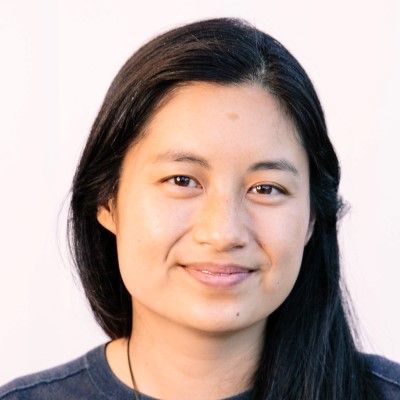
The Doctor She Couldn't Find, She Built.
At four years old, Julia Hu started getting sick. Every few days - stomach attacks, severe pain, no diagnosis. Her father, a first-generation immigrant from China who worked nights to keep them afloat, eventually quit his job to take care of her full-time. They visited more than 30 specialists over 12 years. None had answers.
Then one pediatrician, a Dr. Pang, did something different. He sat down with Julia and her father and treated them like scientists, not patients. Together they ran experiments: changed the diet, tracked the triggers, adjusted sleep, modified exercise. The culprit turned out to be french fries and milk. Dietary modifications cut her attacks by 90 percent. The remaining 10 percent became manageable. She went from debilitated to functional to, eventually, thriving.
That 12-year journey with Dr. Pang - the slow, patient, personalized care - is exactly what Lark Health is trying to replicate at scale. Not the stethoscope. The compassion. The texture of a doctor who actually knows your life.
"I love our team and am most proud of their belief and fortitude in a pretty crazy idea eight years ago: if we worked hard enough, we could one day build AI-enabled coaching so millions of people could access the level of personalized care that I had."- Julia Hu, CEO of Lark Health
Julia Hu launched Lark Technologies in 2011. She was partway through an MBA at MIT Sloan - and she left. Not because the MBA wasn't valuable. Because the problem was too urgent. Over a billion people globally were managing chronic conditions. Almost none of them had access to the kind of doctor that had changed her life. Waiting to finish school felt like a betrayal of the idea.
Co-founding the company with Jeff Zira - who had been on her National Science Bowl championship team in high school, and who she eventually married in 2016 - she started with hardware: a wearable sleep monitor paired with an AI coaching app. The product got early traction. Apple put it in stores. Lark was called one of the best apps of 2015 by Apple and one of the 10 most innovative app companies in the world.
The Apple Sprint: Julia pitched Lark to Apple with a handmade prototype - no manufacturing, no units, nothing. Apple offered her shelf space across all their stores. She immediately flew to China, built the product from scratch, and delivered on schedule. The window between "yes" and "need to ship" was about nine months. She used every one of them.
Then came the pivot. And the dark years.
Shutting down hardware manufacturing disappointed investors. The team shrank. The software-only rebuilding phase meant 120-hour workweeks. The chronic condition that had shadowed her since childhood started flaring again, stress-induced, landing her in the ER annually. She worked through it. The company did not collapse. It transformed.
What emerged from those years was a conversational AI platform sophisticated enough to feel like texting a knowledgeable, caring friend - not clicking through a symptom checker. Lark eventually became the second-largest diabetes prevention program provider in the United States. It achieved CDC Full Recognition status, placing it in the top 8 percent of the 2,400 providers competing for that designation.
"It is unrealistic for the billion-plus people who have a chronic condition or are at high risk to get this kind of care. We had to attempt to apply the burgeoning technologies behind conversational AI to provide that compassionate care at scale."- Julia Hu
One of the more telling stories from Lark's AI development: in an early version of the nutrition coaching system, the bot congratulated a user for "getting fruit" from a strawberry margarita. It was, technically, not wrong. It was also entirely wrong. Building AI that understands human behavior well enough to be genuinely helpful - rather than just technically accurate - took eight years and a hundred million dollars in R&D. An advisor once told Julia it would take five years. She knew it would be longer. She built it anyway.
Before the VC world gave her a yes, it gave her 80 nos. Julia counts that as a feature of the story, not a bug. The fundraising process, she's noted, is deliberately opaque - investors rarely give real feedback, leaving founders to navigate in the dark. Getting through 80 rejections requires either a very short memory or a very deep belief in the problem. Julia had both.
The Obama Call: At 27, Julia Hu was advising President Barack Obama on tax policy as part of his innovation advisory network. This was three years before Lark's major breakthrough, and well before most people knew what AI-driven healthcare looked like. She has described the experience as a reminder that the work has to be about more than the company - it has to be about the policy environment that either lets ideas like Lark survive or crushes them.
Today, Lark is contracted to manage more than 30 million lives. It works with national health plans including Highmark and Anthem, and its programs - covering diabetes prevention, diabetes care, hypertension management, and behavioral health - are fully medically reimbursable. The platform's clinical results have been published in 11 peer-reviewed journals. The Series D round in 2021, led by Deerfield Management at $100 million, brought total funding to over $257 million.
Julia sits on the board of the Council for Diabetes Prevention. She is a faculty member at Singularity University. She is a director of the Silicon Valley Leadership Group. She has spoken at the Milken Institute Future Health Summit. The recognition list is long: Forbes top 10 women in tech, Inc. 30 Under 30, Silicon Valley Business Journal 40 Under 40, UCSF Health Awards Hall of Fame, EY Entrepreneurial Winning Women.
None of which captures what is actually interesting about her. The interesting thing is that she built an AI doctor from a childhood wound, got 80 rejections before anyone believed in it, worked through ER visits and a full company pivot, and kept going because the problem - a billion people who cannot get the care they need - was simply too important not to.
"A mentor once told me an idea is only worth pursuing if you can see yourself excited to wake up tackling it every day for the next 10 years."- Julia Hu
Off the clock: hip-hop dance and painting. Not an accident. Both require rhythm, experimentation, and the willingness to look imperfect on the way to something that works. Both, she has said, are how she manages the same chronic condition that started this whole thing.
The story of Lark Health is usually told as a startup story. Pivots, funding rounds, scale metrics, market share. But the actual origin is a four-year-old with stomach pain and a father who refused to stop looking for answers. Julia Hu built a company to make sure that kind of perseverance is no longer required. That the answer comes to you - quietly, through your phone, in plain language - because the system was designed that way from the start.