Profile
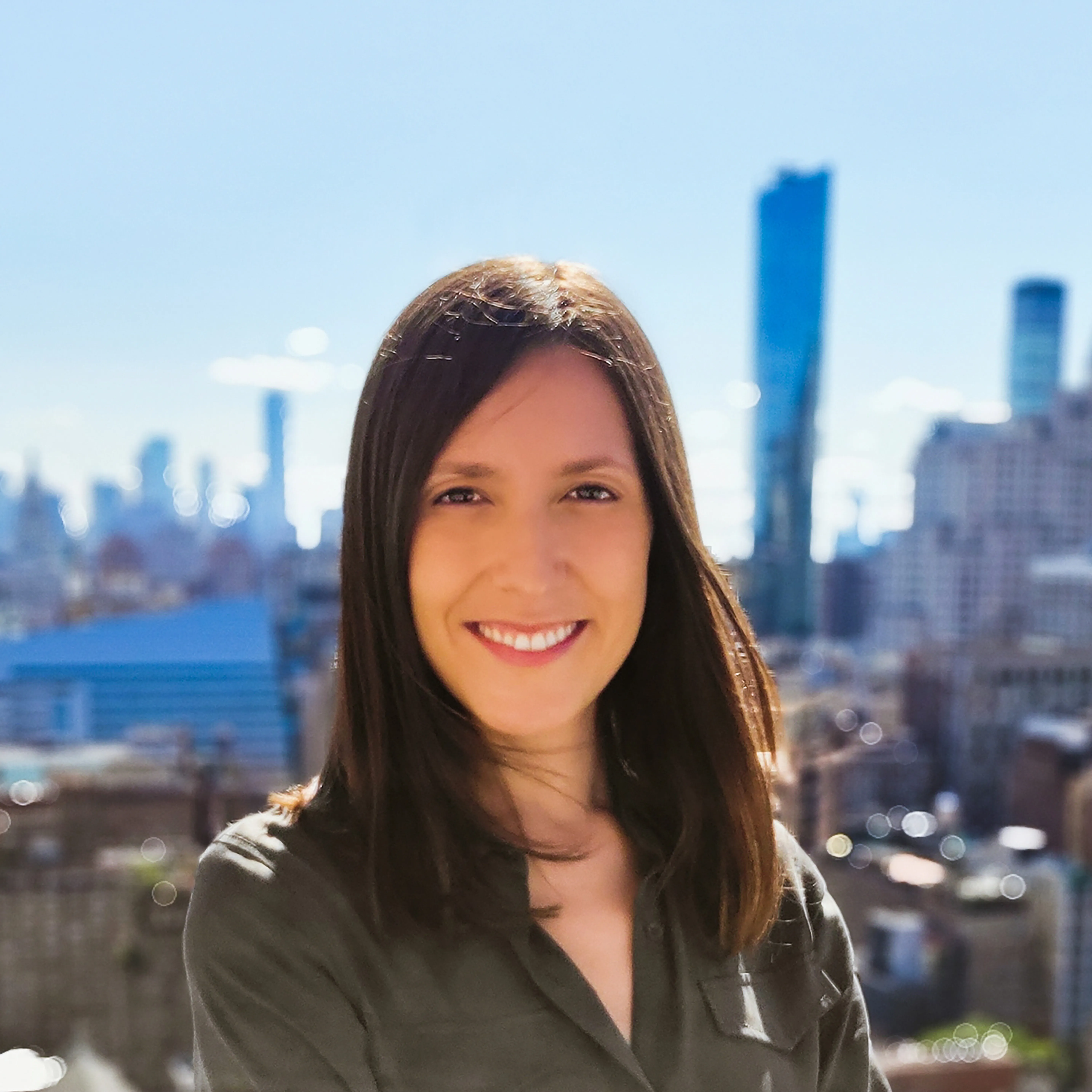
Sandra Pérez Baos was elbow-deep in T-cell mRNA translation at NYU Grossman when she made a decision most scientists don't make: she wanted to be on the other side of the table. Not the bench. The cap table.
That pivot didn't happen overnight, and it didn't happen neatly. It went through Nucleate New York - which she helped build from the ground up as a founding leadership member. It went through NYU's technology commercialization office, where she learned how IP moves from lab to market. And it went through co-founding a therapeutics startup during her own postdoc - experiencing the founder's specific kind of paranoia and momentum before she ever evaluated it in someone else.
Now she's a Senior Associate at 2048 Ventures, a thesis-driven VC firm headquartered in New York with a Boston presence, that just closed Fund III at $82,048,000. (Yes, the $2,048,000 part is intentional. The firm puts its name in the number.) She writes checks between $500K and $3M into pre-seed and seed-stage biotech and health companies - and she's doing it with something most investors at that level simply don't have: a working understanding of what it feels like to be the person asking for the money.
Her scientific background is not decorative. Sandra holds a B.S. in Biotechnology from the University of Salamanca, an M.S. in Immunology from Universidad Complutense de Madrid, and a Ph.D. in Molecular Biosciences from Universidad Autónoma de Madrid. She has published 32 papers. Her postdoctoral research at NYU Grossman zeroed in on translational reprogramming of T cells - the molecular switch between a cell's genetic instructions and its behavior in cancer and autoimmunity. That's not background knowledge. That's the kind of domain depth that lets her see through a data deck in a first meeting.
The investment thesis at 2048 Ventures is built around data moats - the idea that generational companies are the ones that capture proprietary data, turn it into durable insight, and build competitive advantages that compound. In biotech and health, that translates to real-time measurement infrastructure, novel IP, and platform biology that pharma can't easily replicate internally. Sandra's job is to find those companies before they're obvious.
She's watching RNA, cell therapy, molecular degraders, and metabolic biology. She thinks the Q1-2026 acquisition activity by pharma - deals mostly in the $500M-$3B range for platform assets rather than late-stage commercial products - signals something larger: a systematic move by large pharma to reload their pipelines by buying earlier-stage science. That's the context she's investing into. Not the last deal. The next dozen.
Her path from Salamanca to lower Manhattan is the kind of story that sounds like a plan in retrospect but almost certainly wasn't. Three science degrees in Spain. A postdoc in New York. A fellowship at NYU's tech transfer office. A founding role at Nucleate. A startup co-founded on the side. And somewhere in that chain - the pivot. Science to capital. Researcher to investor. Thirty-two papers to a $1.3M average check size.
What makes her unusual in a field that's increasingly credentialed but rarely scientific is the combination: she can read a paper and know if the mechanism is defensible, and she can read a cap table and know if the structure makes sense. That's a rarer skill set than either alone.
At Nucleate New York - the nonprofit that runs biotech entrepreneurship programming and talent development - she served as Mentor Relations Director and Tech Sourcing Lead. That's infrastructure-building work. It means she was thinking about the ecosystem, not just her own career, years before she had capital to deploy. The VCs who end up being most useful to founders are often the ones who were working on the problem before they had a fund.
2048 Ventures itself is a firm that bets on thesis over trend. It identifies structural data advantages - in Vertical AI, Deep Tech, and Healthcare/Biotech - and invests before the category becomes crowded. The portfolio includes GlossGenius, Gorgias, and DataCamp, with an NPS score of 100 from founders across seven consecutive years. For Fund III, the LPs include people from DigitalOcean, Duolingo, Google, MongoDB, Reddit, and Tiger Global. Sandra was promoted to Senior Associate on the fund close in January 2026.
She's one of a new generation of scientist-investors who are changing what early-stage health and biotech investing looks like - not by wearing a lab coat in a board meeting, but by bringing the intellectual rigor of the bench to the judgment calls of the check. The 32 papers are in the past. The next chapter is about which companies she backs, and whether their science turns out to be as defensible as it looked in the pitch.