There is a particular kind of corporate absurdity that arrives dressed as precision. Five systems produce five totals for the same inventory. Each total has commas, decimal places and an air of professional calm. By morning, someone has exported them all into a spreadsheet and begun the ancient ritual of asking which number is real. Ju-Kay Kwek has made a career out of this moment - first by helping enormous datasets answer questions quickly, then by confronting the untidy work required before an answer deserves to be trusted.
Kwek is the CEO and co-founder of Switchboard Software, a San Francisco company that connects, normalizes and monitors enterprise data. Its terrain is the middle layer people tend to encounter only when it breaks: feeds arriving on different schedules, platforms changing a schema, departments using incompatible definitions, and business specialists waiting for engineers to clear a path to their own information.
The current AI boom has made this old problem newly visible. A model can turn a plain-English question into an elegant answer. If the revenue data beneath it is late, fragmented or unreconciled, elegance merely helps the error travel faster. Kwek's recent work with digital publishers starts from a less theatrical premise: connect the evidence first.
“The gap is where signals exist but no one is watching them in a connected way.”Ju-Kay Kwek, on publisher revenue operations
The business knows things
The idea has followed him for years. In 2012, while serving as product manager for Google BigQuery, Kwek described a person in marketing or operations who might not know SQL but certainly knew the business and the data. The remark was practical, almost obvious. It was also a compact product philosophy: technical access and business expertise had been placed on opposite sides of a gate, and good software should shorten the distance between them.
BigQuery was an audacious piece of that argument. Google launched the managed cloud service in 2012 so organizations could analyze immense datasets without first buying and operating immense infrastructure. Kwek worked on the launch, partnerships and product ecosystem. He wrote about connections to analysis tools, large table joins and real-time streaming. The machine could move at a scale that made the old waiting feel faintly comic.
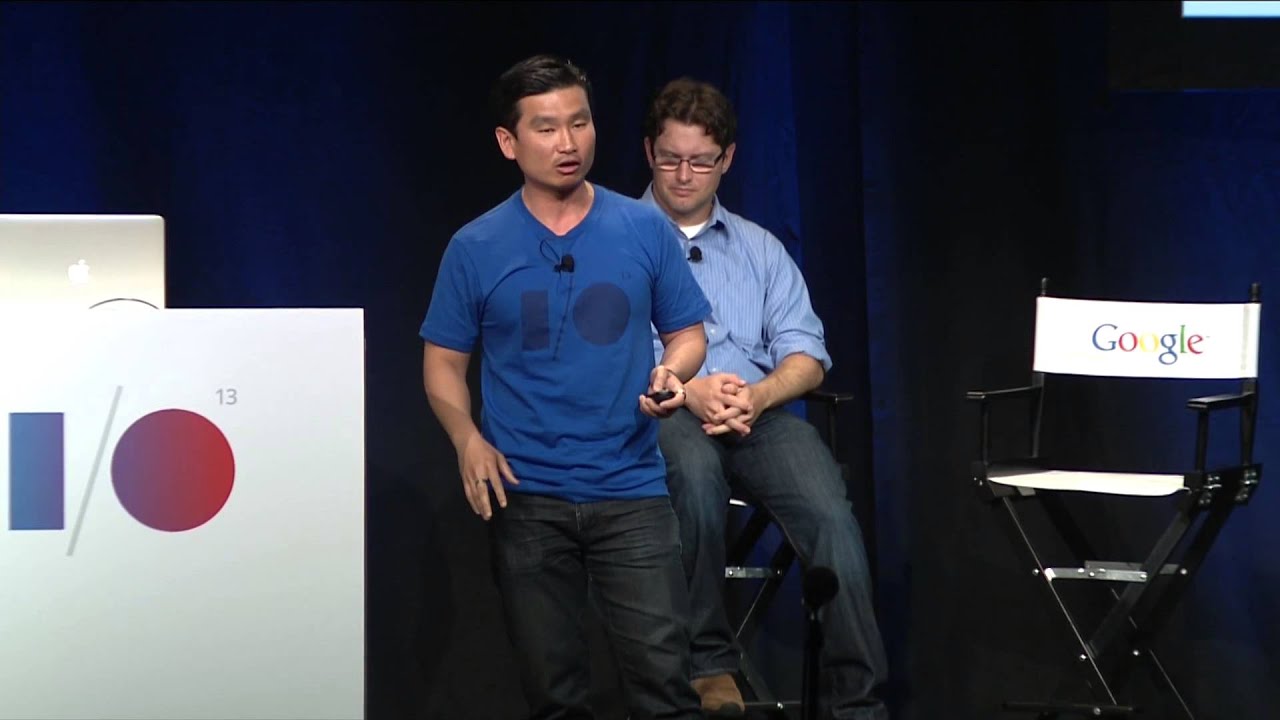
At Google I/O in 2013, Kwek stood onstage to show how Shutterfly was using BigQuery to mine terabytes of customer data. The session title, “Big Data Mashups,” now sounds pleasantly of its time. The underlying concern does not. Companies had plenty of information and plenty of questions; the costly part was arranging a useful meeting between the two.
The work before the query
Speed solved one constraint and exposed another. A warehouse can return a query in seconds, but it cannot decide whether two ad platforms mean the same thing by an impression. It cannot politely inform finance that one source closes its day in a different time zone. Nor can it preserve every bit of organizational context that lives in the heads of people who understand why a total looks strange.
Kwek and Michael Manoochehri founded Switchboard in 2014 after working on BigQuery. Their company took on the work before the query: ingestion, mapping, transformation, validation and monitoring. The aim was not to turn marketers or revenue operators into part-time engineers. It was to let them control the rules they understood while automating repeatable machinery and preserving oversight for technical teams.
SSPs
Finance
on schedule
reconcile
monitor
data
This sounds like plumbing because it is plumbing. Plumbing has the unfair disadvantage of becoming interesting only when the room is filling with water. In publisher revenue, a small fill-rate anomaly at two in the morning may not cross a static alert threshold. If it persists, money leaks while the dashboard remains serenely backward-looking. A gradual shift in demand mix can be meaningful across several systems and unremarkable inside each one.
Kwek's diagnosis is that these are connected-data problems before they are reporting problems. An ad server describes what happened inside its own boundaries. An SSP does the same. Neither has much reason to interpret the publisher's complete business. That interpretive burden falls to an operator with four exports, five tabs and a morning that had other plans.
One Switchboard case involved a publisher processing about two billion rows every day across more than 40 brands, 40 partners and 200 sources. The point of citing such a number is not to admire its bigness. It is to notice how quickly a spreadsheet habit becomes an architecture decision. Switchboard said its implementation took roughly eight weeks, while an internal build was estimated at about a year. The saved time belonged not only to engineers, but also to the business teams who could begin asking better questions sooner.
A network, not a vault
Kwek's interest in access reaches beyond software. He was born and raised in Singapore and studied in the United States, earning BA and MS degrees from Carnegie Mellon University. By 2011 he had spent 12 years working in the San Francisco Bay Area. That year, he wrote an essay about Singaporean identity, immigration and the country's relationship with citizens living abroad.
The essay began with a visiting Singapore Ministry of Education delegation at Google. Their conversation turned to the “Singaporean diaspora”: what it meant to work as foreign talent, when someone might return, and whether contributing to Singapore required physical presence there. Kwek argued that a small country could treat its diaspora as a strategic network, engaging talent around the world rather than thinking only in terms of keeping it inside national borders.
There is an echo between that argument and his work. A resource becomes more useful when connections remain active. Talent sitting elsewhere is not necessarily lost; data sitting elsewhere is not necessarily useless. The challenge is building the routes, rules and trust that allow value to move. It is a systems view of belonging, with unusually good manners.
“There is only ‘talent’ and what you do to attract and engage it.”From Kwek's 2011 essay on Singapore and its diaspora
Away from work, Kwek enjoys downhill and backcountry skiing. He teaches scuba diving. He makes what Switchboard affectionately calls “nerdy science projects” with his daughter. These pursuits share neither a dashboard nor a quarterly target. They do suggest that technical curiosity survives contact with fresh air.
There is also a pleasing historical rhyme in his record. Kwek is a co-inventor on a patent issued in 2011 for a natural-language tool that lets users specify subsets of inter-related data. More than a decade later, natural language has become the preferred front door for enterprise AI. The interface arrived. The inter-related data still needs looking after.
Trust before theatre
Switchboard's 2023 Series A put $7 million behind that maintenance work. The round was co-led by GFT Ventures and Quest Venture Partners. The company said it would develop more self-service features and turn solutions built with advanced customers into products. Its public customer work has included media, publishing, fitness and other data-heavy businesses.
By 2026, Kwek was describing the publisher problem in sharper operational terms. Threshold alerts miss slow deterioration. Reporting schedules range from hourly to delays of a day or two. Deal definitions diverge. A useful system must normalize those differences, watch patterns across time and retain enough context to distinguish a real revenue problem from a reporting artifact.
This is where his earlier promise of self-service meets the AI era. Self-service without reliable inputs leaves users confidently serving themselves the wrong dish. Governance without access leaves every question waiting in an engineering queue. Kwek's work occupies the less fashionable compromise: automation that gives business experts agency while making lineage, validation and monitoring part of the product.
The reward is not merely a prettier dashboard. A connected view can reveal an open-market advertiser related to an existing direct customer, a discrepancy that has been accumulating unnoticed, or a slow change that no single platform considers remarkable. The numbers were present all along. Their relationship was missing.
Kwek has moved through several generations of data language: enterprise software, big data, cloud analytics, data operations and now AI. The nouns keep changing outfits. His verb has remained connect. Connect the specialist to the evidence, one platform's definition to another, the answer to its lineage, and the ambition of intelligent software to the dull reliability that makes intelligence actionable.
A model may eventually make all of this feel conversational. Good. Conversation is useful. But when a revenue answer arrives in a sentence, somebody should still know which systems supplied it, which rules transformed it, and whether those systems were awake at two in the morning. Kwek's career is an extended wager that convenience and rigor can occupy the same line of code.