The revealing detail is in the interview. For its offshore staffing service, Veridic Solutions says candidates come into its Noida office to meet prospective clients by phone or video. Identification is checked. A representative monitors the conversation. The company then verifies that the person hired is the person interviewed. Before the cloud architecture, before the first line of code, there is a surprisingly physical question: who is sitting in the chair?
- Specialists for cloud, AI, cybersecurity, software and data teams.
- Contract, permanent, project and offshore arrangements.
- A stated five-year average consultant retention makes continuity part of the pitch.
That detail offers a useful way into Veridic. Technology buyers purchase expertise, but expertise arrives inside an employment relationship. Someone must check credentials, arrange equipment, handle payroll and keep a capable person available when one assignment ends. Veridic puts those practical matters alongside the technical skill. Its proposition is easiest to understand at the point where a project plan meets an empty seat.
A cloud company with a staffing engine
In September 2021, Housatonic Partners and Pracinco announced a growth investment in Veridic, previously owned by founder Devender Aerrabolu. The announcement described a cloud and digital transformation business serving financial services, technology and healthcare. Its engineers handled planning, migration, DevOps and managed services. Vikas Aditya joined as chief executive.
A second announcement, in April 2022, brought in Piyush Malik as Chief Digital and Transformation Officer. His background included SpringML and IBM. Data engineering, analytics and emerging technologies featured prominently in that expansion story. Engineering talent was the common ingredient: these were services that depended on having people who could do the work.
Today, Veridic leads with specialized IT talent, and its leadership page names Jim Yoshimura as CEO. The difference in emphasis is instructive. A buyer may describe the problem as a cloud migration, a security backlog or an application release. Veridic’s current pitch starts with the skills needed to move that work forward. The company sits between technical recruiting and project delivery.

The project ends. The relationship can continue.
Veridic’s client page reports average consultant retention of five years. Treat that as the company’s own measure. Even so, it tells you what Veridic wants buyers to value: continuity after the placement. A technically qualified hire is useful on day one. A consultant who understands the client’s systems and working habits can become more useful with time.
The consultant offering gives that claim some operational context. Veridic advertises health benefits, a 401(k), dedicated consultant care and immigration assistance. It says its Green Card process starts within 90 days of employment. A redeployment team works to find subsequent projects. The employment relationship, in other words, is designed to extend across individual assignments.
There is a modest incentive attached to the network, too. Eligible active consultants can receive a referral bonus of up to $500 after a referred hire completes 90 days of successful continuous employment. The waiting period matters. The reward depends on someone actually starting and staying, rather than merely appearing in a recruiter’s inbox.
Noida supplies the office. You direct the work.
The offshore offer makes the division of labor explicit. Consultants are full-time employees of Veridic India, based in a managed Noida office. Client managers direct their work. Veridic supplies the employment and workplace infrastructure, including equipment, payroll and local administration. Work schedules can match U.S. business hours.
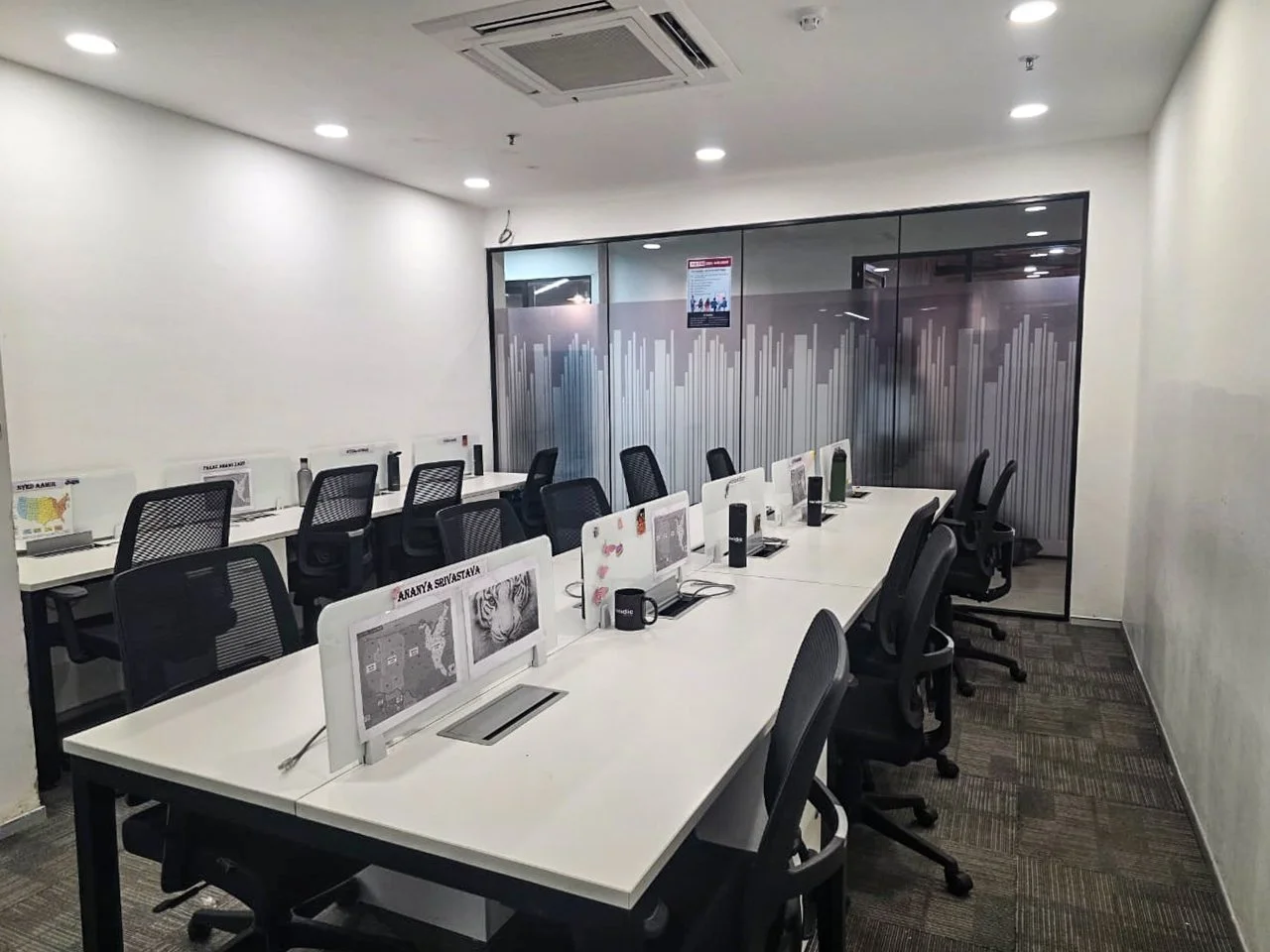
That arrangement suits a buyer who wants additional capacity inside an existing team. It also leaves a real job with the buyer: setting priorities, reviewing output and making decisions. The sensible comparison includes both the consultant rate and the management attention required. A lower staffing bill is only one component of a functioning delivery team.
Workplace
Priorities
Team integration
“Cybersecurity” is several hiring problems
Veridic’s dedicated cybersecurity practice gets more specific than a general promise to find technical people. Its published capabilities cover security operations and incident response, penetration testing, governance and risk, identity, cloud protection and fractional CISO leadership. The director named on its leadership page is Russ Seals.
The industry distinctions matter. A healthcare organization may need help with HITRUST readiness and HIPAA obligations. A manufacturer may need operational technology security. A bank may need identity controls or fraud expertise. Veridic also markets talent to cybersecurity vendors, managed service providers and integrators. These buyers can need different specialists even when the vacancy carries the same broad security label.
This is where a prospective customer can sharpen the brief. Specify the environment, the immediate work and the decisions the consultant must be able to make. A cloud security architect and an incident responder may share vocabulary while solving quite different problems. Veridic’s role list is useful as a prompt for making that distinction before recruiting begins.
The practical test is the first conversation with the hiring manager. Ask which security task is waiting, who will review it and how the organization will judge completion. A long list of platforms can obscure those questions. Matching someone to a concrete task gives both the buyer and the recruiter a clearer standard than matching a title to another title.
Buy the arrangement that matches the problem
Veridic offers contract, contract-to-hire, permanent placement, employer-of-record and payroll support, statements of work and offshore staffing. Its client materials also describe fully managed agile teams. Those choices place it alongside specialist staffing agencies and outsourced development providers; direct hiring remains another route. The important difference is the responsibility purchased with the people.
“We don’t submit candidates for the sake of submitting.”Veridic Solutions, published company values
A buyer who needs a particular engineer can start with staffing. One who needs a defined project should establish deliverables, acceptance criteria and ownership in the engagement. The lesson to borrow from Veridic is practical: make verification, employment support and project transitions part of the buying decision. The work begins with finding expertise. Keeping that expertise useful requires a plan for everything around it. If the client cannot assign work or review the result, additional staffing leaves that management gap open. The engagement has to fit the organization receiving the talent.