In 2009, J. R. Caporal’s father had a complaint. He would telephone a dealership, ask for a quotation, and wait for someone to call back. Nobody did. Years later, his son returned to that small indignity in his writing about the car business. Between the unanswered telephone and the modern showroom lay an expensive procession of software, advertising and customer databases. The customer was still waiting.
It is an unusually useful family anecdote for understanding Caporal. His working life encompasses vehicle transport, a Honda motorcycle dealership, sales training, books and the co-founding of Auto Avaliar. Yet the questions he keeps asking remain close to the counter. Who answers the enquiry? Who understands the buyer? And who knows what the car taken in exchange will actually fetch?
The last question has become a business of its own. Auto Avaliar connects the appraisal of a used vehicle with a marketplace of professional buyers. Caporal’s current public roles place him on both sides of that work: president of Auto Avaliar and CEO of MegaDealer, which provides consulting, training and analytics to the automotive trade. There is plenty of technology involved. There is also the stubborn matter of getting a deal finished.
A family name, and a ticket to Michigan
The family’s involvement in the automotive industry dates to 1941. Caporal subsequently spent 12 years in vehicle logistics and transport, and operated a Honda motorcycle dealership until 1993. His experience included sales, parts, service and administration. The breadth matters: a showroom promises a vehicle; the rest of the operation must make the promise affordable to keep.
Before that career, there was an experiment in independence. In a personal recollection, Caporal describes signing up for an American exchange programme at 15 without first telling his parents. His father agreed to pay. In January 1976, he flew from São Paulo to Detroit and went on to Grand Rapids, Michigan. He had attended Colégio Bandeirantes in São Paulo; his American school was Catholic Central High School.
The welcoming committee was a host couple of 25. Domestic chores followed. So did the discovery that years of English lessons did not make the television comedy Happy Days immediately comprehensible. He remembers returning with fluent English and greater independence. Decades later, his professional life would repeatedly involve studying American dealerships and considering which practices might travel to Brazil. That connection is one he makes himself.
Another family memory gives the story its weight. When Auto Avaliar turned the interviewer into the interviewee for episode 100 of The Dealers Podcast, it highlighted his father’s advice: “Vou te deixar o nome. Cuide dele.” In English: “I’ll leave you the name. Take care of it.” A reputation, in this version of inheritance, comes with maintenance obligations.
The second car in every new-car deal
A trade-in creates a peculiar negotiation. A buyer sees the car that has carried the family around. A dealer sees an asset that must be inspected, priced, prepared and sold again. Agreement about the next car can founder on disagreement about the present one. An attractive sale at the front of the showroom can produce an awkward purchase at the back.
Auto Avaliar, established in 2015, addresses that handover. The platform brings franchised dealerships and independent dealers into the same trading process, with appraisal and inventory tools supporting the transaction. The used car can reach buyers who want it for their own stock. A dealer accepting a trade-in gains a route to its next owner.
For 2019, the company reported 180,000 vehicles traded through its platform, representing R$5.2 billion in transactions. At the time, it reported more than 2,800 dealerships and 30,000 independent stores using the service. Those figures describe activity through the marketplace, rather than money earned by Caporal or revenue retained by the business. The distinction is rather important when the merchandise has four wheels and a substantial price tag.
Caporal’s explanation of the model emphasised speed and transparency between dealerships and independent retailers. It also reveals the continuity in his career. Logistics asks how a vehicle gets from one place to another. Wholesale trading asks how it gets from one balance sheet to another. In each case, a car standing still is somebody’s problem.
Three signatures, two halves of a transaction
In March 2020, Auto Avaliar announced a Brazilian partnership with Karvi, the Argentine startup focused on buying and selling new vehicles online. The accompanying photograph is pleasingly literal: Caporal, Karvi co-founder Matías Fernández Barrio and Auto Avaliar’s Daniel Nino holding the paperwork. Even a digital partnership sometimes requires the reassuring spectacle of people holding sheets of paper.
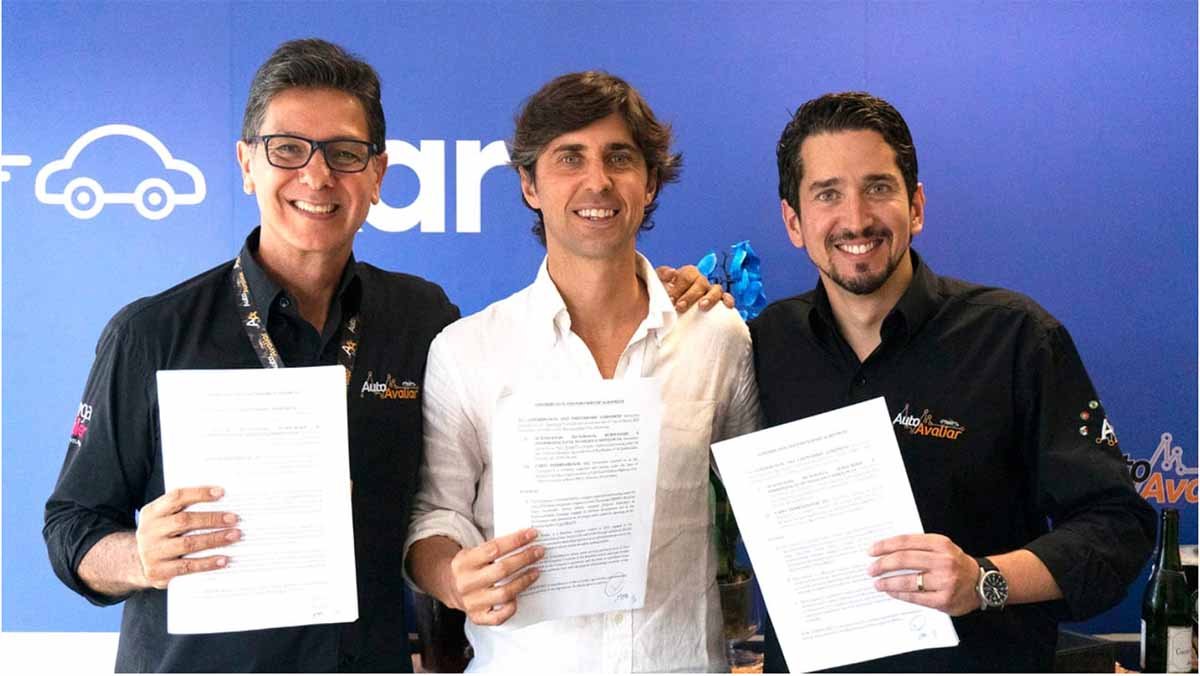
The proposed integration linked complementary jobs. Karvi would show the prices and available stock of new vehicles at participating dealerships. Auto Avaliar would continue handling used-vehicle business between professionals. Caporal described the combination as a way to make the purchase and exchange process more convenient and transparent. The customer’s journey could be considered across both cars involved.
His thinking about ownership also extended to Carflip. At a March 2023 industry seminar, he discussed its used-car subscription operation: agreements lasting six to 24 months, with an option to buy at the end. He described serving some customers who had been unable to obtain conventional vehicle finance. The idea allowed a different route into a car, while preserving a later purchase decision.
There is a consistent commercial curiosity here. The appraisal, the wholesale buyer, the online new-car listing and the subscription all concern points where a willing customer or a usable vehicle can get stuck. Caporal has worked on several of those junctions. Each involves a different contract; all require someone to understand what happens after the initial expression of interest.
- 01The trade-inA customer brings a used car
- 02The appraisalCondition meets market demand
- 03The next buyerDealers compete for inventory
- 04The next saleCapital returns to the operation
A conceptual view of the handover, rather than a measured performance chart.
The software still needs a salesperson
Caporal has written about those expressions of interest in considerably more detail than most customers would volunteer to read. His 2023 book, O manual definitivo para converter 100% de leads na venda de veículos, runs to 227 pages. Its subject is the work between attracting an enquiry and converting it into a purchase. The title supplies the ambition; the practical concern is following up properly.
In explaining the book, he stressed understanding the stage a prospective buyer has reached before choosing an approach. Acquiring contacts and then abandoning them defeats the purpose. The dealership that buys attention needs a process for responding to it. His father’s unanswered call had acquired a digital vocabulary, but the commercial embarrassment was recognisable.
His writing also goes beyond the sales desk. Como superar 100% de taxa de absorção, catalogued in 2023, deals with dealership workshop management. Its contents move through scheduling, time control, customer communication, quality checks and teamwork. The scope suggests how thoroughly he has considered the unglamorous machinery behind a dealership’s public face. A beautiful showroom cannot schedule a mechanic’s afternoon.
That concern became pointed in his August 2026 column about the gap between expanding dealer networks and the preparation of their staff. He argued that complex vehicles require knowledgeable explanations, and that short training events cannot substitute for practice and supervision. His criticism placed responsibility on how businesses develop people, rather than simply blaming the salesperson facing the customer.
This is where his work as a trainer meets his work around data. A dashboard can reveal a slow response or ageing inventory. Someone still has to change the daily routine. MegaDealer’s services span consulting, training, audits and analytics, putting organisational habits alongside the numbers used to judge them. Buying the system is the easier appointment to put in the diary.
His advice to individual owners can be equally concrete. In a 2021 interview, he considered whether substantial repairs were worth making before replacing a car. He asked about its age, mileage, intended use and how long the owner expected to keep it. Even the owner’s attachment belonged in the calculation. The familiar car in the driveway deserves a more careful answer than a reference price alone can provide.
When waiting becomes a decision
For all the attention paid to closing sales, Caporal also writes about when to let a vehicle go. His public discussions of inventory management use the idea of a stop loss: establishing limits before an ageing car becomes a continuing argument with the market. The temptation to wait for a better price is understandable. The cost of waiting needs equal billing.
“Adiar a decisão não recupera a margem; muitas vezes, apenas aumenta a perda.”
J. R. Caporal, Economy&Cars interview“Postponing the decision does not restore the margin; often, it only increases the loss.” Translation.
The observation has the plainness of advice earned around inventory. It also helps explain why information about used cars attracts interest far beyond the used-car lot. Condition, demand and actual transactions affect the willingness to accept a trade-in, and therefore the ability to sell another vehicle. The old car remains part of the new-car business long after the showroom conversation has moved on.
Stellantis made that connection tangible in September 2025. It paid €54 million for an additional 51.7% interest in Auto Avaliar, increasing its holding from 43.3% to 95%. The automaker described the acquisition as supporting its analytical capabilities and services built around data. The transaction puts a documented corporate value on the information and trading infrastructure surrounding used vehicles.
€54 million paid for an additional 51.7% interest in Auto Avaliar.
Caporal continues to speak and write about the operation of dealerships, including the demands of electrification and the changing economics of selling a car. His recurring ambition is practical: improve processes so customers receive better service and businesses retain their loyalty. That objective has room for software, finance and considerable training. It also has room for a much older courtesy.
Return the call. Find out what the customer needs. Understand the car coming back. For a career spanning motorcycles, marketplaces and management books, it is an admirably specific place to keep starting.