Breaking Josh Kaufman sells 1.5M+ books without an MBA | TEDx talk on learning anything fast hits 42 million views | The Personal MBA adopted as textbook at Stanford, NYU, Howard, and Portland State | "How to Fight a Hydra" becomes #1 in Modern Philosophy | P&G brand manager quietly builds a reading list that disrupts business education | One-person company. Three books. Zero employees. |
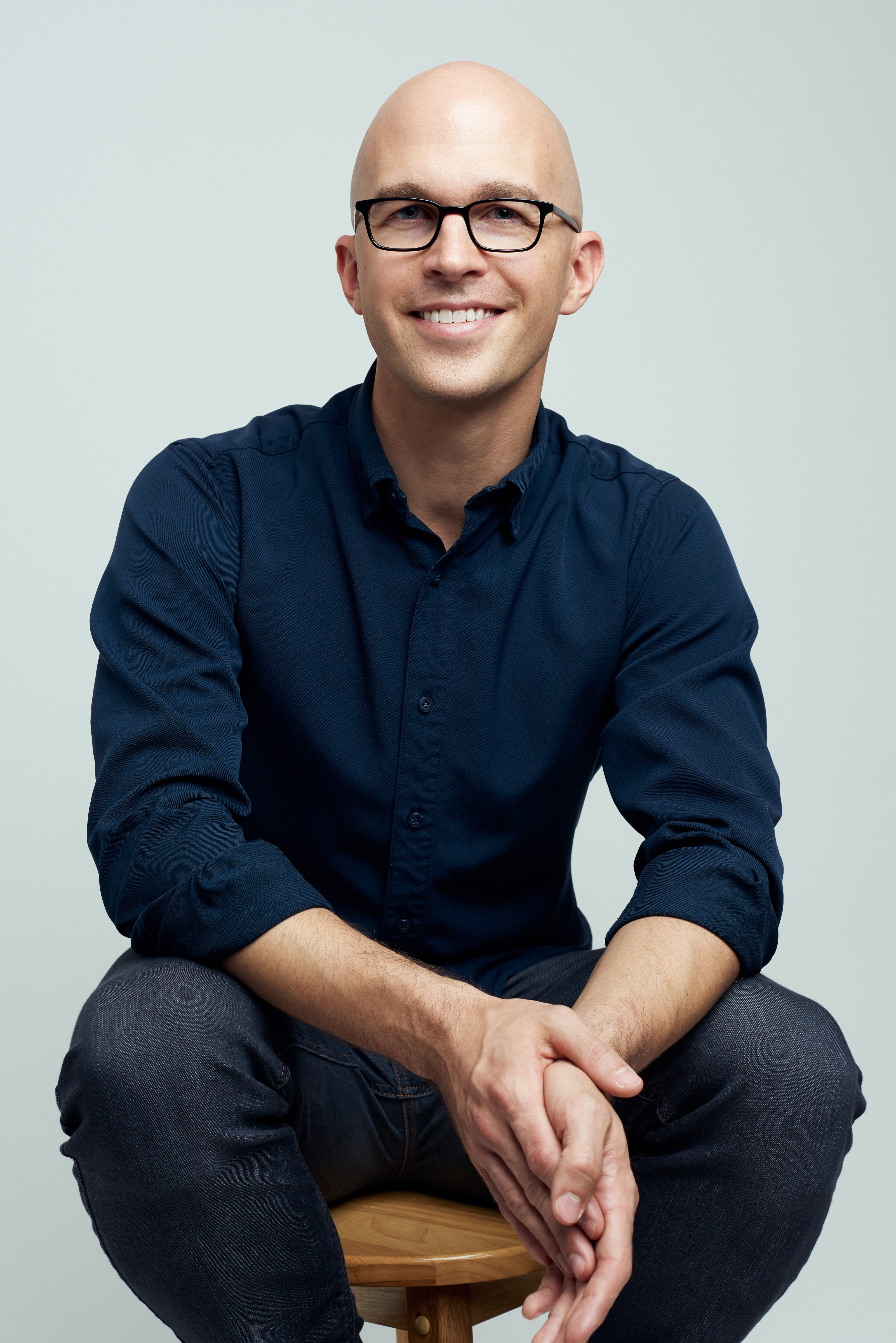
Josh Kaufman - author and business educator
YesPress Profile / Author + Educator

Josh Kaufman

The man who killed the MBA industry's best argument

He wrote the book that told a generation: stop waiting for permission, stop paying $150,000 for credentials - just learn the thing.

1.5M+ Books Sold
42M TEDx Views
3 Books Written
4 Universities

The guy who turned a blog post into a Stanford textbook

In 2005, Josh Kaufman was a Procter & Gamble brand manager in his mid-twenties, running multi-million dollar campaigns for Walmart and Target, watching colleagues pour six figures into MBA programs that, as far as he could tell, taught a lot of frameworks and not much else. So he made a list.

He called it PersonalMBA.com. It was a curated reading list - maybe 50 books to start - organized around the actual fundamentals of how businesses work. No tuition required. No case studies about railroad companies in 1895. Just: read these, think carefully, apply the ideas. The internet found it. Then a publisher found it.

By 2010, the list was a book. By 2013, it was a #1 Amazon bestseller in Business & Money. By 2025, over 1.5 million copies in print across three books and six languages. Professors at Stanford, NYU, Howard, and Portland State started assigning it. The irony writes itself.

Kaufman never set out to disrupt business education. He set out to figure out whether he actually needed a $150,000 degree. He ran the experiment. Published the results. Sold a million copies to people asking the same question.

His second book, The First 20 Hours, made a different argument: that the famous "10,000 hours" rule was about mastery, not basic competence. You can get reasonably good at anything - yoga, programming, ukulele, chess - in about 20 hours of focused practice. A TEDx talk explaining this became one of the most-watched talks in TED history. Forty-two million views. Organic. No machine behind it.

His third book departed from business entirely. How to Fight a Hydra is a philosophical allegory about doing ambitious things in a world that offers zero guarantees. He published it himself, through his one-person company Worldly Wisdom Ventures LLC, because by then he'd earned the right to want creative control.

Three books. Three different arguments. One through-line: the tools for building a good life are available to everyone who bothers to look. No institution required. No credentials necessary. Just the willingness to start and pay attention to what works.

"There are no certainties, and no guarantees. The hero fights anyway."
- Josh Kaufman, How to Fight a Hydra

Three books. One argument.
Learn everything. Owe nobody.

01
2010 / Penguin Random House
The Personal MBA: Master the Art of Business

The book that started everything. Kaufman distilled hundreds of business texts into a single framework covering value creation, marketing, sales, finance, psychology, and systems. Over 1 million copies sold. Now a textbook at Stanford and NYU. The question it asks: what if you could skip the $150k and just read the right things?

#1 Amazon Bestseller
02
2013 / Penguin Random House
The First 20 Hours: How to Learn Anything... Fast!

Malcolm Gladwell said 10,000 hours. Kaufman said: that's mastery, not competence. Get reasonably good at anything in 20 deliberate hours. Yoga, programming, ukulele - he did them all as case studies. The accompanying TEDx talk has 42 million views and counting, placing it among the all-time most-watched talks in TED history.

#1 Business Self-Improvement
03
2018 / Worldly Wisdom Ventures (Self-Published)
How to Fight a Hydra: Face Your Fears, Pursue Your Ambitions

Kaufman's strangest and most personal book. A philosophical allegory about an adventurer facing a Hydra - a stand-in for ambitious goals that multiply their heads every time you cut one off. No business frameworks. Just: what does it mean to attempt hard things in an uncertain world? #1 in Modern Philosophy. Self-published for creative control.

#1 Modern Philosophy
1.5M+ Books Sold

Across 3 books, 6+ languages, without a single employee

42M TEDx Views

Top 10 most-viewed TED talk ever. Grew entirely through organic sharing

20hrs The Theory

Hours needed to reach basic competency in any new skill - his central argument

4 Universities

Stanford, NYU, Howard, Portland State use his book as a textbook

A P&G Brand Manager Moonlights on History

Kaufman joined Procter & Gamble out of the University of Cincinnati with a Business degree in hand. He managed products in the Home Care division - bleach, cleaning supplies, the kind of categories you walk past in a grocery store without thinking about. Internally, he was running multi-million dollar campaigns and helping P&G develop its global online marketing measurement strategy, which was genuinely significant work for the mid-2000s.

But he kept noticing colleagues enrolling in MBA programs. Paying $100,000, $150,000 for degrees. Taking two years out. He read the curriculum. He read the textbooks. He started wondering: is this the most efficient path to understanding how business actually works?

In 2005, he started keeping a list. Books that cut to the actual mechanisms - not the case studies, not the prestige frameworks, just the fundamental ideas. He put it online. The internet found it. By the time he left P&G to pursue writing full time, PersonalMBA.com had an audience.

The Argument That Sold a Million

The Personal MBA wasn't an attack on business schools. It was a more precise argument: the purpose of a business education is to understand how businesses work. You can do that by paying $150,000 and attending classes. Or you can read maybe 99 specific books, think hard, and apply the ideas in the real world. The second option is available to anyone.

The book's framework covers everything an MBA curriculum touches - value creation, marketing, sales, value delivery, finance, human psychology, personal productivity, systems thinking - but it does it in a single coherent narrative instead of a scattered collection of disconnected courses. Kaufman's writing is clean, precise, and allergic to jargon.

When professors at Stanford started assigning it as a textbook, the irony was not lost on anyone. The anti-MBA book became required reading at one of the world's most prestigious business schools.

The 20-Hour Experiment

The First 20 Hours started as a contrarian response to Malcolm Gladwell's 10,000-hour rule. Kaufman's reading of the underlying research - specifically Anders Ericsson's work on deliberate practice - revealed a crucial distinction: 10,000 hours gets you to world-class expertise. But basic, useful competency? That can happen in about 20 focused hours.

The book is structured around Kaufman personally testing the theory. He learned yoga, programmed a basic game from scratch, played ukulele, got decent at chess. Each skill documented carefully. The TEDx talk condensing the idea ran 19 minutes and spawned 42 million views, making Kaufman one of the rare people whose ideas spread faster than their reputation.

The Hydra Problem

His third book is the one that surprises people who expect another business framework. How to Fight a Hydra is a short philosophical fable. You are an adventurer. You are sent to fight a monster. The monster keeps growing new heads. The map is incomplete. The equipment is imperfect. The outcome is uncertain.

This is the actual experience of pursuing ambitious goals, written in a form that bypasses the defenses of the practical-minded reader. Kaufman published it independently specifically because the allegory format would have been rejected by traditional business publishers. Through Worldly Wisdom Ventures, he controlled the price, the cover art, the audio production. It hit #1 in Modern Philosophy within days of release.

The central idea: uncertainty is the permanent condition, not a temporary obstacle. The question is whether you fight anyway.

The Solo Operator Model

Kaufman runs his entire operation - research, writing, publishing, speaking, advising - through Worldly Wisdom Ventures LLC without employees. This is a deliberate architectural choice, not a circumstance. He advises business owners across tech, entertainment, publishing, manufacturing, fitness, healthcare, and government, but maintains independence from all of them.

He coined the concept of "Strategic Apathy" for the deliberate choice to ignore status signals that don't serve your actual goals. He would ask advisory clients: "What if you achieved everything but no one could ever know?" The question is a scalpel. It separates intrinsic goals from status performance. Most people find the answer uncomfortable.

Key Idea

"Business education is a learnable craft. The institution that teaches it is optional."

Core Framework
01 / Value Creation
02 / Marketing
03 / Sales
04 / Value Delivery
05 / Finance
06 / The Human Mind
07 / Systems
08 / Improvement

The Personal MBA framework - 11 chapters replacing 2 years of school

Speaking Venues
Stanford University
Google
Aspen Ideas Festival
TEDx Oshkosh
Media Coverage
The New York Times
The Wall Street Journal
Forbes
Fortune

The ideas underneath the books

Core Concept
🎯

Do to Become

Identity isn't declared - it's accumulated through action. If you want to be a writer, write. If you want to be a businessperson, run a business. The doing precedes the becoming, always. Waiting until you feel ready is the mistake.

Strategic Principle
🧠

Strategic Apathy

Deliberately ignore status signals that don't serve your actual goals. Kaufman's test: "What if you achieved everything but no one could ever know?" If the goal collapses under that question, it's performance, not purpose. Worth knowing the difference.

Operating Method
🔬

Personal Science

Treat your own life as a low-risk experiment. When standard medical tests showed nothing wrong, Kaufman self-diagnosed dysthymia, researched the biochemistry, tested SAM-e supplementation at 800mg twice daily, and documented his results. The approach: hypothesis, intervention, careful observation.

The Talk That Changed Everything

"The First 20 Hours - How to Learn Anything Fast"

Filmed at TEDx Oshkosh before Kaufman had any significant public profile. The talk lays out the core argument - 10,000 hours is about mastery, 20 hours is about competence - and ends with him playing the ukulele badly but demonstrably better than when he started.

It spread entirely through organic sharing. No PR campaign. No social media machine. Just an idea that resonated and traveled on its own momentum to 42 million people across the globe.

Ranking: Among the Top 10 most-viewed TED/TEDx talks in history

42M+ YouTube Views

Grew without a marketing budget. One of the most-watched TED talks ever recorded.

The Method
20 hours
of deliberate, focused practice

From brand manager
to accidental institution

2001 - 2004
Earns BBA at University of Cincinnati
2004 - 2007
Joins P&G Home Care brand management - leads multi-million dollar campaigns for Walmart and Target; helps develop global online marketing measurement strategy
2005
Founds PersonalMBA.com while still at P&G - a curated business reading list as an alternative to traditional MBA programs
2007 - 2010
Leaves P&G; transitions to independent researcher, author, and advisor through Worldly Wisdom Ventures LLC
2010
Publishes The Personal MBA (Penguin Random House) - becomes #1 Amazon bestseller with over 1 million copies sold
2013
Publishes The First 20 Hours; delivers TEDx Oshkosh talk - accumulates 42+ million views organically
2013
Forbes names JoshKaufman.net a "Top 100 Website for Entrepreneurs"
2018
Self-publishes How to Fight a Hydra through Worldly Wisdom Ventures LLC - hits #1 in Modern Philosophy
Ongoing
Advises business owners across 8+ industries; continues research and writing; operates as a solo practitioner

What Kaufman actually says

"If you want to be, you have to be willing to do. No doing, no becoming."
"Practice + Paying Attention to Real Results = Skill."
"Learning how to think like a successful businessperson matters more than memorizing quick tips."
"When you start doing things often enough, you start to realize the doing is way more valuable than the becoming anyway."

Six things you won't find
on the back cover

Origin Story

He built PersonalMBA.com in 2005 while still on P&G's payroll. The side project that became his career started as a genuine question: is the MBA actually worth it? He ran the experiment instead of just asking.

The Irony

The book that argued against MBA programs is now assigned reading at Stanford Business School. The professors who assign it presumably paid full freight for their own degrees. Kaufman has not commented publicly on whether he finds this funny.

Personal Science

After over a decade of chronic fatigue and dysthymia that standard medical tests couldn't explain, Kaufman self-diagnosed via research and began testing SAM-e at 800mg twice daily. He documented dramatic improvement within hours. Published the whole thing publicly.

The Test

He asks advisory clients a single question designed to separate real goals from status performance: "What if you achieved everything but no one could ever know?" He calls the deliberate ignoring of irrelevant status signals "Strategic Apathy." Most people fail the test on the first try.

The numbers and details
worth knowing

Publishing

Three #1 Amazon bestsellers across business, self-improvement, and philosophy - three different categories, three different publishers (traditional, then self-published).

Solo Business

Worldly Wisdom Ventures LLC runs with zero employees. Kaufman handles research, writing, publishing, speaking, and advising entirely independently.

Reach

His 99-book reading list on PersonalMBA.com predates the book by five years and was what attracted the publisher. The list grew the book; the book grew the idea.

Intellectual Influence

His entire professional focus on clarity over conventional wisdom was inspired by Garry Kasparov's chess philosophy - objective analysis rather than received wisdom.

Audio Recognition

The Personal MBA audiobook earned Audie Award finalist status and "Best of Audible" recognition - unusual for a business book by a first-time author.

The Ukulele

The closing moment of his 42-million-view TEDx talk is him playing ukulele. He had never played before the 20-hour experiment documented in The First 20 Hours. He plays it badly. That's the point.

Where to go from here