The first episode had a title only a patient investor could love: “M1 Finance 1 year, $25,000 Dividend Portfolio Update.” It appeared in February 2019. There was no promise of a secret method, no invitation to become rich by Friday. Joseph Carlson opened his account, showed what he owned and said he would keep updating viewers as markets changed. A portfolio worth about $25,000 was the subject. The real format was a continuing record.
Carlson had already spent years buying stocks and reading about companies. By his account, he began building a serious portfolio around 2016. The YouTube channel came later, almost as a camera pointed at an existing habit. “All YouTube was was a window into what I’m already doing,” he said in a 2026 retrospective. It is a neat sentence for a show whose drama depends on time. Anyone can sound certain about a stock once. It takes a longer memory to return with the same account next week.
That memory has become Carlson’s signature. The host of The Joseph Carlson Show has taken viewers through dividend payments, changing positions, company research, uncomfortable losses and the occasional satisfying gain. He now also runs an After Hours channel and Qualtrim, a stock analysis platform. The progression makes sense when seen from the beginning: a programmer wanted to make the reasoning visible, then built more ways to do it.
The first audience was a test
In a 2020 question-and-answer session, Carlson described the channel’s origin with the unfussy precision of someone explaining a product decision. He had watched finance videos that offered advice while keeping the presenter’s own investments out of view. He thought an audience might want to see real holdings, regularly, with the decisions left in. He considered the idea for a couple of months, then treated the first episode as a test. Nobody had pushed him to start, he said. Early commenters, even when the videos drew only a few hundred views, encouraged him to make more.
The show could have stopped at a clever premise. Instead it acquired the more useful quality of continuity. Carlson said in 2020 that he had made videos at least weekly for nearly two years, answering questions alongside the portfolio updates. At that point he reported more than 134,000 YouTube subscribers and 20,000 audio listeners. By August 2026, he described the main channel as having passed half a million subscribers, with After Hours around a quarter million. Those are his reported figures at those dates, and they tell a simpler story than a graph of daily views: people had found a reason to come back.
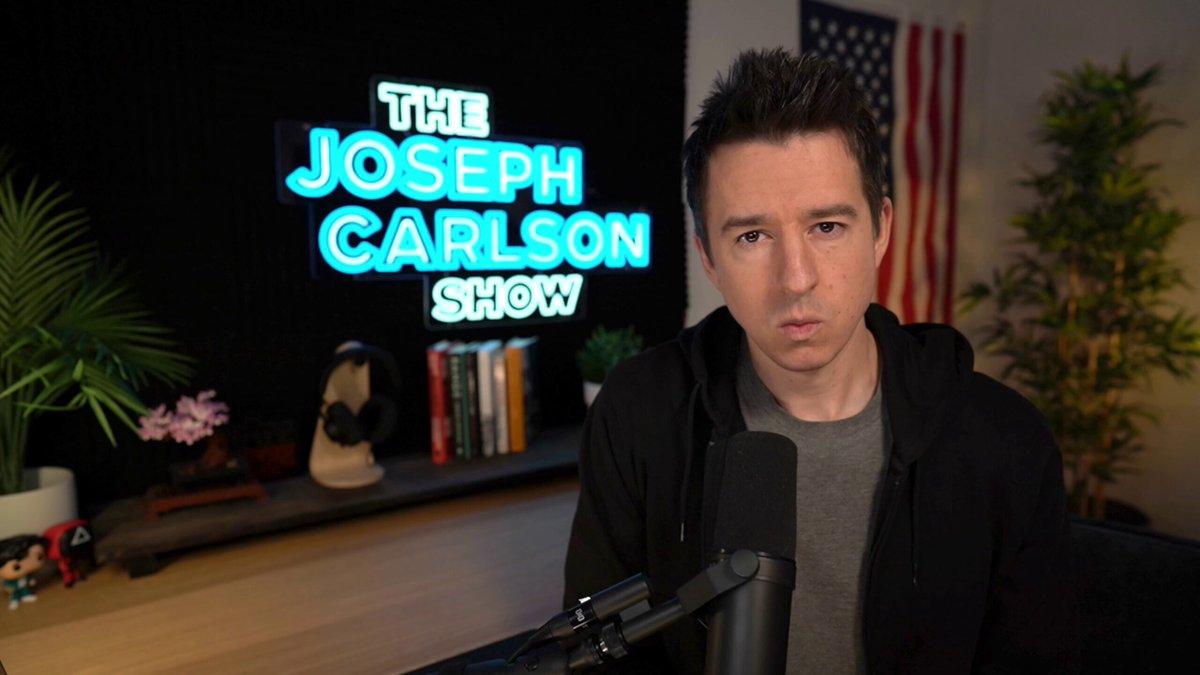
There is a personal hinge in the origin story. Carlson said his father involved him in the family’s rental properties while he was growing up. The mechanics of owning assets were not an abstraction in that household. He also described himself in 2020 as a husband, father, senior full-stack web developer and amateur investor. The last phrase was deliberate. On his videos, he has repeatedly said he is not a professional investor. He presents the account as his own experience, with choices viewers can question, rather than a portfolio they should copy.
The dividend label had limits
The show began in the language of dividend investing. Monthly income made for a visible scoreboard, and Carlson told viewers that watching its growth helped him stay motivated. Yet he was already stretching the label by 2020. In the same public conversation, he said his Roth IRA held a smaller, growth-centered portfolio with Amazon in it. “I’m not as much of a ‘purist’ as some on youtube,” he wrote. An investor who likes dividends can still see a business worth owning without one.
That distinction matters because it explains the show’s later range. The Passive Income Portfolio remained one public account; a separate Story Fund gave Carlson room to discuss growth holdings. His analysis widened from dividend checks toward the operating qualities of businesses. In his 2026 account of the early years, he recalled making the case for Apple as it expanded its software and services business. In other episodes he has discussed companies including Alphabet, Mastercard, S&P Global, Costco and ASML. The roster changes. His stated preference for studying companies as businesses is the thread.
Carlson’s audience also gets a record of changing his mind. He explained in the 2020 Q&A that he sold Main Street Capital chiefly because he did not feel he understood the company well enough to own it. That is an unusually plain reason. Later, in a 2025 episode, he described trimming roughly half of a Texas Roadhouse position after holding it for about five years, then explained where the proceeds would go. A sale can be an admission, a rebalance or simply a new judgment. On a continuing show, it also becomes part of the plot.
A programmer builds his own research desk
For eight years before making YouTube content full time, Carlson worked as a senior-level programmer, according to the description on his After Hours channel. He says programming taught him to improve through iterations, an approach he applies to investment research. The second career did not erase the first. It gave it a new problem to solve.
Qualtrim is the result. Carlson describes it as a stock analysis platform he built and uses. It offers company financial histories, business-segment data and valuation tools; membership also includes extra video content and a community. In a 2026 episode, he said more than 13,000 members were paying for the platform. That number comes from Carlson, as do his statements about the product’s features and ownership. What is visible to any viewer is the relationship between the software and the show: research goes into the episode, and the episode demonstrates the research.
There is a small irony in a creator selling a research tool while insisting viewers should make their own decisions. It is also what gives the tool its logic. A screen full of company data cannot decide what a company is worth. Carlson’s videos show him selecting assumptions, weighing a business and sometimes revising the verdict. Viewers can disagree with any step. In fact, he originally wanted them to. The platform puts more of those steps within reach of the audience.
The community has shaped the work, too. In 2020, Carlson said he enjoyed the dynamic nature of the channel and learned from members of his Discord group. He also confessed that video editing was his least favorite part of running it. He kept doing the editing himself because he worried a hired editor would produce a different finished show. It is a revealing bit of creator fussiness: the person comfortable showing a portfolio to strangers was still particular about every cut.
Carlson’s publicly shown portfolios are part of his financial life. A portfolio screenshot, even a large one, is not a verified estimate of his net worth.
The account keeps moving
In August 2026, Carlson published a retrospective under the title “How I Built A $1.5 Million Portfolio.” He looked back to the first videos, discussed roughly $500,000 in gains on a portfolio he described as about $1.4 million at that point, and said he intended to keep showing the account as it grew. The figures are snapshots from his own presentation, not a promise about future returns. Markets are poor at honoring a narrator’s preferred ending.
Still, his ambition is explicit. Carlson said he plans to document the portfolio toward $5 million. He could have made that number the whole story. Instead, the more durable part is the process around it: the public explanations of buys and sells, the gradual change from a dividend focus, and the willingness to keep an old thesis available for inspection. A channel can edit a video. It cannot edit away years of earlier videos.
What makes Carlson an interesting finance creator is therefore less the size of the account than its visibility over time. The first $25,000 update was modest, even a little ungainly as a media proposition. It asked viewers to care about a future episode before there was one. Seven years later, the future episodes are the archive. The programmer who once treated his first upload as a test now has a long public record of his decisions, a business built from the tools behind them, and another update to make.