On Monday morning after Thanksgiving in 1992, Dylan Jovine sat down at his desk and looked at a quote machine that appeared to be broken. Comptronix, the stock he had bought near $22 a share, now showed $2.43. A decimal point had not wandered. The company had disclosed accounting fraud. Jovine had purchased 5,000 shares, putting roughly $110,000 on an idea he had inherited from a mentor he revered. In his telling, 90% of his savings vanished before breakfast had settled.
The detail that makes the story linger is not only the loss. It is the shirt. A Wall Street tailor had explained to the young broker that the people who gave orders wore shirts without pen pockets, while the people who took orders carried pens. Jovine bought a pocketless shirt. Then he bought the stock. He arrived after the holiday dressed for authority and met, instead, the indifferent authority of a number on a screen.
Every career in markets accumulates a private museum of numbers. There are first commissions, proud exits and prices sold too soon. For Jovine, $2.43 is the exhibit with the lights trained on it. He has since founded a broker-dealer, built and sold a financial publishing company, and created another research business for individual investors. Yet his worst trade remains the cleanest way into his work because it reveals the enemy he has spent decades trying to outwit: borrowed certainty.
“The most revealing number in the career is not a return. It is $2.43.”I. The apprenticeship
Charts by hand, ambition by the yard
Jovine grew up in Queens and has written that his family relied on welfare and food stamps. Wall Street was not an inherited room. He entered it in the early 1990s, when weekly stock charts still arrived by mail and updating them could mean ruler, pencil and patience. While training as a broker, he volunteered to arrive an hour early and stay an hour late to help a senior technical analyst maintain those charts.
The bargain was obvious. Jovine supplied time and received proximity. He watched an older investor sort through patterns, set promising charts aside and teach without much ceremony. Research felt less like clerical work than prospecting. A stock opened into the town around a company, the people inside it and the products moving through it. Jovine later compressed the fascination into a neat image: studying a stock felt like reading a short history book.
That apprenticeship also set the trap. The mentor had stature, a formidable record and the physical props of success. Jovine had enthusiasm and very little scar tissue. Comptronix appeared to unite a strong chart with accelerating sales and earnings. He checked the information he knew how to check, then concentrated nearly everything he had in one position. The fraud exposed a problem deeper than bad timing. A chart can describe price and volume beautifully while remaining silent about books that have been cooked.
He kept going. By the end of 1996, he had passed the Series 7, Series 63 and Series 24 principal examinations. That same year, at 24, he founded Lexington Capital Partners at 100 Wall Street. Jovine says the firm eventually made markets in more than 100 securities. He sold his stake in 2000.
Series 7 and the Comptronix lesson
Founds Lexington Capital Partners
Launches Tycoon Publishing
Sells Tycoon Publishing to Agora
Behind the Markets begins its Florida chapter
Research expands across biotech, robotics and energy
The customer stayed the same
The next turn moved the work from executing trades to publishing ideas. Jovine launched Tycoon Publishing in 2004 with a pitch for independent investment research and education. At its peak, he says, the company reached more than 500,000 individual investors across 28 countries. He became closely associated with The Tycoon Report, a free newsletter built for readers who wanted market thinking without an institutional terminal.
The format suited him. Jovine writes as a person who knows that finance must compete with the rest of a reader's inbox. His better stories arrive with a character, an object and a small confession: the chart teacher, the tailor, the shirt, the quote machine. Even the grand calls are often followed by a pinprick of self-deprecation. He recalls a bullish television appearance in 2009, then cheerfully says he was dreadful on camera.
Tycoon was sold to Agora in 2011. Seven years later, Behind the Markets was organized in Florida. The business returned Jovine to the same broad proposition under a new name: research made for the person managing money outside a bank, fund or trading floor. He now serves as chairman and CEO, publishing on public stocks, small companies and sector shifts from biotech to robotics and energy.
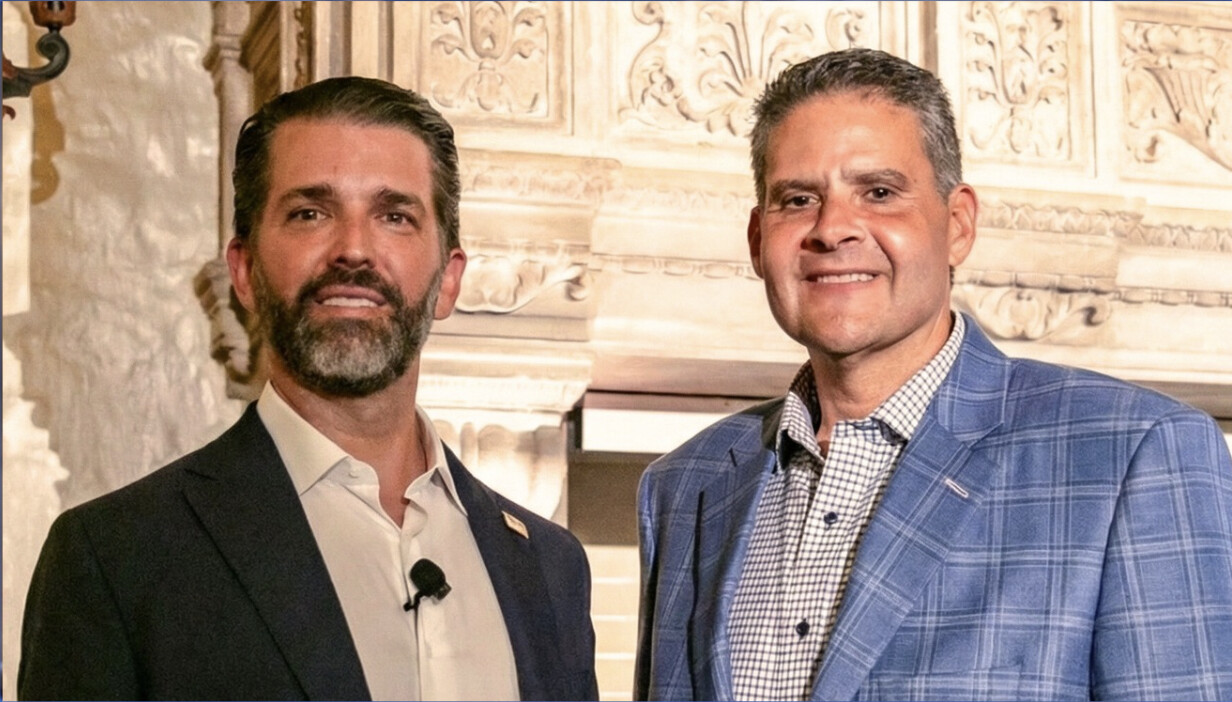
The company surrounding him is compact, with 17 employees and a Boca Raton base. Jovine serves as chairman and CEO. The title has evolved, but the editorial job remains recognizable: find an argument, test it and make it legible to a nonprofessional reader.
III. The filterBlunt force logic for complicated companies
Jovine's favorite hunting grounds tend to be places where the story is large and the evidence uneven. Biotech is a natural example. The science can be forbidding, the development timelines long and the outcome binary. His response is a checklist he calls “blunt force logic.” Look for later-stage programs, meaningful strategic partnerships and management teams with relevant experience. The name is comic, but the discipline underneath it is not.
How far along?
Later-stage evidence can narrow the range of stories a company tells about itself.
Who else believes?
A credible partner may contribute diligence, capital, distribution or technical validation.
Who has done it?
Experienced management matters when milestones, financing and execution must all line up.
The framework does not turn speculation into safety. It does something more modest and useful: it gives the reader three places to press on a narrative. In robotics, Jovine has applied similar reasoning to private-company potential, openly acknowledging that many early investments fail or merely return capital while only a small number drive the result. In energy interviews, he has focused on the infrastructure required to turn fashionable technologies into operating systems. Follow the grand theme, then search for the bottleneck with a balance sheet.
There is continuity here with the Comptronix trade. The young broker had price action, reported fundamentals and a respected voice pointing in the same direction. What he lacked was a durable way to investigate what could break. The older publisher's checklists are, in part, architecture around that missing question. They do not abolish error. Nothing honest in markets can. They make confidence work for its supper.
Behind the Markets publishes investment research, not certainty. Jovine is not presently registered as a broker. Readers should evaluate research, fees, incentives and risk independently before making financial decisions.
IV. The historianRome, markets and the long memory
Away from company filings, Jovine has identified two durable interests: writing and ancient Roman history. The pairing is almost suspiciously apt. Rome offers a long archive of incentives, institutions, charismatic certainty and abrupt repricing. Wall Street offers the same, with worse stonework and quicker settlement.
History also rewards the habit that markets punish people for abandoning. It asks what came before the triumph, who financed the monument, which institution still worked and which one had become scenery. Jovine's career has crossed enough cycles to make that perspective practical. Brokerage gave way to publishing. Paper newsletters became digital alerts and video interviews. The audience grew more connected while the old human weaknesses remained stubbornly offline: envy, fear, impatience and the wish to borrow another person's conviction.
His aspiration is consistent across the ventures. Individual investors should be able to see more of the machinery behind an investment idea. The promise is not that every reader becomes an institution. It is that the gap between a ticker and a business can be narrowed with industry work, company valuation and a plainly stated thesis.
Research begins when the exciting story meets an inconvenient question.
The pocketless shirt survives because it makes the final point better than a spreadsheet could. Markets constantly sell costumes of authority: vocabulary, access, famous company, confident mentor, elegant chart. Jovine wore one early and paid dearly for the lesson. The useful response was not to retreat from ambition. It was to add pockets for doubt.
Three decades later, he is still prospecting through companies and explaining what he sees. The tools are faster, the reach is wider and the sectors have changed. The number on the quote machine remains wonderfully rude. It reminds the founder, the writer and anyone reading him that reality never checks how impressive your shirt looks before it reprices the stock.